The Dream Machine: J.C.R. Licklider and the Revolution That Made Computing Personal by M. Mitchell Waldrop is a 2001 biography book about computing history, innovation, human-computer interaction. Licklider's 'Man-Computer Symbiosis' (1960) argued for interactive computing as the productive mode — not calculation or batch processing but a real-time collaboration between human judgment and machine speed.
Summary
The Dream Machine is a biography of J.C.R. Licklider, the psychologist and computer scientist who, more than anyone else, articulated the vision of interactive personal computing decades before it existed and then funded the research that made it possible. Licklider is not famous. He did not found a company or invent a product. He spent his career inside institutions — MIT, BBN, DARPA, and back — funding other people's work. But the research he supported and the vision he propagated can be traced in a direct line to the internet, the graphical user interface, and the networked personal computer.
Waldrop tells the story through an unusually well-structured biography that interleaves Licklider's personal and professional history with the broader history of computing from the 1940s through the 1980s. The result is one of the clearest accounts available of how ARPANET — the precursor to the internet — came to exist, and why it looked the way it did rather than looking like the centralized time-sharing systems that most people in the 1960s assumed would be the future of computing.
The central intellectual contribution Waldrop traces is Licklider's 1960 paper "Man-Computer Symbiosis," which argued that the most productive use of computers was not batch processing or calculation but interactive collaboration between human intelligence and machine speed. This was a radical claim when computers filled rooms, cost millions of dollars, and were used exclusively for numerical computation. Licklider spent the next two decades funding researchers who shared this vision — Douglas Engelbart, Ivan Sutherland, Bob Taylor — and creating the organizational conditions in which their work could survive.
The book is most valuable as an account of how big, institutional vision funding actually works: how one person with access to significant resources and a clear, articulated idea about what computing should become shaped the entire trajectory of the field. It is a story about management as much as invention, and about the relationship between individual vision and collective execution. The writing is careful and the research thorough. For anyone interested in where the modern computing environment came from and why it took the form it did, this is the essential book.

Talk to The Dream Machine: J.C.R. Licklider and the Revolution That Made Computing Personal like its author wrote you back.
Get the ideas that fit your life — not generic summaries.
- Chat with the book
- Audiobook-style main ideas
- Adapts to your life and goals
- Helps you take action
Key takeaways
- 1.
Licklider's 'Man-Computer Symbiosis' (1960) argued for interactive computing as the productive mode — not calculation or batch processing but a real-time collaboration between human judgment and machine speed.
- 2.
Licklider's power was institutional and financial: as head of ARPA's Information Processing Techniques Office, he funded the research culture that produced the internet, the graphical user interface, and interactive computing.
- 3.
ARPANET, the internet's precursor, was designed to connect researchers at different institutions and was shaped by Licklider's vision of a distributed network of communities rather than a centralized system.
- 4.
Douglas Engelbart, Ivan Sutherland, Bob Taylor, and Alan Kay — the central figures of interactive computing — were all connected to funding or intellectual networks Licklider built or inspired.
- 5.
The computing paradigm that won (personal, interactive, networked) was not inevitable. Most experts in the 1960s expected centralized time-sharing to dominate. Licklider's vision was a deliberate and successful intervention.
- 6.
Institutional funding and vision leadership can shape a field more decisively than individual invention. Licklider did not build the things he imagined; he created the conditions in which others could.
- 7.
The history of computing is largely a history of psychologists, mathematicians, and engineers working outside their disciplines. Licklider's background in psychoacoustics shaped his intuitions about human-machine interaction in ways that a pure engineer would not have had.
- 8.
Personal computing was always about augmenting human intellect, not replacing it. The early AI winter resulted partly from confusing these two goals.
Discussion questions
Use these on your own, with a book club, or as chat starters in Superbook. Book club version, ready to copy or print →
- 1.
Licklider is nearly unknown despite being arguably the most important figure in shaping the internet and personal computing. What does that tell us about how we understand technological history?
- 2.
Waldrop's account suggests that institutional vision funding — one person directing resources toward a long-term idea — can be more effective than competitive market innovation. Do you find that persuasive?
- 3.
Licklider's 1960 paper argued for human-computer symbiosis. Now that AI can perform many cognitive tasks autonomously, does that frame still apply? Or has the relationship shifted?
- 4.
ARPANET was shaped by the assumption that the network would connect researchers who already knew each other. How different is the internet we got from the one Licklider imagined?
- 5.
The book covers the tension between interactive computing advocates and AI researchers in the 1960s. Has that tension been resolved, and if so, how?
- 6.
Licklider spent most of his career in positions where he influenced others rather than building things himself. How do you think about that kind of institutional leadership compared to direct technical achievement?
- 7.
Waldrop argues that Licklider's psychological training was essential to his computing vision. What other fields have contributed unexpected insights to how we design and use technology?
- 8.
The computing paradigm Licklider envisioned won, but it won in ways he did not fully anticipate — commercial, consumer-facing, and eventually dominated by advertising. Would he recognize the internet we have now?
- 9.
The book describes a research culture of the 1960s and 1970s that many find enviable — long time horizons, tolerance for failure, genuine intellectual freedom. Is that culture reproducible, and should we try?
- 10.
Licklider thought computers should augment human intelligence rather than replace it. How does that principle apply to current debates about AI?
- 11.
What is the significance of ARPA funding coming from the military? Does the origin of the internet in defense research tell us anything about the technology's later character?
- 12.
The Dream Machine is long — over 400 pages. Does depth and detail in technology history change your sense of how innovation actually works?
Themes
Frequently asked questions
-
Who was J.C.R. Licklider and why does he matter?
Joseph Carl Robnett Licklider (1915–1990) was a psychologist turned computer scientist who articulated the vision of interactive personal computing in 1960 and then spent two decades funding the researchers who built it. He is arguably more responsible for the shape of modern computing than any single inventor, but his role was institutional rather than technical, which is why he is little known outside the field.
-
Is The Dream Machine only for people interested in computing history?
No. It is also a book about how vision and institutional power shape technological trajectories, about the culture of research organizations, and about the relationship between individual ideas and collective execution. Anyone interested in innovation, management, or the history of technology will find it rewarding.
-
How long is The Dream Machine?
About 500 pages — a ten-to-eleven hour read at average pace. It is thorough without being padded. The research culture chapters and the ARPANET sections are the most historically important; the biographical sections on Licklider's early life are interesting but can be read more lightly.
-
What is the book's relationship to Walter Isaacson's The Innovators?
Both cover overlapping territory in computing history. Waldrop's book is deeper and more focused, essentially a single biography with broad context; Isaacson's is panoramic and more accessible. Read The Dream Machine for depth; The Innovators for breadth.
-
What did Licklider actually fund that we still use today?
His ARPA funding directly supported ARPANET, Douglas Engelbart's NLS (which introduced the mouse, hypertext, and collaborative computing), Ivan Sutherland's Sketchpad (the first graphical computing interface), and the research culture at MIT, Stanford, Carnegie Mellon, and UCLA that produced most of modern computer science.
Similar books

Steve Jobs
Walter Isaacson
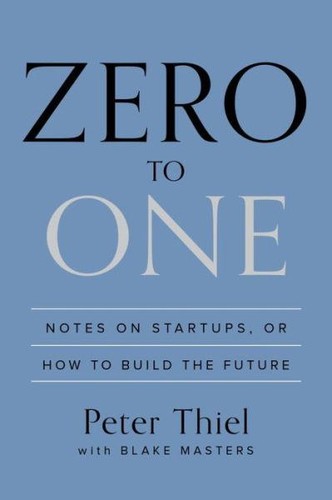
Zero to One: Notes on Startups, or How to Build the Future
Peter Thiel
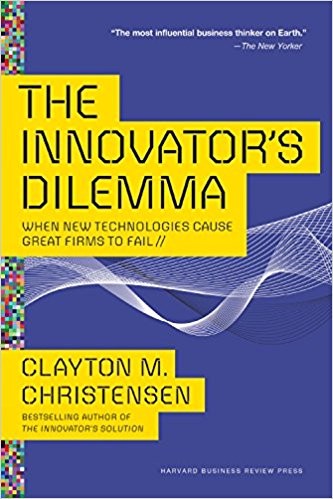
The Innovator's Dilemma
Clayton M. Christensen

Bad Blood: Secrets and Lies in a Silicon Valley Startup
John Carreyrou
