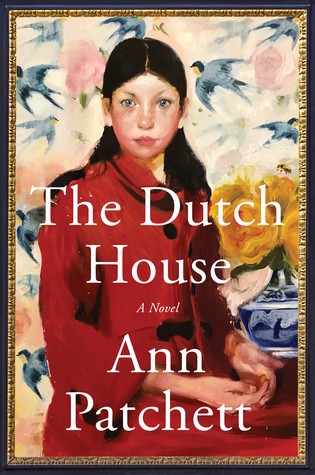
Talk to The Dutch House like its author wrote you back.
Get the ideas that fit your life — not generic summaries.
- Chat with the book
- Audiobook-style main ideas
- Adapts to your life and goals
- Helps you take action
The Dutch House, in detail
The Dutch House is narrated by Danny Conroy, who along with his sister Maeve grew up in an extraordinary mansion in the suburbs of Philadelphia — a house their father bought as a monument to his own success. After their father remarries and his new wife ultimately expels Maeve and Danny from the house, the siblings spend decades unable to let go: sitting in a car parked outside, replaying the same stories, trying to understand what they lost and why. The novel spans roughly fifty years, from the 1950s into the 2000s.
At its core the book is about how we construct and maintain family mythology, particularly the myths that protect us from harder truths. Danny and Maeve have an account of their childhood that keeps them close and keeps them wounded in equal measure. Patchett is interested in what it costs to hold onto a grievance across a lifetime — the rituals people build around loss, and whether those rituals are sustaining or imprisoning. Their mother, who abandoned the family to work with the poor in India, is the book's most complicated figure: a saint in the world's eyes and a wound in her children's.
Patchett writes clean, unflashy prose that accumulates quietly. The Dutch House itself is rendered as a character — its rooms, its portraits, its particular quality of light — and the novel has a fairy-tale undertow (the wicked stepmother, the expulsion from paradise) that Patchett leans into deliberately. The structure, narrated retrospectively by Danny with the benefit of hindsight, creates a gentle dramatic irony: we know roughly how things end up while watching the characters live through not knowing.
This is not a novel of big shocks or plot twists. Readers who want propulsive forward momentum will find it slow. But for readers who are interested in how families create their stories about themselves, and what it takes to revise those stories, The Dutch House is one of the more quietly devastating novels of recent years. It earns comparison to Patchett's earlier Bel Canto and Run, and to the literary family dramas of Richard Russo.
The big ideas
- 1.
The house itself is the novel's central symbol — beauty and entrapment in the same object, and a measure of how much of a life can be organized around something that no longer belongs to you.
- 2.
Maeve and Danny's bond is the emotional engine of the book; their sibling relationship is more stable and sustaining than any of the marriages depicted.
- 3.
The retrospective narration creates a gentle irony — Danny tells the story with the knowledge of outcomes the characters couldn't have, and the gap between what they feared and what actually happened is often illuminating.
