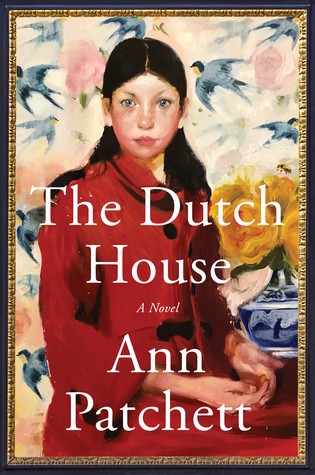
The Dutch House by Ann Patchett is a 2019 literary fiction book about family and memory, wealth and class, abandonment. The house itself is the novel's central symbol — beauty and entrapment in the same object, and a measure of how much of a life can be organized around something that no longer belongs to you.
Summary
The Dutch House is narrated by Danny Conroy, who along with his sister Maeve grew up in an extraordinary mansion in the suburbs of Philadelphia — a house their father bought as a monument to his own success. After their father remarries and his new wife ultimately expels Maeve and Danny from the house, the siblings spend decades unable to let go: sitting in a car parked outside, replaying the same stories, trying to understand what they lost and why. The novel spans roughly fifty years, from the 1950s into the 2000s.
At its core the book is about how we construct and maintain family mythology, particularly the myths that protect us from harder truths. Danny and Maeve have an account of their childhood that keeps them close and keeps them wounded in equal measure. Patchett is interested in what it costs to hold onto a grievance across a lifetime — the rituals people build around loss, and whether those rituals are sustaining or imprisoning. Their mother, who abandoned the family to work with the poor in India, is the book's most complicated figure: a saint in the world's eyes and a wound in her children's.
Patchett writes clean, unflashy prose that accumulates quietly. The Dutch House itself is rendered as a character — its rooms, its portraits, its particular quality of light — and the novel has a fairy-tale undertow (the wicked stepmother, the expulsion from paradise) that Patchett leans into deliberately. The structure, narrated retrospectively by Danny with the benefit of hindsight, creates a gentle dramatic irony: we know roughly how things end up while watching the characters live through not knowing.
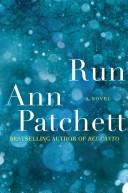
This is not a novel of big shocks or plot twists. Readers who want propulsive forward momentum will find it slow. But for readers who are interested in how families create their stories about themselves, and what it takes to revise those stories, The Dutch House is one of the more quietly devastating novels of recent years. It earns comparison to Patchett's earlier Bel Canto and Run, and to the literary family dramas of Richard Russo.
Talk to The Dutch House like its author wrote you back.
Get the ideas that fit your life — not generic summaries.
- Chat with the book
- Audiobook-style main ideas
- Adapts to your life and goals
- Helps you take action
Key takeaways
- 1.
The house itself is the novel's central symbol — beauty and entrapment in the same object, and a measure of how much of a life can be organized around something that no longer belongs to you.
- 2.
Maeve and Danny's bond is the emotional engine of the book; their sibling relationship is more stable and sustaining than any of the marriages depicted.
- 3.
The retrospective narration creates a gentle irony — Danny tells the story with the knowledge of outcomes the characters couldn't have, and the gap between what they feared and what actually happened is often illuminating.
- 4.
The mother who abandons her children for altruistic reasons is one of fiction's harder moral puzzles. Patchett refuses to resolve it cleanly.
- 5.
Holding onto a grievance can be a way of holding onto a relationship — the Conroy siblings' ritual of parking outside the Dutch House keeps them connected to each other and to the wound.
- 6.
Wealth in the novel is shown to be both enabling and distorting — the Dutch House inflated the family's sense of who they were and made the loss of it catastrophic.
- 7.
The stepmother Andrea is not purely villainous; she wanted the house and the life, not the stepchildren. The novel shows how that ordinary self-interest can have devastating consequences.
- 8.
Forgiveness in the final pages is not resolution but a choice — imperfect, incomplete, and still the thing that frees them.
Discussion questions
Use these on your own, with a book club, or as chat starters in Superbook. Book club version, ready to copy or print →
- 1.
Danny narrates from the future, which means he knows how things turn out. Does that foreknowledge make him reliable or does it shape the story in ways that aren't entirely honest?
- 2.
The mother abandoned her children to help the poor. Is she admirable, unforgiveable, or both? Does the novel ask you to choose?
- 3.
Maeve and Danny keep returning to park outside the Dutch House for decades. What does that ritual give them, and what does it cost them?
- 4.
Andrea the stepmother is often read as the novel's villain. Is that fair? What was she actually after, and do you understand her?
- 5.
The Dutch House is described almost magically. What does a house mean in this novel that couldn't be captured by a different kind of object or place?
- 6.
How does wealth function in the story? Would the same dynamics have played out in a less spectacular setting?
- 7.
The sibling bond is the most stable relationship in the book. Why do you think Patchett centered that over the romantic relationships?
- 8.
Did you find the ending satisfying? Does Patchett earn the note of resolution she reaches for?
- 9.
Compared to run-ann-patchett — what themes persist across Patchett's work? What does she keep returning to?
- 10.
Which character in the novel do you think is most self-deceived about their own motives?
- 11.
The fairy-tale elements — the beautiful house, the wicked stepmother, the expulsion — are clearly deliberate. Does that framework help or limit the novel?
- 12.
What would this story look like told from Maeve's perspective instead of Danny's?
Themes
Frequently asked questions
-
Is The Dutch House worth reading?
Yes, particularly for readers who enjoy literary family dramas with psychological depth. It's not Patchett's most ambitious novel, but it may be her most emotionally precise. The sibling relationship at its center is rendered with unusual fidelity.
-
Is The Dutch House a slow read?
It moves deliberately. Patchett is not a plot-driven writer — she's interested in accumulation and revelation. Readers who are patient will find the pace suits the material; readers who need constant forward momentum may struggle in the middle sections.
-
What is The Dutch House about, in a sentence?
Two siblings expelled from their childhood home spend fifty years unable to leave it behind — and the novel examines what it means to build your identity around a wound.
-
Is there an audiobook of The Dutch House?
Yes, and it's excellent. Tom Hanks narrates the audiobook, and his performance as Danny is widely praised. Many readers say the audio version is the definitive way to experience this novel.
-
Who shouldn't read The Dutch House?
Readers who want thriller pacing, major plot twists, or a contemporary setting with external drama will likely find this quiet and slow. It's a novel of interiority and memory, not action.