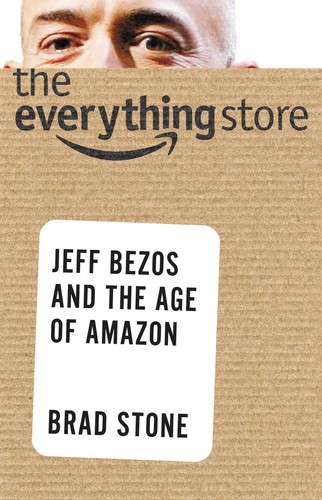
Talk to The Everything Store: Jeff Bezos and the Age of Amazon like its author wrote you back.
Get the ideas that fit your life — not generic summaries.
- Chat with the book
- Audiobook-style main ideas
- Adapts to your life and goals
- Helps you take action
The Everything Store: Jeff Bezos and the Age of Amazon, in detail
The Everything Store is Brad Stone's account of Amazon's founding and growth from a book retailer to one of the most powerful companies in the world. Stone, a Bloomberg Businessweek reporter, conducted hundreds of interviews over two years, gaining access to former Amazon employees, executives, and, briefly, Bezos himself. The book is the most comprehensive early account of how Amazon was built and what made Bezos's vision and management style so unusual — and so demanding.
Bezos founded Amazon in 1994 with an explicit goal of building the everything store — a company that could sell anything to anyone with maximum convenience. The early chapters trace the company's founding mythology, including Bezos's regret-minimization framework for deciding to leave his finance career, the first office in a Bellevue garage, and the scramble to find books to fulfill the early orders. What distinguished Amazon from the start was Bezos's obsession with the long term: he was willing to accept years of losses to build infrastructure and customer trust that would compound into durable competitive advantages.
Stone examines the internal dynamics of Amazon as it grew — the notoriously high bar for hiring, the culture of frugality and urgency, the development of the Kindle, AWS, Prime, and the third-party marketplace. Bezos's leadership principles run throughout: customer obsession over competitor focus, bias for action, frugality as discipline, and an insistence on writing in prose rather than presenting in PowerPoint, so that assumptions are visible rather than hidden in bullet points.
The book is sympathetic to Bezos's vision while honest about the costs: the brutal demands on employees, the aggressive tactics against competitors including publishers and Diapers.com, and the question of whether a company that functions as critical infrastructure should operate with the same autonomy as a private corporation. Stone is a reporter first, and the book is rigorous and detailed. It is strongest on Amazon's early years and internal culture; the later chapters, covering AWS and international expansion, are necessarily compressed.
The big ideas
- 1.
Bezos's regret-minimization framework: imagine yourself at eighty looking back, and choose the path you'd least regret not having tried. The framework shaped the decision to leave finance and start Amazon.
- 2.
Amazon's obsession with the long term allowed it to accept years of losses to build infrastructure, logistics, and customer trust that compounded into structural advantages competitors couldn't easily replicate.
- 3.
Customer obsession over competitor focus: Bezos consistently redirected attention from what competitors were doing to what customers wanted that no one was yet providing.
