The Everything Store: Jeff Bezos and the Age of Amazon by Brad Stone is a 2013 business book about entrepreneurship, strategy, technology. Bezos's regret-minimization framework: imagine yourself at eighty looking back, and choose the path you'd least regret not having tried. The framework shaped the decision to leave finance and start Amazon.
Summary
The Everything Store is Brad Stone's account of Amazon's founding and growth from a book retailer to one of the most powerful companies in the world. Stone, a Bloomberg Businessweek reporter, conducted hundreds of interviews over two years, gaining access to former Amazon employees, executives, and, briefly, Bezos himself. The book is the most comprehensive early account of how Amazon was built and what made Bezos's vision and management style so unusual — and so demanding.
Bezos founded Amazon in 1994 with an explicit goal of building the everything store — a company that could sell anything to anyone with maximum convenience. The early chapters trace the company's founding mythology, including Bezos's regret-minimization framework for deciding to leave his finance career, the first office in a Bellevue garage, and the scramble to find books to fulfill the early orders. What distinguished Amazon from the start was Bezos's obsession with the long term: he was willing to accept years of losses to build infrastructure and customer trust that would compound into durable competitive advantages.
Stone examines the internal dynamics of Amazon as it grew — the notoriously high bar for hiring, the culture of frugality and urgency, the development of the Kindle, AWS, Prime, and the third-party marketplace. Bezos's leadership principles run throughout: customer obsession over competitor focus, bias for action, frugality as discipline, and an insistence on writing in prose rather than presenting in PowerPoint, so that assumptions are visible rather than hidden in bullet points.
The book is sympathetic to Bezos's vision while honest about the costs: the brutal demands on employees, the aggressive tactics against competitors including publishers and Diapers.com, and the question of whether a company that functions as critical infrastructure should operate with the same autonomy as a private corporation. Stone is a reporter first, and the book is rigorous and detailed. It is strongest on Amazon's early years and internal culture; the later chapters, covering AWS and international expansion, are necessarily compressed.
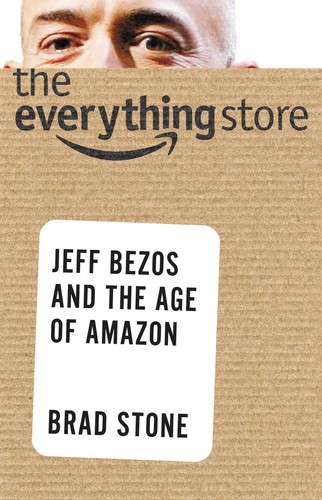
Talk to The Everything Store: Jeff Bezos and the Age of Amazon like its author wrote you back.
Get the ideas that fit your life — not generic summaries.
- Chat with the book
- Audiobook-style main ideas
- Adapts to your life and goals
- Helps you take action
Key takeaways
- 1.
Bezos's regret-minimization framework: imagine yourself at eighty looking back, and choose the path you'd least regret not having tried. The framework shaped the decision to leave finance and start Amazon.
- 2.
Amazon's obsession with the long term allowed it to accept years of losses to build infrastructure, logistics, and customer trust that compounded into structural advantages competitors couldn't easily replicate.
- 3.
Customer obsession over competitor focus: Bezos consistently redirected attention from what competitors were doing to what customers wanted that no one was yet providing.
- 4.
The six-page narrative memo is one of Amazon's most distinctive management practices: proposals must be written in complete prose, forcing authors to surface their assumptions and reason precisely rather than hide vagueness in bullet points.
- 5.
AWS originated from an internal effort to make Amazon's own infrastructure more modular and reliable, then became a product when Bezos recognized that other companies had the same infrastructure problems.
- 6.
Amazon Prime was a deliberate structural choice: pay once, buy often without price friction. It changed customer behavior more fundamentally than any promotional campaign could.
- 7.
Third-party marketplace and first-party retail are fundamentally in tension — Amazon both competes with and hosts its sellers — a structural ambiguity that defined many of its most controversial business decisions.
- 8.
Frugality and urgency are cultural values, not just financial disciplines. The bias toward doing rather than planning, and toward lean operations, shaped Amazon's speed and willingness to enter new markets quickly.
Discussion questions
Use these on your own, with a book club, or as chat starters in Superbook. Book club version, ready to copy or print →
- 1.
Bezos's regret-minimization framework shaped Amazon's founding. What major decision in your own life have you made — or would you make differently — using that lens?
- 2.
Amazon accepted years of losses while building infrastructure that competitors couldn't easily replicate. At what point does long-term orientation become an excuse for avoiding accountability?
- 3.
The six-page memo culture assumes that writing forces clearer thinking than bullet points. Have you seen evidence that this is true in your own experience? What does it take to make it work?
- 4.
Amazon's customer obsession is legendary. Can customer obsession be a competitive liability in situations where customers want things that aren't good for them or for society?
- 5.
Stone describes Amazon's negotiating tactics with publishers and Diapers.com as aggressive to the point of predatory. How do you think about the ethics of competitive tactics in markets where scale confers this kind of power?
- 6.
AWS grew from an internal infrastructure project. What other internal capabilities might Amazon or other large companies be sitting on that have potential as standalone businesses?
- 7.
Bezos designed Amazon to thrive on frugality and urgency. What are the organizational costs of that culture on the people who work there?
- 8.
Amazon Prime changed customer behavior by removing price friction. What other business model changes have done something similar — altered the nature of buying decisions rather than just the terms?
- 9.
Stone's account suggests Bezos's thinking was genuinely distinctive. What did he see about the internet and retail that most people missed in the mid-1990s?
- 10.
Amazon is both a marketplace platform for third-party sellers and a direct competitor to those same sellers. Is that a sustainable long-term business structure, or does it create irresolvable conflicts?
- 11.
Bezos famously said that your margin is my opportunity. What does that principle imply about where Amazon would or should expand next?
- 12.
The Everything Store was published in 2013. What do you think the next chapter of the Amazon story — AI, healthcare, logistics — looks like, and how does it connect to the culture Stone describes?
Themes
Frequently asked questions
-
Is The Everything Store worth reading?
Yes, especially for anyone trying to understand how Amazon built its structural advantages. It is one of the best-reported business histories of the internet era, and Stone's access to former employees gives it a texture that official histories lack.
-
Is The Everything Store authorized by Amazon or Bezos?
No. Bezos cooperated briefly but the company ultimately attempted to discredit the book through Bezos's wife MacKenzie (now Scott), who wrote a critical Amazon review. The book is reported journalism, not an authorized account.
-
What is Bezos's regret-minimization framework?
A mental model Bezos describes using to make major decisions: imagine yourself at eighty, looking back at this moment. Which choice would you regret not having made? The framework values action over safety when the opportunity is significant and one-directional.
-
How does The Everything Store hold up in 2026?
The early chapters on Amazon's culture, founding, and first decade are evergreen. The later chapters covering AWS and Prime have been superseded by subsequent reporting. The Amazon Unbound follow-up covers the 2013–2021 period.
-
What is Amazon's six-page memo culture?
Amazon bans PowerPoint for major proposals. Instead, leaders write a six-page narrative memo that is read in silence at the start of every important meeting. The format forces precise thinking because vague arguments can't hide in bullet points.
Similar books
Zero to One: Notes on Startups, or How to Build the Future
Peter Thiel
Shoe Dog: A Memoir by the Creator of Nike
Phil Knight
No Rules Rules: Netflix and the Culture of Reinvention
Reed Hastings and Erin Meyer
Rework
Jason Fried and David Heinemeier Hansson
