Memoir · Book club
The Executioner's Song book club questions
Here are 12 book club questions for The Executioner's Song by Norman Mailer, ordered to open easily and end somewhere worth arguing about. Copy them, print them, or bring them up one at a time.
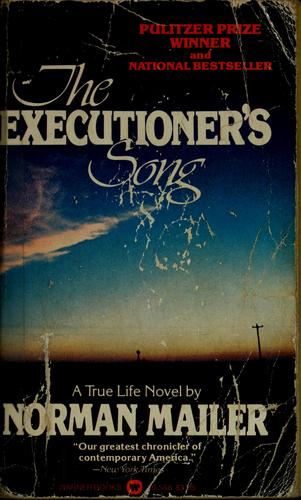
The Executioner's Song is Norman Mailer's Pulitzer Prize-winning account of Gary Gilmore, the convicted murderer who in 1977 became the first person executed in the United States after the Supreme Court reinstated the death penalty.
Norman Mailer · 1979 · 21h 20m
Full summary and key takeaways →The 12 questions
- 1.
Mailer calls the book a 'true life novel.' Does that label give him creative license that a journalist should not take, or does it serve the story?
- 2.
Gilmore wanted to be executed. Does respecting a condemned man's wish for death constitute dignity or abdication of a society's responsibility?
- 3.
How does Mailer's portrait of Lawrence Schiller — the producer who monetized Gilmore's story — change your reading of your own consumption of true crime?
- 4.
The two victims receive relatively little page space compared to Gilmore. Is that a moral failure of the book or an accurate reflection of how society actually allocates attention?
- 5.
Nicole Baker's perspective is given serious weight. Does her relationship with Gilmore deepen your understanding of him or complicate your sympathy for her?
- 6.
The Utah setting is rendered with sociological precision. To what degree do you think environment shapes the kind of violence Gilmore committed?
- 7.
The book was published in 1979, at the moment American true crime was becoming entertainment. Has anything changed in how the culture handles these stories, or have the dynamics Mailer identified just scaled up?
- 8.
Gilmore believed in reincarnation and seemed to view death as a transition rather than an ending. Does his stated belief system make his behavior more or less comprehensible to you?
- 9.
At over a thousand pages, the book demands an investment most readers won't make. Is there something important that only a book this long can do that a shorter version would lose?
- 10.
Mailer himself appears at the edges of the story. How does his visibility as author shape your reading of the account's reliability?
- 11.
The legal machinery trying to stop Gilmore's execution worked harder to keep him alive than he wanted to be. What does that say about whose interests capital punishment actually serves?
- 12.
If the same story happened today — a convicted murderer demanding execution, a media circus forming around it — what would be different?
How to run the discussion
- Pick six to eight, not all of them. An hour of real discussion covers fewer questions than anyone expects, and racing the list is what makes a book club feel like homework.
- Open with what people noticed, not what they concluded. Asking for a verdict first hardens opinions before anyone has heard each other.
- Let the disagreement run. The questions below that split a room are the ones worth the time; the ones everyone answers the same way can be skipped.
- Ask the quiet person a specific question. A direct, narrow question is far easier to answer than an open invitation to contribute.
Themes worth steering toward
If the conversation stalls, these are the threads that usually restart it.
Common questions
What are good book club questions for The Executioner's Song?
Here are 12 book club questions for The Executioner's Song by Norman Mailer, ordered to open easily and end somewhere worth arguing about. The strongest openers ask what each reader noticed rather than what they concluded, and the discussion usually turns on violence, justice, american west.
How long should a book club discussion of The Executioner's Song last?
Most groups run 60 to 90 minutes of actual discussion. That is roughly six to eight questions, not all of them, so pick the ones that suit your group rather than working down the list in order.
What are the main themes in The Executioner's Song?
Violence, Justice, American West, Media, Capital punishment. Those are the threads most likely to divide a room, which makes them the useful places to steer a discussion that has gone quiet.
Picking the next one? See books like The Executioner's Song or questions for other book club picks.
