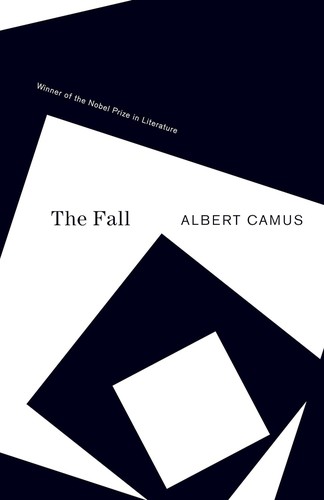
Talk to The Fall like its author wrote you back.
Get the ideas that fit your life — not generic summaries.
- Chat with the book
- Audiobook-style main ideas
- Adapts to your life and goals
- Helps you take action
What it argues
Jean-Baptiste Clamence, a former Parisian defense lawyer living in the seamiest bar district of Amsterdam, monologues at a stranger in a series of evenings. He was once, he tells us, a genuinely good man — generous, admired, morally impeccable — until one November night on a Paris bridge he heard a woman fall into the Seine and did nothing. This failure, small and unwitnessed, gradually hollows out his entire self-image and leads him to what he calls his vocation: a "judge-penitent," someone who confesses his own faults in elaborate and entertaining ways in order to invite his listener's complicity, then judge them in return.
The Fall was Camus's last completed novel and his most bitter. It was written partly in response to Sartre's criticism of The Rebel (1951), and Clamence is at least partly a portrait of a certain kind of Parisian intellectual — charming, self-aware, morally sophisticated in analysis and cowardly in practice. But the novel's target is wider than intellectual bad faith: it is about the universal human move of converting guilt into superiority, of using self-condemnation as a shield against genuine accountability.
What it gets right
- 1.
Clamence's confession is a trap: by admitting his failures openly and entertainingly, he invites the listener's sympathy and then turns that sympathy into a shared accusation. The reader is implicated.
- 2.
The fall of the title is not Clamence's failure on the bridge but his discovery of his own fundamental dishonesty: his 'goodness' was always performance, and the bridge incident merely revealed what was already there.
- 3.
The 'judge-penitent' figure — someone who confesses in order to judge — is Camus's most acidic portrait of how self-awareness can become a form of moral evasion rather than moral improvement.
What it covers
Who wrote it
Albert Camus (1913–1960) was a French-Algerian author, philosopher, and journalist who won the Nobel Prize in Literature in 1957. His major works include The Stranger (1942), The Plague (1947), The Fall (1956), and the philosophical essay The Myth of Sisyphus (1942). Camus developed the concept of the absurd and was associated with French existentialism, though he rejected the label. The Fall, published in 1956, was his last completed novel. He died in a car accident four years later, leaving an unfinished novel, The First Man, in the wreckage.
