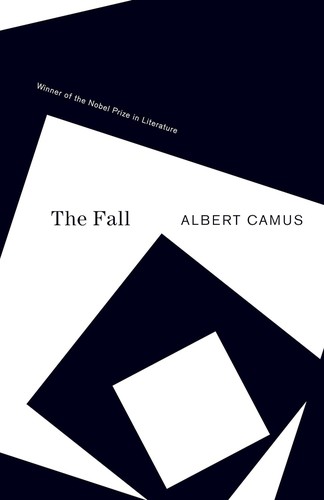
The Fall by Albert Camus is a 1956 literary fiction book about guilt and self-deception, confession as performance, moral complicity. Clamence's confession is a trap: by admitting his failures openly and entertainingly, he invites the listener's sympathy and then turns that sympathy into a shared accusation. The reader is implicated.
Summary
Jean-Baptiste Clamence, a former Parisian defense lawyer living in the seamiest bar district of Amsterdam, monologues at a stranger in a series of evenings. He was once, he tells us, a genuinely good man — generous, admired, morally impeccable — until one November night on a Paris bridge he heard a woman fall into the Seine and did nothing. This failure, small and unwitnessed, gradually hollows out his entire self-image and leads him to what he calls his vocation: a "judge-penitent," someone who confesses his own faults in elaborate and entertaining ways in order to invite his listener's complicity, then judge them in return.
The Fall was Camus's last completed novel and his most bitter. It was written partly in response to Sartre's criticism of The Rebel (1951), and Clamence is at least partly a portrait of a certain kind of Parisian intellectual — charming, self-aware, morally sophisticated in analysis and cowardly in practice. But the novel's target is wider than intellectual bad faith: it is about the universal human move of converting guilt into superiority, of using self-condemnation as a shield against genuine accountability.
The entire novel is a monologue — we never hear the stranger's responses — and Clamence is one of literature's great unreliable confessors. He tells the truth about his failure on the bridge, but everything else is performance. His elaborate guilt is itself a defense mechanism: by confessing loudly and completely, he preempts judgment and subtly implicated his silent listener in the same moral failures. The reader is the stranger. We are being worked.
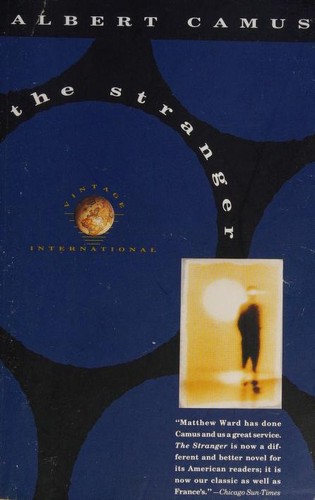
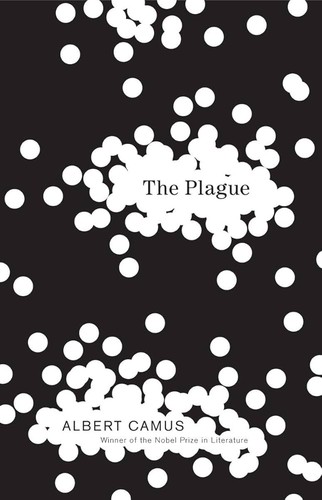
This is a short, demanding, and claustrophobic novel. The relentless monologue style requires patience. Clamence is brilliantly drawn but not easy to spend time with. Readers who encounter it after The Stranger or The Plague may find it colder and less generous — it is. But it may be Camus's most honest work, and its central observation — that self-knowledge without accountability is just sophisticated evasion — is one that lands harder the older you get.
Talk to The Fall like its author wrote you back.
Get the ideas that fit your life — not generic summaries.
- Chat with the book
- Audiobook-style main ideas
- Adapts to your life and goals
- Helps you take action
Key takeaways
- 1.
Clamence's confession is a trap: by admitting his failures openly and entertainingly, he invites the listener's sympathy and then turns that sympathy into a shared accusation. The reader is implicated.
- 2.
The fall of the title is not Clamence's failure on the bridge but his discovery of his own fundamental dishonesty: his 'goodness' was always performance, and the bridge incident merely revealed what was already there.
- 3.
The 'judge-penitent' figure — someone who confesses in order to judge — is Camus's most acidic portrait of how self-awareness can become a form of moral evasion rather than moral improvement.
- 4.
Amsterdam, with its fog, its concentric canals, and its moral murkiness, is the novel's perfect setting: a city of circles that resembles Dante's hell, a place to end up rather than a place to arrive.
- 5.
Clamence is partly a self-portrait and partly a portrait of Sartre; Camus was working through a public intellectual falling-out, and the bitterness of that dispute saturates the novel's atmosphere.
- 6.
The woman in the Seine is never named and barely described. Her function is to exist as the specific, irrecoverable moment when Clamence's self-image became impossible to maintain.
- 7.
The novel argues that universal guilt — everyone is complicit, no one is innocent — is more comfortable than specific accountability. General condemnation is easier to live with than answering for one particular failure.
- 8.
Unlike Meursault or Rieux, Clamence is never at rest. His intelligence is entirely in the service of self-protection, and the novel's achievement is showing exactly how that works without ever quite escaping it.
Discussion questions
Use these on your own, with a book club, or as chat starters in Superbook. Book club version, ready to copy or print →
- 1.
Clamence says he was genuinely good before the bridge incident. Do you believe him? Or is the novel suggesting his 'goodness' was always self-serving performance?
- 2.
The reader never hears the stranger respond. What effect does that one-sided conversation create? How does it implicate you as reader?
- 3.
Clamence describes becoming a 'judge-penitent' as his vocation. Is there any version of this figure that is honest, or is it by definition a corrupt mode?
- 4.
The novel was written after Camus's public break with Sartre over The Rebel. Does knowing that context change how you read Clamence as a character?
- 5.
Is self-condemnation a form of moral action, or is it, as Camus seems to suggest, a sophisticated way of avoiding it?
- 6.
Clamence's failure on the bridge was unwitnessed and had no external consequences. Why does it destroy him? What does the novel say about the relationship between guilt and consequences?
- 7.
The Fall is Camus's most pessimistic work. Is it also his most honest, as some critics argue? Or does its cynicism feel like its own kind of bad faith?
- 8.
Compare Clamence's confession to the confessions of other literary narrators you've encountered — Dostoevsky's Underground Man, for instance. What do they share? Where does Clamence differ?
- 9.
Amsterdam as setting — fog, concentric canals, moral murkiness — functions almost as a character. Does the environment feel essential or merely decorative?
- 10.
Clamence says near the end that he would push the drowning woman in again, now that he knows himself. Is this honesty or performance?
- 11.
The Fall is the last novel Camus completed before dying in a car accident at 46. Does knowing it was his final word change how you read its tone?
Themes
Frequently asked questions
-
Is The Fall worth reading?
Yes, particularly if you've already read The Stranger and The Plague and want to understand Camus's full range. It is his darkest and most ironic work, and its central observation — about how self-knowledge becomes self-protection — is sharp enough to be uncomfortable. It is also short and can be read in an afternoon.
-
Is The Fall hard to read?
Formally it is unusual: a single continuous monologue across several evenings, with no dialogue from the person being addressed. This requires patience. The prose itself is not difficult, but Clamence's voice is dense with irony and requires attention to follow his logic. It rewards close reading more than most Camus.
-
What is The Fall about, without spoilers?
A former Parisian lawyer living in Amsterdam's most disreputable district tells a stranger about his moral fall — specifically about a moment of cowardice on a Paris bridge — and his subsequent conversion into a figure who confesses his own failures as a way of judging others. It's about guilt, self-deception, and the sophisticated evasion of real accountability.
-
How does The Fall compare to The Stranger?
The Stranger is spare, cool, and about the refusal to perform emotions. The Fall is dense, ironic, and about the performance of emotions as a means of evasion. They are in a sense opposites: Meursault refuses all social performance; Clamence is all social performance. Both are Camus's attempts to name something true about authenticity and its failures.
-
Who shouldn't read The Fall?
Readers who want narrative momentum, multiple characters, or emotional warmth will find this book frustrating. It is essentially a 100-page monologue by an unreliable narrator who is also unlikable. Its pleasures are entirely intellectual and formal. If you read fiction primarily for story or empathy, this is not the right entry point into Camus.