Thriller · Book club
The Family Upstairs book club questions
Here are 11 book club questions for The Family Upstairs by Lisa Jewell, ordered to open easily and end somewhere worth arguing about. Copy them, print them, or bring them up one at a time.
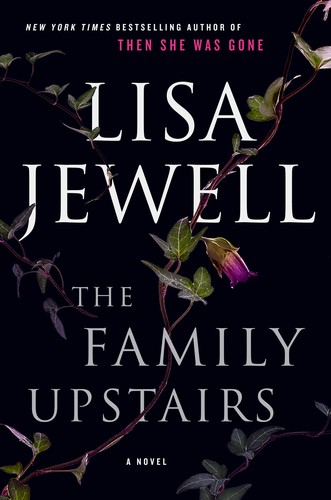
Libby Jones turns twenty-five and inherits a large Chelsea townhouse — left to her by parents she never knew, because she was raised in the foster system after being found as a baby amid three adult corpses.
Lisa Jewell · 2019 · 5h 45m
Full summary and key takeaways →The 11 questions
- 1.
Henry can identify every stage of the manipulation in retrospect but couldn't resist it at the time. Does the novel offer any explanation for why retrospective clarity is so difficult to achieve prospectively?
- 2.
The charismatic figure who takes over the household never becomes a cliché. What specifically makes him frightening rather than simply villainous?
- 3.
Lucy's decision-making throughout is frequently questionable. Does the novel ask you to judge her, or does it contextualize her choices as products of what she survived?
- 4.
The house is inherited, not earned — it was never really the family's to inhabit. Does the novel frame the inheritance system itself as implicated in what happened?
- 5.
How do the three narrative voices feel different in register? Did you trust one narrator more than the others, and if so, why?
- 6.
Libby's adoptive upbringing was stable and loving. The novel contrasts it with what she came from. Is it suggesting something about the relationship between material security and psychological safety?
- 7.
The ending involves several revelations arriving in quick succession. Did they feel earned by what came before, or compressed for effect?
- 8.
Children appear throughout the novel as both victims and as future risks. What responsibility does the novel place on survivors to break cycles they didn't choose?
- 9.
Compare the experience of reading Henry's thread versus Lucy's. Which felt more urgent to you, and what does that tell you about how Jewell manages sympathy?
- 10.
Is this primarily a thriller about secrets, or a literary novel about family and trauma that uses thriller mechanics? Does the distinction matter?
- 11.
The Chelsea setting — wealth, privilege, a certain English social register — shapes the story's plausibility. Would the same events read differently in a different class context?
How to run the discussion
- Pick six to eight, not all of them. An hour of real discussion covers fewer questions than anyone expects, and racing the list is what makes a book club feel like homework.
- Open with what people noticed, not what they concluded. Asking for a verdict first hardens opinions before anyone has heard each other.
- Let the disagreement run. The questions below that split a room are the ones worth the time; the ones everyone answers the same way can be skipped.
- Ask the quiet person a specific question. A direct, narrow question is far easier to answer than an open invitation to contribute.
Themes worth steering toward
If the conversation stalls, these are the threads that usually restart it.
Common questions
What are good book club questions for The Family Upstairs?
Here are 11 book club questions for The Family Upstairs by Lisa Jewell, ordered to open easily and end somewhere worth arguing about. The strongest openers ask what each reader noticed rather than what they concluded, and the discussion usually turns on cults and coercive control, inherited trauma, identity and origins.
How long should a book club discussion of The Family Upstairs last?
Most groups run 60 to 90 minutes of actual discussion. That is roughly six to eight questions, not all of them, so pick the ones that suit your group rather than working down the list in order.
What are the main themes in The Family Upstairs?
Cults and coercive control, Inherited trauma, Identity and origins, Secrets and silence, Family as trap. Those are the threads most likely to divide a room, which makes them the useful places to steer a discussion that has gone quiet.
Picking the next one? See books like The Family Upstairs or questions for other book club picks.
