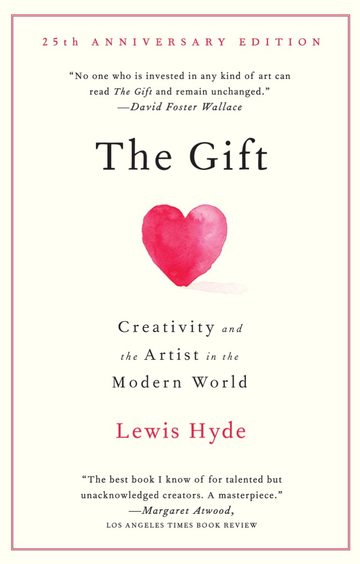
Talk to The Gift: Imagination and the Erotic Life of Property like its author wrote you back.
Get the ideas that fit your life — not generic summaries.
- Chat with the book
- Audiobook-style main ideas
- Adapts to your life and goals
- Helps you take action
The Gift: Imagination and the Erotic Life of Property, in detail
The Gift is Lewis Hyde's argument that creative work operates under a different logic than market exchange, and that misunderstanding this difference does serious damage to artists and to the culture that depends on them. The book works in two registers: anthropological and biographical. In the first half, Hyde examines gift economies — systems of circulation in which value moves by being given rather than sold — drawing on ethnographic accounts of potlatches, Polynesian exchange networks, and folk tales about gifts that multiply when shared and wither when hoarded. In a gift economy, value flows when it moves. A gift that stops moving, that gets converted into a commodity and sold, loses its gift-nature. Hyde's claim is that this logic governs genuine creative work.
The second half applies this framework to two poets: Walt Whitman and Ezra Pound. Whitman's life and poetry become an illustration of what it looks like to work in alignment with gift logic — giving freely, seeing talent as something received and passed on rather than owned. Pound's life, and his catastrophic failures, become an illustration of what happens when a person of genuine creative gifts tries to operate in commodity terms — possessing, controlling, withholding, demanding. The comparison is illuminating even for readers who don't come to the book with an interest in either poet.
Hyde doesn't argue that artists should be poor. The book acknowledges that artists live in two economies — the gift economy of creative work and the market economy of rent and groceries — and that the tension between them is real and often painful. His argument is that artists who lose track of the gift dimension of their work, who begin to think primarily in terms of market value, tend to produce worse work and to suffer from a particular kind of spiritual bankruptcy.
The Gift has accumulated an unusual reputation. It sold modestly when first published but spread by word of mouth, particularly among working artists, for decades. It is a book people give to each other — appropriately enough — and return to at different stages of a creative life. It asks large questions about why making things matters, and it answers them with enough intellectual seriousness and historical richness to justify its ambition.
The big ideas
- 1.
Gift economies operate on different logic than markets: value is created and preserved by being passed on, not accumulated. A gift that stops circulating loses its gift-nature.
- 2.
Creative work participates in gift logic: the artist receives a talent or inspiration, works with it, and puts it into the world — returning something to the commons from which it came.
- 3.
The tension between gift and commodity is structural for artists: creative work demands gift logic, but artists live in a market economy and must negotiate both simultaneously.
