Thriller · Book club
The Girl on the Train book club questions
Here are 12 book club questions for The Girl on the Train by Paula Hawkins, ordered to open easily and end somewhere worth arguing about. Copy them, print them, or bring them up one at a time.
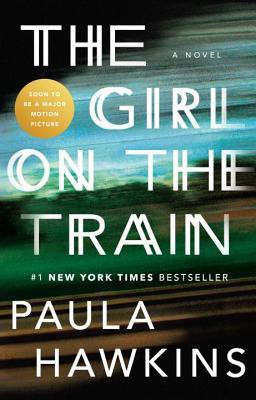
Rachel Watson takes the same commuter train every day, passing the house where she used to live with her ex-husband Tom, who now lives there with his new wife.
Paula Hawkins · 2015 · 7h 0m
Full summary and key takeaways →The 12 questions
- 1.
Rachel blames herself for her blackout on the critical night. When did you first suspect that her self-blame might be wrong, and what tipped you off?
- 2.
The three narrators — Rachel, Megan, Anna — see Tom differently. What does the novel suggest about how intimate partners shape each other's self-perception?
- 3.
Megan is the least developed narrator. Does she feel like a real person to you, or primarily a narrative function?
- 4.
The novel is set in English suburbs that Hawkins describes with some bleakness. How much does setting shape the book's emotional register?
- 5.
The American film moves the setting to New York. Does that feel like a meaningful change, or does location not matter much to the story?
- 6.
Rachel's drinking is sympathetically portrayed — we understand how it started, what it costs her, how it traps her. Does Hawkins romanticize it, or is the portrait honest?
- 7.
Anna starts as an unsympathetic character and ends in a more complex place. How did your reading of her change, and what caused that change?
- 8.
Tom is the novel's central male presence and its least visible one until late. What does that asymmetry — three female narrators circling a man who barely narrates — suggest about the book's concerns?
- 9.
Compared to Gone Girl, The Girl on the Train offers a more conventional resolution. Does that feel like a relief, a concession, or the right choice for this particular story?
- 10.
Coercive control — a partner systematically eroding the other's self-trust — is the novel's underlying subject. Did reading the book change how you think about what makes intimate abuse recognizable?
- 11.
Rachel's fantasy version of Megan and Scott's marriage is projection. What is she projecting, and what does it tell us about what she lost or never had?
- 12.
The novel was adapted quickly and lucratively after publication. Does knowing it was a massive commercial success change how you read it critically?
How to run the discussion
- Pick six to eight, not all of them. An hour of real discussion covers fewer questions than anyone expects, and racing the list is what makes a book club feel like homework.
- Open with what people noticed, not what they concluded. Asking for a verdict first hardens opinions before anyone has heard each other.
- Let the disagreement run. The questions below that split a room are the ones worth the time; the ones everyone answers the same way can be skipped.
- Ask the quiet person a specific question. A direct, narrow question is far easier to answer than an open invitation to contribute.
Themes worth steering toward
If the conversation stalls, these are the threads that usually restart it.
Common questions
What are good book club questions for The Girl on the Train?
Here are 12 book club questions for The Girl on the Train by Paula Hawkins, ordered to open easily and end somewhere worth arguing about. The strongest openers ask what each reader noticed rather than what they concluded, and the discussion usually turns on unreliable memory and alcoholism, obsession and voyeurism, domestic violence.
How long should a book club discussion of The Girl on the Train last?
Most groups run 60 to 90 minutes of actual discussion. That is roughly six to eight questions, not all of them, so pick the ones that suit your group rather than working down the list in order.
What are the main themes in The Girl on the Train?
Unreliable memory and alcoholism, Obsession and voyeurism, Domestic violence, Identity and self-deception, Suburban unhappiness. Those are the threads most likely to divide a room, which makes them the useful places to steer a discussion that has gone quiet.
Picking the next one? See books like The Girl on the Train or questions for other book club picks.
