Classics · Book club
The Great Gatsby book club questions
Here are 12 book club questions for The Great Gatsby by F. Scott Fitzgerald, ordered to open easily and end somewhere worth arguing about. Copy them, print them, or bring them up one at a time.
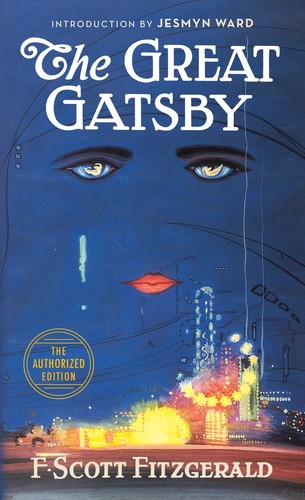
The Great Gatsby is narrated by Nick Carraway, a young Midwesterner who moves to Long Island in the summer of 1922 and finds himself adjacent to the fabulous, mysterious parties of his neighbor Jay Gatsby.
F. Scott Fitzgerald · 1925 · 3h 10m
Full summary and key takeaways →The 12 questions
- 1.
Nick says Gatsby had 'an extraordinary gift for hope.' Is that a compliment or an epitaph? Does the novel finally admire or pity him?
- 2.
Tom Buchanan is racist, bullying, and unfaithful — yet he survives intact while Gatsby dies. What is Fitzgerald saying about power and who it protects?
- 3.
Daisy is often called a weak character. Is that a failure of Fitzgerald's writing, or is the opacity of her interiority part of the point?
- 4.
The Valley of Ashes and its billboard god watch over everything but intervene in nothing. What function does this setting serve beyond atmosphere?
- 5.
Nick claims he's one of the few honest people he knows, then proceeds to enable Gatsby's obsession and lie by omission throughout. How reliable is his self-assessment?
- 6.
Jordan Baker is a professional cheat at a genteel sport. Is she the novel's most honest character, in the sense that she at least doesn't pretend?
- 7.
Compare Gatsby's self-invention to the American Dream as you understand it. Is the novel an endorsement of that myth, a critique of it, or something more complicated?
- 8.
The ending — 'So we beat on, boats against the current, borne back ceaselessly into the past' — is often quoted. Does the novel actually earn that final generalization, or does it feel tacked on?
- 9.
Fitzgerald wrote this at 28, mostly in Europe. Does knowing that change how you read the novel's nostalgia for America?
- 10.
Is the Gatsby-Daisy relationship a love story? Or is it something else — obsession, projection, class anxiety made personal?
- 11.
Compared to a contemporary novel about wealth and aspiration that you've read, where does Gatsby land harder and where does it feel dated?
- 12.
Which character in the novel, if any, has your sympathy? Did that shift as you read?
How to run the discussion
- Pick six to eight, not all of them. An hour of real discussion covers fewer questions than anyone expects, and racing the list is what makes a book club feel like homework.
- Open with what people noticed, not what they concluded. Asking for a verdict first hardens opinions before anyone has heard each other.
- Let the disagreement run. The questions below that split a room are the ones worth the time; the ones everyone answers the same way can be skipped.
- Ask the quiet person a specific question. A direct, narrow question is far easier to answer than an open invitation to contribute.
Themes worth steering toward
If the conversation stalls, these are the threads that usually restart it.
Common questions
What are good book club questions for The Great Gatsby?
Here are 12 book club questions for The Great Gatsby by F. Scott Fitzgerald, ordered to open easily and end somewhere worth arguing about. The strongest openers ask what each reader noticed rather than what they concluded, and the discussion usually turns on the american dream, class and wealth, illusion and disillusionment.
How long should a book club discussion of The Great Gatsby last?
Most groups run 60 to 90 minutes of actual discussion. That is roughly six to eight questions, not all of them, so pick the ones that suit your group rather than working down the list in order.
What are the main themes in The Great Gatsby?
The American Dream, Class and wealth, Illusion and disillusionment, The past's grip on the present, Moral decay. Those are the threads most likely to divide a room, which makes them the useful places to steer a discussion that has gone quiet.
Picking the next one? See books like The Great Gatsby or questions for other book club picks.
