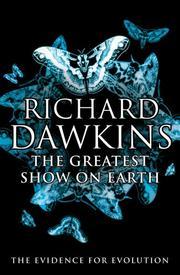
The Greatest Show on Earth: The Evidence for Evolution by Richard Dawkins is a 2009 science book about evolution, evidence, natural selection. Evolution is a fact, not a theory in the colloquial sense. The theory of evolution explains how it works; the evidence that it happened is as secure as the evidence that the Earth orbits the Sun.
Summary
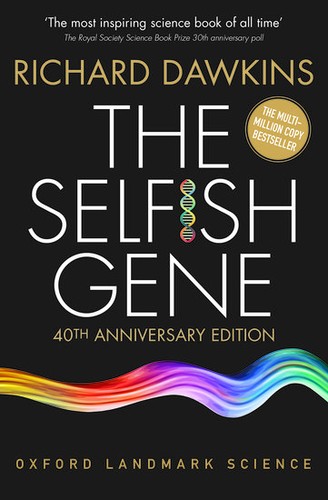
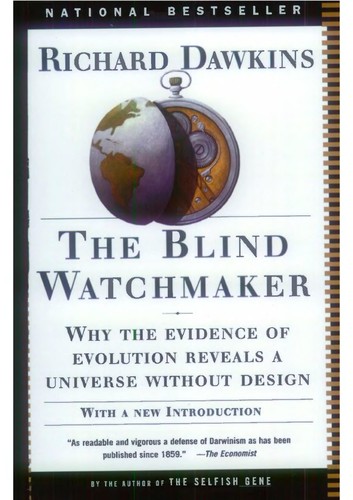
The Greatest Show on Earth is Richard Dawkins's systematic presentation of the evidence for evolution by natural selection. Dawkins wrote it partly in frustration: The Selfish Gene and The Blind Watchmaker explained how evolution works, but neither was primarily a book about the evidence that it happened. By 2009, with creationism still actively contesting science education in some countries, Dawkins felt a book making the direct evidentiary case was overdue.
The analogy Dawkins draws in the opening is pointed. He compares a biologist who doesn't address the evidence for evolution to a historian who spends all their time on the detail of Roman campaigns without mentioning that some people deny the Romans existed. The book then proceeds systematically: the fossil record, direct observation of evolution in real time (bacteria developing antibiotic resistance, dog breeding, the Lenski E. coli experiment), comparative anatomy and vestigial structures, biogeography, molecular genetics, and embryology.
The fossil record chapters are particularly strong. Dawkins addresses the creationist claim that transitional fossils are missing, showing that the record contains exactly what evolution predicts: a nested hierarchy of forms with shared ancestors, punctuated by rapid change at branchings. He is especially good on the distinction between a gap in the fossil record (which is always expected, given how rarely fossilization occurs) and the absence of evidence for specific transitions that evolution requires.
The molecular genetics section, drawing on DNA comparison and the genetic code, is arguably the strongest modern evidence for common descent, and Dawkins explains it clearly. Pseudogenes — broken copies of functional genes in the same positions in related species — provide a particularly elegant argument: they are scars of shared evolutionary history that make no sense under any alternative hypothesis. The Greatest Show on Earth is a useful companion to Dawkins's earlier work and a reference for readers who want the evidence assembled in one place.
Talk to The Greatest Show on Earth: The Evidence for Evolution like its author wrote you back.
Get the ideas that fit your life — not generic summaries.
- Chat with the book
- Audiobook-style main ideas
- Adapts to your life and goals
- Helps you take action
Key takeaways
- 1.
Evolution is a fact, not a theory in the colloquial sense. The theory of evolution explains how it works; the evidence that it happened is as secure as the evidence that the Earth orbits the Sun.
- 2.
The fossil record shows exactly what evolution predicts: a nested hierarchy of forms with shared ancestors. Gaps are expected given the rarity of fossilization, not evidence against common descent.
- 3.
Direct observation confirms evolution: the Lenski E. coli experiment, bacteria evolving antibiotic resistance, and dog breeding over centuries all demonstrate evolution in real time.
- 4.
Vestigial structures — reduced or non-functional remnants of once-useful organs — make no sense under intelligent design but are exactly what evolution predicts.
- 5.
Biogeography — the distribution of species across continents and islands — follows the patterns evolution predicts: species are found where their ancestors were, not where they would be most useful.
- 6.
Pseudogenes are broken copies of functional genes that appear in the same chromosomal positions in related species. They are molecular scars of shared evolutionary history.
- 7.
DNA comparison across species confirms the tree of life: the more recently two species shared a common ancestor, the more similar their genomes, with remarkable precision matching what the fossil record shows.
- 8.
Embryology reveals evolutionary history: human embryos briefly develop gill slits, a tail, and other features that reflect our vertebrate ancestry, not our adult anatomy.
Discussion questions
Use these on your own, with a book club, or as chat starters in Superbook. Book club version, ready to copy or print →
- 1.
Dawkins opens with the analogy of a Roman historian who must defend the existence of Rome. Is that analogy fair, or does it understate the strength of creationist arguments?
- 2.
The fossil record is incomplete by nature, yet it still confirms evolution's predictions. How do you evaluate evidence from a necessarily incomplete record?
- 3.
The Lenski E. coli experiment ran for over 30 years and observed novel metabolic abilities evolving. Does direct observation of evolution feel qualitatively different from inferring it from the fossil record?
- 4.
Pseudogenes appear in the same broken form in related species. Is that the most convincing molecular evidence for common descent, or is there something stronger?
- 5.
Vestigial structures like the human coccyx and wisdom teeth cause real problems for real people. Does that count as evidence against intelligent design, or is it compatible with some versions of it?
- 6.
Biogeography shows that species are distributed where their ancestors were, not where they'd be most usefully placed. Why do you think this argument gets less attention than the fossil record in popular discussions of evolution?
- 7.
Dog breeding demonstrates that extreme phenotypic diversity can emerge from selection over centuries. What does that imply about what selection over millions of years can produce?
- 8.
Dawkins is openly combative about creationism in this book. Does that tone help or hurt the book's persuasive goal with someone who is genuinely uncertain?
- 9.
The genetic code is essentially universal across all life. What does that imply about the last universal common ancestor, and how confident can we be about inferences that far back?
- 10.
Which piece of evidence in the book did you find most convincing? Which felt least clear to you, or in most need of additional explanation?
- 11.
Evolution by natural selection has no goal or direction. What does that imply about human exceptionalism — are we just one result among countless contingent possibilities?
- 12.
Dawkins distinguishes between evolution as fact and the theory of evolution as mechanism. Is that a useful distinction in practice, or does it invite misunderstanding?
Themes
Frequently asked questions
-
Is The Greatest Show on Earth worth reading?
Yes, particularly if you want the full evidentiary case for evolution assembled in one book. The chapters on pseudogenes, the Lenski experiment, and biogeography are especially good. Readers who have already read The Blind Watchmaker will find this complements rather than repeats it.
-
How long is The Greatest Show on Earth?
About 470 pages. At average reading pace that is roughly seven hours. The chapters are organized by type of evidence and can be read somewhat independently, though the argument builds.
-
What is the strongest evidence for evolution in this book?
Dawkins makes the strongest case for pseudogenes and molecular genetics: broken copies of functional genes in the same chromosomal positions across related species provide evidence for common descent that is almost impossible to explain otherwise. The direct observational evidence from the Lenski experiment is also striking.
-
Is this book suitable for someone skeptical of evolution?
Dawkins writes for a skeptical reader, systematically addressing common objections. The tone is occasionally combative, which may be off-putting. But the evidence is presented carefully, and the book does not require prior scientific knowledge.
-
How does this compare to Dawkins's other books?
The Selfish Gene explains the mechanism (gene-centered selection). The Blind Watchmaker explains how complexity arises. The Greatest Show on Earth presents the evidence that evolution actually happened. They address different questions and complement each other well.