Psychology · Book club
The Happiness Hypothesis book club questions
Here are 12 book club questions for The Happiness Hypothesis by Jonathan Haidt, ordered to open easily and end somewhere worth arguing about. Copy them, print them, or bring them up one at a time.
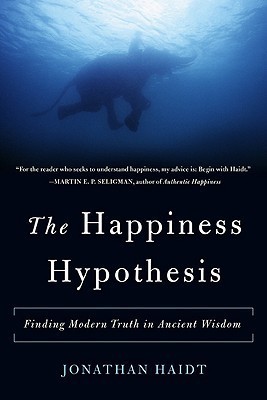
Jonathan Haidt is a social psychologist at NYU who spent the early part of his career studying morality and happiness, and this book — published in 2006, before his work on political psychology brought him wider attention — synthesizes ancient philosophical wisdom with modern psychological research.
Jonathan Haidt · 2006 · 5h 20m
Full summary and key takeaways →The 12 questions
- 1.
Haidt's rider-elephant metaphor suggests that rational argument rarely changes deep emotional commitments. What has actually changed your mind about something important in your life?
- 2.
The hedonic treadmill implies that most things we want won't produce lasting happiness. Can you identify something you pursued, got, and found less satisfying than anticipated?
- 3.
He argues that adversity, when meaning is made of it, can produce genuine growth. Is there an experience of difficulty in your life that has shaped you in ways you value, even though you wouldn't choose it?
- 4.
Haidt distinguishes between within-person strategies (changing your thoughts) and person-environment fit as sources of happiness. Which do you think you have more control over?
- 5.
The signature strengths concept from positive psychology suggests that using your core strengths in work and relationships produces more engagement than fixing weaknesses. What are your signature strengths, and how often do you actually use them?
- 6.
He surveys happiness research from Buddhism, Stoicism, and Christianity. Which ancient tradition's advice do you find most compatible with contemporary psychology?
- 7.
The meaning and coherence section argues that people need a story about their life that connects past, present, and future. How coherent is your story right now?
- 8.
Haidt argues that relationship quality predicts happiness more than almost any other variable. How do you think about investment in relationships relative to other things you invest time in?
- 9.
The gratitude and savoring prescriptions have solid empirical support. Have you tried either deliberately? What happened?
- 10.
He wrote this before his political psychology work, which is more pessimistic about human rationality. Does the optimism of this book feel consistent with what he concluded in The Righteous Mind?
- 11.
Which of the ten great ideas he evaluates do you find most accurate in your own experience?
- 12.
If the happiness formula suggests set point is the biggest term and conditions are the smallest, what are the implications for how much effort to put into changing your circumstances versus your interpretation of them?
How to run the discussion
- Pick six to eight, not all of them. An hour of real discussion covers fewer questions than anyone expects, and racing the list is what makes a book club feel like homework.
- Open with what people noticed, not what they concluded. Asking for a verdict first hardens opinions before anyone has heard each other.
- Let the disagreement run. The questions below that split a room are the ones worth the time; the ones everyone answers the same way can be skipped.
- Ask the quiet person a specific question. A direct, narrow question is far easier to answer than an open invitation to contribute.
Themes worth steering toward
If the conversation stalls, these are the threads that usually restart it.
Common questions
What are good book club questions for The Happiness Hypothesis?
Here are 12 book club questions for The Happiness Hypothesis by Jonathan Haidt, ordered to open easily and end somewhere worth arguing about. The strongest openers ask what each reader noticed rather than what they concluded, and the discussion usually turns on happiness, ancient wisdom, positive psychology.
How long should a book club discussion of The Happiness Hypothesis last?
Most groups run 60 to 90 minutes of actual discussion. That is roughly six to eight questions, not all of them, so pick the ones that suit your group rather than working down the list in order.
What are the main themes in The Happiness Hypothesis?
Happiness, Ancient wisdom, Positive psychology, Meaning, Morality. Those are the threads most likely to divide a room, which makes them the useful places to steer a discussion that has gone quiet.
Picking the next one? See books like The Happiness Hypothesis or questions for other book club picks.
