Romance · Book club
The Hating Game book club questions
Here are 11 book club questions for The Hating Game by Sally Thorne, ordered to open easily and end somewhere worth arguing about. Copy them, print them, or bring them up one at a time.
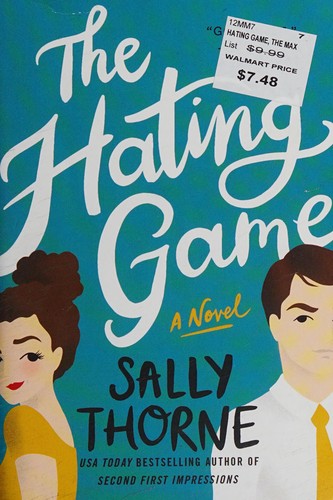
Lucy Hutton and Joshua Templeman are co-assistants to the joint CEOs of a publishing company formed by a merger, sharing a tiny office, facing each other across identical desks, and conducting an elaborate cold war of small competitions and veiled hostilities.
Sally Thorne · 2016 · 6h 15m
Full summary and key takeaways →The 11 questions
- 1.
The hating game is really a watching game — Lucy and Joshua have been studying each other for months before the novel opens. What does that mutual surveillance suggest about what the hostility was actually about?
- 2.
Lucy is compulsively accommodating with everyone except Joshua. What does her willingness to fight with him suggest that her niceness elsewhere doesn't?
- 3.
Joshua's emotional distance is presented as protective rather than cruel — he's guarded rather than cold. Does the novel fully justify the behavior that distance produces, particularly in the first half?
- 4.
The shared-office setup is a compression device. How much does the novel depend on confinement? Would it work the same way if they could simply avoid each other?
- 5.
Lucy consistently misreads Joshua's signals. Is that failure of reading realistic, or does the novel stretch credulity to delay the resolution?
- 6.
The novel has almost no supporting characters of substance — colleagues are mostly furniture. Does that absence limit the world of the book, or is it the right call for a story this focused?
- 7.
The professional competition between Lucy and Joshua for a promotion is never fully resolved in a satisfying way. Does that feel like a deliberate choice or an unresolved thread?
- 8.
The Hating Game is widely credited with reviving the enemies-to-lovers subgenre. What does the enormous appetite for that particular arc tell us about readers?
- 9.
Lucy's voice is funny, obsessive, and occasionally exhausting. How much of your enjoyment of the book depended on liking her narration?
- 10.
Joshua is revealed to be more emotionally intelligent than he appears. Was the reveal convincing, or did it feel like the novel backfilling to make him worthy of Lucy?
- 11.
What does the novel suggest about the relationship between competition and desire — is wanting to beat someone and wanting to be with them actually that different?
How to run the discussion
- Pick six to eight, not all of them. An hour of real discussion covers fewer questions than anyone expects, and racing the list is what makes a book club feel like homework.
- Open with what people noticed, not what they concluded. Asking for a verdict first hardens opinions before anyone has heard each other.
- Let the disagreement run. The questions below that split a room are the ones worth the time; the ones everyone answers the same way can be skipped.
- Ask the quiet person a specific question. A direct, narrow question is far easier to answer than an open invitation to contribute.
Themes worth steering toward
If the conversation stalls, these are the threads that usually restart it.
Common questions
What are good book club questions for The Hating Game?
Here are 11 book club questions for The Hating Game by Sally Thorne, ordered to open easily and end somewhere worth arguing about. The strongest openers ask what each reader noticed rather than what they concluded, and the discussion usually turns on enemies to lovers, workplace tension, vulnerability and defenses.
How long should a book club discussion of The Hating Game last?
Most groups run 60 to 90 minutes of actual discussion. That is roughly six to eight questions, not all of them, so pick the ones that suit your group rather than working down the list in order.
What are the main themes in The Hating Game?
Enemies to lovers, Workplace tension, Vulnerability and defenses, Competition and ambition, Trust and intimacy. Those are the threads most likely to divide a room, which makes them the useful places to steer a discussion that has gone quiet.
Picking the next one? See books like The Hating Game or questions for other book club picks.
