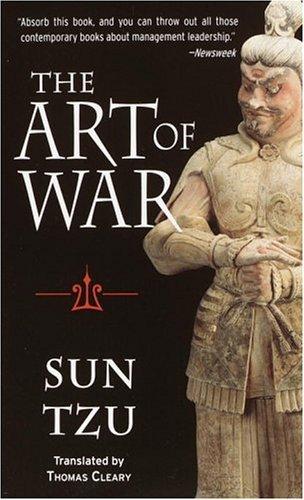
History of the Peloponnesian War by Thucydides is a 1628 history book about war, power, democracy. The 'Thucydides Trap': when a rising power threatens an established one, war becomes structurally likely even without intention or incident on either side.
Summary
Thucydides' account of the twenty-seven-year conflict between Athens and Sparta stands as the founding document of political realism and the first work of history that treats evidence and causation as problems to be solved rather than stories to be told. Written by an Athenian general who was exiled during the war and used his exile to gather accounts from both sides, it covers the period from 431 to 411 BCE with a thoroughness and analytical rigor that still makes historians uncomfortable when they measure themselves against it.
The central argument Thucydides makes, never stated quite so bluntly but impossible to miss, is that what caused the war was the growth of Athenian power and the fear this instilled in Sparta. This observation, now known as the Thucydides Trap, has been applied to every subsequent era of great-power rivalry. The narrative moves through the plague that killed Pericles, the disastrous Sicilian Expedition, democratic demagogy, oligarchic coup, and the slow deterioration of Athenian judgment under prolonged stress.
The set-piece speeches — the Funeral Oration of Pericles, the Melian Dialogue, the Mytilenean Debate — are the most analyzed passages in the history of political thought. They dramatize the tension between ideals and interests with a clarity that most political writing since has only obscured. The Melian Dialogue in particular, where Athenian envoys tell the neutral Melians that the strong do what they can and the weak suffer what they must, reads less like history and more like a warning that has never expired.
Thucydides never finished the work — it breaks off mid-sentence in 411 BCE. What survives rewards patience. The prose, even in translation, is dense and elliptical. The rewards are in proportion: a framework for thinking about interstate conflict, democratic dysfunction, and the way power corrodes the judgment of those who hold it that remains as fresh as anything written since.
Talk to History of the Peloponnesian War like its author wrote you back.
Get the ideas that fit your life — not generic summaries.
- Chat with the book
- Audiobook-style main ideas
- Adapts to your life and goals
- Helps you take action
Key takeaways
- 1.
The 'Thucydides Trap': when a rising power threatens an established one, war becomes structurally likely even without intention or incident on either side.
- 2.
The Melian Dialogue establishes the realist axiom: in the absence of enforceable justice, the strong do what they can and the weak suffer what they must.
- 3.
Pericles' Funeral Oration articulates Athenian democratic ideals at their peak — and the Sicilian Expedition that follows shows how quickly those ideals can be abandoned for imperial ambition.
- 4.
Democratic demagogy is a structural vulnerability: the same open debate that makes Athenian democracy admirable also makes it prone to manipulation by clever speakers pursuing their own interests.
- 5.
The plague at Athens is described with clinical detachment as an event that destroyed social bonds and made people rational about self-preservation in ways that undermined the community.
- 6.
Prolonged war degrades the moral vocabulary of both sides. Words change meaning: recklessness becomes courage, cautious deliberation becomes cowardice.
- 7.
Thucydides presents himself not as a neutral recorder but as an analyst who cross-examined witnesses and weighed contradictions. His method defines history as a discipline.
- 8.
The Sicilian Expedition — Athens attacking a distant island at the height of its power — is the canonical example of imperial overreach driven by collective delusion.
Discussion questions
Use these on your own, with a book club, or as chat starters in Superbook. Book club version, ready to copy or print →
- 1.
Thucydides argues the real cause of the war was Athenian power growth, not the specific incidents that triggered it. Do you find this structural explanation satisfying, or does it explain too much?
- 2.
The Melian Dialogue ends with the Athenians slaughtering the Melians. Does the dialogue make Athens look more or less culpable than a simple narrative account would?
- 3.
Pericles argues Athens is worth dying for in the Funeral Oration. How does his argument hold up against what Athens actually does over the course of the war?
- 4.
Thucydides was exiled by Athens for military failure. How does that biography shape your reading of his account of Athenian self-destruction?
- 5.
The 'Thucydides Trap' has been applied to US-China relations. Do you think the structural logic Thucydides describes translates across 2,400 years of changed political context?
- 6.
Cleon, the demagogue who advocates for mass punishment of Mytilene, is presented without sympathy. What's the difference between Thucydides' editorial voice and simple bias?
- 7.
The plague chapters describe how catastrophe breaks down the norms that hold societies together. What parallels have you seen in more recent collective crises?
- 8.
Thucydides never explicitly moralizes. Does the absence of explicit judgment make the history more or less powerful as a moral argument?
- 9.
The Sicilian Expedition is approved by democratic vote despite expert opposition. What does Thucydides seem to think about democracy's capacity for strategic self-discipline?
- 10.
Where in the modern world do you see the dynamic Thucydides describes — allies becoming burdens, neutral parties being coerced, and great powers convincing themselves their aggression is defensive?
- 11.
The narrative breaks off unfinished. Does the incompleteness change how you think about what Thucydides was trying to accomplish?
- 12.
What does Thucydides mean when he says he writes for 'those who wish to understand clearly the events which happened in the past and which human nature being what it is will at some time or other recur'?
Themes
Frequently asked questions
-
Is History of the Peloponnesian War still relevant today?
Yes. The structural argument about rising-power conflict, the analysis of democratic demagogy, and the Melian Dialogue's statement of realpolitik are referenced in contemporary international relations scholarship as often as anything written in the last fifty years. The specific events are ancient; the dynamics are not.
-
Which translation of the Peloponnesian War should I read?
The Penguin Classics translation by Rex Warner (ISBN 9780140440393) is the most widely used modern translation. It reads more naturally than earlier versions while preserving Thucydides' analytic density. The Landmark Thucydides edition by Strassler adds maps and notes that help with geography.
-
How long does it take to read the Peloponnesian War?
Roughly twelve hours at average reading pace, though the density of the prose means most readers spend considerably longer. Reading in focused sessions with some annotation is more productive than trying to push through quickly.
-
What is the Thucydides Trap?
The political scientist Graham Allison coined the term to describe Thucydides' observation that when a rising power threatens an established one, structural pressures toward war become very strong even if neither side wants war. Allison applied the concept to US-China competition in his 2017 book Destined for War.
-
Who should read History of the Peloponnesian War?
Readers interested in political science, military history, or the origins of democratic thought will get the most from it. It rewards patience and some background knowledge of Greek geography and politics. It is not an easy read, but the payoff in frameworks for understanding interstate conflict is substantial.