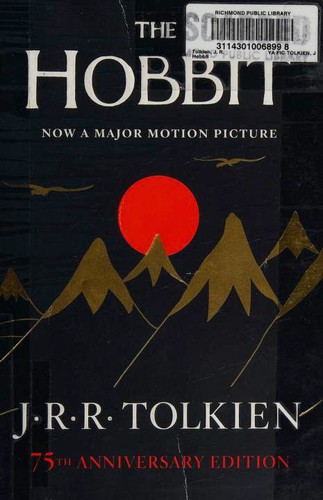
Talk to The Hobbit like its author wrote you back.
Get the ideas that fit your life — not generic summaries.
- Chat with the book
- Audiobook-style main ideas
- Adapts to your life and goals
- Helps you take action
The Hobbit, in detail
Bilbo Baggins is a thoroughly respectable hobbit who has no interest in adventures, danger, or anything that might interfere with his meals. When the wizard Gandalf and thirteen dwarves arrive at his door and recruit him as their "burglar" for an expedition to reclaim the dwarves' stolen mountain kingdom from the dragon Smaug, Bilbo goes — partly because Gandalf has vouched for him and partly because something unexpected stirs in him. The journey takes him through encounters with trolls, goblins, wood-elves, giant spiders, and a creature called Gollum who owns a very unusual ring.
The Hobbit is a lighter, younger story than The Lord of the Rings, written as a bedtime story and narrated in a voice that addresses the reader directly and reassures them that things will be all right. But it is also where the Ring enters the story, where Bilbo's character is established, and where the geography and peoples of Middle-earth are first described. The relationship between the two books is something like the relationship between a children's fairy tale and the larger mythology it spawned — The Hobbit is the accessible entry point, The Lord of the Rings is where those seeds grow into something more complicated.
Tolkien's dwarves are vivid characters individually, and Thorin Oakenshield is a genuinely interesting study in how the desire to reclaim what was lost can corrupt the judgment of an otherwise admirable leader. The book's darkest section — the Battle of Five Armies, the death of Smaug, and the prolonged standoff over the dragon's hoard — explores how quickly the discovery of treasure converts allies into adversaries. "Dragon-sickness," as Tolkien calls it, is one of the book's most resonant concepts.
The Hobbit is appropriate for children who are comfortable with sustained narrative and light violence, but it works equally well for adults reading it for the first time or re-reading it as context for The Lord of the Rings. It is shorter, funnier, and kinder than its sequel, and it has a specific quality of coziness in its adventure that the larger trilogy deliberately sacrifices. Bilbo's return to Bag-End at the end is one of Tolkien's most satisfying pages.
The big ideas
- 1.
Bilbo's growth as a character is the book's moral center: he begins as someone who values comfort above all and ends as someone capable of courage, generosity, and sacrifice, without losing his love of home.
- 2.
Dragon-sickness — the irrational hoarding behavior that possession of great treasure produces — affects Thorin and changes him from a proud leader into something frightening. It's the book's sharpest piece of psychology.
- 3.
Gollum's riddle contest with Bilbo is the chapter that connects directly to The Lord of the Rings; it's also one of Tolkien's best set-pieces, genuinely tense and with an ambiguous moral resolution.
