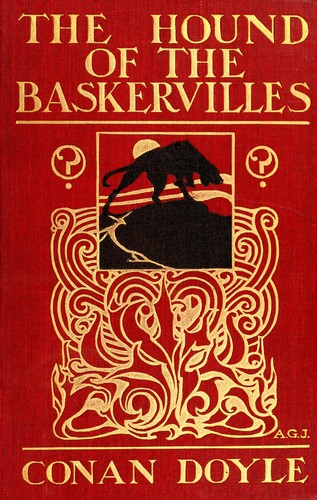
Talk to The Hound of the Baskervilles like its author wrote you back.
Get the ideas that fit your life — not generic summaries.
- Chat with the book
- Audiobook-style main ideas
- Adapts to your life and goals
- Helps you take action
What it argues
The Baskerville family has been haunted for generations by the legend of a spectral hound — a creature of supernatural vengeance said to pursue the heirs of a wicked ancestor across the Dartmoor fog. When the latest heir dies under mysterious circumstances, his doctor brings the case to Sherlock Holmes, who sends Watson ahead to the Devonshire moors with the new heir while he remains in London. The setup allows Conan Doyle to run the novel half as Gothic horror and half as detective story, and the combination is what makes it his most successful long-form work.
The Holmes novels vary considerably in quality — The Valley of Fear and The Sign of the Four are uneven — but Hound is tight and atmospheric in a way none of the others quite achieve. Much of this is Watson's narration from Dartmoor in Holmes's absence: the moors are fog, treacherous bogs, strange lights, unexplained howling. The supernatural pressure is maintained long enough that even readers who know Holmes will deliver a rational solution may find themselves unsure. Conan Doyle understood that the Gothic requires sustained dread, not just a spooky setting.
What it gets right
- 1.
The novel is structurally built on a tension between two explanatory modes: the supernatural and the rational. Conan Doyle runs them in parallel long enough to make even confident readers uncertain.
- 2.
Watson as sole narrator for much of the novel — rather than Watson-reporting-Holmes — gives the book a different texture than the short stories. The uncertainty is more sustained because Watson genuinely doesn't know.
- 3.
Holmes's strategic absence from the moors is a piece of formal misdirection: it forces the reader to sit with Watson's limited perspective before the revelation of what was actually happening.
What it covers
Who wrote it
Arthur Conan Doyle (1859–1930) was a Scottish writer and physician best known for creating Sherlock Holmes and Dr. Watson. He wrote four novels and 56 short stories featuring Holmes, collected into five volumes. Beyond Holmes, he wrote historical novels, science fiction (The Lost World), and journalism. He was knighted in 1902. The Hound of the Baskervilles, published in 1902, was written as a prequel after Conan Doyle had already killed Holmes — which perhaps explains its unusually complete construction as a stand-alone novel.
