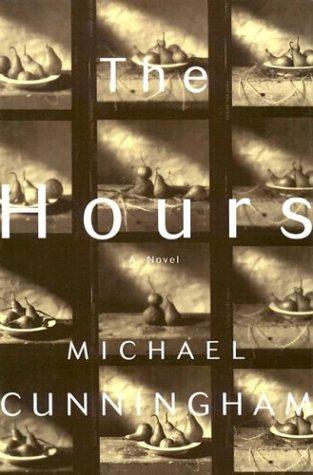
Talk to The Hours like its author wrote you back.
Get the ideas that fit your life — not generic summaries.
- Chat with the book
- Audiobook-style main ideas
- Adapts to your life and goals
- Helps you take action
What it argues
The Hours follows three women across three different time periods, each living a single day, each connected to Virginia Woolf's Mrs Dalloway. Virginia Woolf herself appears in 1923, writing the opening of her novel in Richmond while battling the depression and creative restlessness that will eventually lead to her suicide. Laura Brown appears in 1949 Los Angeles, a housewife reading Mrs Dalloway while baking a birthday cake for her husband and feeling the first tremors of a life she cannot bear. Clarissa Vaughan appears in 1990s New York — a contemporary woman who has been called "Mrs Dalloway" by her oldest friend, a dying poet named Richard, and who is preparing a party in his honor.
The novel's structure is its argument: the same day, the same accumulation of small choices and private thoughts, lived by women in radically different circumstances, all circling the same questions — what does a life mean when it is mostly spent in service of others? What does it cost to want something for yourself? Cunningham is not interested in plot; he is interested in interiority, in the texture of hours as they pass and the gap between what a woman shows and what she feels.
What it gets right
- 1.
The structure — three women, three eras, one day — argues that certain questions about women's lives are not historically specific: the constraints change, the feeling of entrapment recurs.
- 2.
Laura Brown's decision to leave her family is treated with moral seriousness rather than condemnation, which is one of the novel's more controversial choices.
- 3.
Virginia Woolf is rendered as a person, not a monument — irritable, brilliant, struggling, deeply afraid of hospitalization, and choosing death with what the novel frames as a kind of clarity.
What it covers
Who wrote it
Michael Cunningham is an American novelist born in Cincinnati in 1952 and raised in Los Angeles. He studied at Stanford University and the University of Iowa Writers' Workshop. His novels include A Home at the End of the World (1990), Flesh and Blood (1995), The Hours (1998), Specimen Days (2005), and The Snow Queen (2014). The Hours won the Pulitzer Prize for Fiction and the PEN/Faulkner Award in 1999. He teaches creative writing at Yale University.
