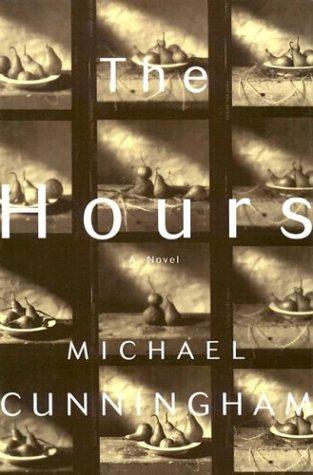
The Hours by Michael Cunningham is a 1998 literary fiction book about mental illness and suicide, women's interiority, the passage of time. The structure — three women, three eras, one day — argues that certain questions about women's lives are not historically specific: the constraints change, the feeling of entrapment recurs.
Summary
The Hours follows three women across three different time periods, each living a single day, each connected to Virginia Woolf's Mrs Dalloway. Virginia Woolf herself appears in 1923, writing the opening of her novel in Richmond while battling the depression and creative restlessness that will eventually lead to her suicide. Laura Brown appears in 1949 Los Angeles, a housewife reading Mrs Dalloway while baking a birthday cake for her husband and feeling the first tremors of a life she cannot bear. Clarissa Vaughan appears in 1990s New York — a contemporary woman who has been called "Mrs Dalloway" by her oldest friend, a dying poet named Richard, and who is preparing a party in his honor.
The novel's structure is its argument: the same day, the same accumulation of small choices and private thoughts, lived by women in radically different circumstances, all circling the same questions — what does a life mean when it is mostly spent in service of others? What does it cost to want something for yourself? Cunningham is not interested in plot; he is interested in interiority, in the texture of hours as they pass and the gap between what a woman shows and what she feels.
Cunningham writes in a close third-person style clearly influenced by Woolf's own prose — long sentences, interior rhythm, attention to sensory detail as a conduit for emotion. He does this without pastiche; the Woolf sections feel genuinely inhabited rather than performed. The novel is short, beautifully controlled, and moves very quickly despite its meditative pace. It won the Pulitzer Prize in 1999 and was adapted into an acclaimed film in 2002 with Nicole Kidman, Julianne Moore, and Meryl Streep.
The Hours works best for readers who have some familiarity with Mrs Dalloway, though it is not required. It is a novel about the cost of consciousness — of feeling too much, of wanting more than your life seems to allow, of spending a day in proximity to death and deciding, or not deciding, to go on. It is not a cheerful book, but it is not a hopeless one.
Talk to The Hours like its author wrote you back.
Get the ideas that fit your life — not generic summaries.
- Chat with the book
- Audiobook-style main ideas
- Adapts to your life and goals
- Helps you take action
Key takeaways
- 1.
The structure — three women, three eras, one day — argues that certain questions about women's lives are not historically specific: the constraints change, the feeling of entrapment recurs.
- 2.
Laura Brown's decision to leave her family is treated with moral seriousness rather than condemnation, which is one of the novel's more controversial choices.
- 3.
Virginia Woolf is rendered as a person, not a monument — irritable, brilliant, struggling, deeply afraid of hospitalization, and choosing death with what the novel frames as a kind of clarity.
- 4.
The relationship between art and survival is central: Mrs Dalloway keeps Laura alive for a day; Richard has spent his life writing and it has not saved him.
- 5.
Ordinary domestic time — baking, party preparation, walking through a city — is given the same weight as illness, suicide, and grief, which is the novel's Woolfian inheritance.
- 6.
Clarissa's party, like Dalloway's party, is a way of organizing life around giving pleasure to others rather than confronting what she wants for herself.
- 7.
Death is present in all three storylines but never sensationalized; the novel approaches it as a presence to be negotiated rather than a crisis to be survived.
- 8.
The formal rigor — the echoes across the three timelines, the repetitions that gradually reveal themselves as significant — rewards rereading.
Discussion questions
Use these on your own, with a book club, or as chat starters in Superbook. Book club version, ready to copy or print →
- 1.
The novel connects three women across seventy years. What do you think Cunningham is arguing about what is constant in women's experience across that span?
- 2.
Laura Brown leaves her family. The novel does not condemn her. Do you? How does knowing what she becomes later change how you judge that choice?
- 3.
Cunningham's version of Virginia Woolf chooses death in the prologue. How did that choice — to begin with the ending — shape how you read the novel?
- 4.
Richard has been a literary star who spent his life writing. He is dying and sees his work as a failure. Is the novel critical of how literary culture works, or just sad about it?
- 5.
Clarissa's greatest love is Sally, not Richard. The novel is not particularly interested in their relationship. Why not?
- 6.
Mrs Dalloway gives Laura Brown something essential on the day she reads it. Have you ever had that experience with a book — a work of art that held you together at a specific moment?
- 7.
The prose in the Woolf sections mimics Woolf's style without becoming pastiche. Did you find that successful? Where does homage end and imitation begin?
- 8.
The Hours is a novel about depression and suicide written in a way that is not harrowing. Is that a formal achievement or a form of evasion?
- 9.
Which of the three women did you feel most connected to, and does your answer say something about where you are in your own life?
- 10.
The film with Kidman, Moore, and Streep is considered one of the best literary adaptations of its era. Does knowing that affect how you read the novel?
- 11.
The novel ends with a kind of qualified hope. Does that feel earned?
Themes
Frequently asked questions
-
Do I need to read Mrs Dalloway first?
It helps. The Hours makes more sense — and its echoes land with more force — if you know Woolf's novel. That said, many readers have loved The Hours without having read Mrs Dalloway, and the book works as a standalone. If you want to read both, read Woolf first.
-
Is The Hours depressing to read?
It deals with depression, suicide, and dying, but it is not a harrowing read. Cunningham's tone is measured and the novel has a formal beauty that holds the darkness at a considered distance. Readers who find that kind of formal control cold may not connect with it, but it is not a book that leaves you devastated.
-
What is The Hours about, without spoilers?
Three women, three time periods, each living one day, each connected to Virginia Woolf's Mrs Dalloway. The novel is about interiority, the cost of ordinary life, and what women want from their lives when they are not allowed or not able to say it directly.
-
How does the film compare to the book?
The 2002 film with Nicole Kidman, Julianne Moore, and Meryl Streep is widely considered one of the better literary adaptations of its era. Philip Glass's score and the performances add something genuine; the film simplifies some of the interior material but compensates in other ways. Worth seeing after reading.
-
Is The Hours hard to read?
No. It's short, beautifully written, and moves quickly. The Woolf-influenced prose style requires some adjustment if you haven't read that kind of interior fiction before, but it is not difficult. Most readers finish in a single sitting or over a couple of evenings.
-
Who shouldn't read The Hours?
Readers who need plot-driven fiction or forward momentum. The novel is almost entirely interior, and the 'events' are mostly mental. Also readers who have difficulty with content involving depression, suicide, and terminal illness — those themes are central and treated seriously.