Classics · Book club
The Hunchback of Notre-Dame book club questions
Here are 12 book club questions for The Hunchback of Notre-Dame by Victor Hugo, ordered to open easily and end somewhere worth arguing about. Copy them, print them, or bring them up one at a time.
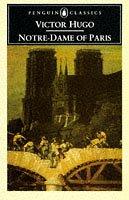
Set in Paris in 1482, The Hunchback of Notre-Dame centers on Quasimodo — deaf, disfigured, and wholly devoted to the cathedral that is his home — and Esmeralda, a young Romani street dancer whose beauty ignites obsession in several men simultaneously: Claude Frollo, the archdeacon who raised Quasimodo and whose repressed religious fervor curdles into predatory lust; Phoebus, the vain soldier who uses Esmeralda without feeling anything for her; and Quasimodo himself, who loves her with a wordless ferocity she cannot fully see.
Victor Hugo · 1831 · 12h 45m
Full summary and key takeaways →The 12 questions
- 1.
Hugo uses the cathedral as a structural and symbolic protagonist. Does that work for you as a reader, or does it feel like an intrusion into what should be a human drama?
- 2.
Frollo is the villain, but Hugo gives him a comprehensible psychology. Does your understanding of how he became what he became change how you feel about what he does?
- 3.
Esmeralda is drawn with sympathy but limited interiority. Is she a victim of the novel's male gaze, or is her function as an object of multiple desires the point?
- 4.
Quasimodo is the character most readers remember. Is his love for Esmeralda moving, pathetic, or both? Does it matter that she never truly sees it?
- 5.
The ending offers no redemption — Esmeralda is executed, Quasimodo disappears to die beside her. Is this true to the novel's worldview, or does it feel like Hugo punishing his characters?
- 6.
The word Anankè — fate — is meant to explain everything. Do you find that a satisfying framework, or does it feel like it lets the human characters off the hook for their choices?
- 7.
Hugo spent the first chapter and much of the novel on architecture, history, and politics. Did those chapters feel essential or like interruptions? What would be lost without them?
- 8.
The Disney adaptation reversed the ending and made Frollo's evil simpler. What do you lose when you remove Hugo's psychological complexity from Frollo?
- 9.
Pierre Gringoire, the poet, is the novel's comic observer. What does his presence accomplish that a purely tragic cast would not?
- 10.
Is Phoebus the most realistic male character in the novel precisely because he is the least romantic — a man who desires without devotion and survives by never caring enough to be destroyed?
- 11.
Hugo argues that the printing press killed architecture as the primary medium of civilization. Does that argument still hold? What is the primary medium of civilization now?
- 12.
Compare the Esmeralda-Quasimodo dynamic to other 'beauty and the beast' narratives you know. Where does Hugo's version differ in its moral logic?
How to run the discussion
- Pick six to eight, not all of them. An hour of real discussion covers fewer questions than anyone expects, and racing the list is what makes a book club feel like homework.
- Open with what people noticed, not what they concluded. Asking for a verdict first hardens opinions before anyone has heard each other.
- Let the disagreement run. The questions below that split a room are the ones worth the time; the ones everyone answers the same way can be skipped.
- Ask the quiet person a specific question. A direct, narrow question is far easier to answer than an open invitation to contribute.
Themes worth steering toward
If the conversation stalls, these are the threads that usually restart it.
Common questions
What are good book club questions for The Hunchback of Notre-Dame?
Here are 12 book club questions for The Hunchback of Notre-Dame by Victor Hugo, ordered to open easily and end somewhere worth arguing about. The strongest openers ask what each reader noticed rather than what they concluded, and the discussion usually turns on fate and predestination, desire and obsession, outcasts and society.
How long should a book club discussion of The Hunchback of Notre-Dame last?
Most groups run 60 to 90 minutes of actual discussion. That is roughly six to eight questions, not all of them, so pick the ones that suit your group rather than working down the list in order.
What are the main themes in The Hunchback of Notre-Dame?
Fate and predestination, Desire and obsession, Outcasts and society, Architecture and history, Injustice and cruelty. Those are the threads most likely to divide a room, which makes them the useful places to steer a discussion that has gone quiet.
Picking the next one? See books like The Hunchback of Notre-Dame or questions for other book club picks.
