Fantasy · Book club
The Hundred Thousand Kingdoms book club questions
Here are 12 book club questions for The Hundred Thousand Kingdoms by N.K. Jemisin, ordered to open easily and end somewhere worth arguing about. Copy them, print them, or bring them up one at a time.
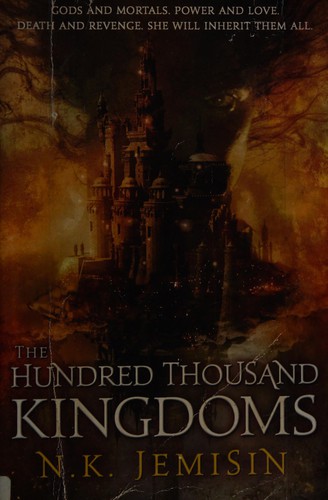
The Hundred Thousand Kingdoms is the first book in N.K.
N.K. Jemisin · 2010 · 7h 0m
Full summary and key takeaways →The 12 questions
- 1.
Yeine is summoned to compete for an inheritance she didn't ask for. At what point, if ever, does participation in a corrupt system make you responsible for it?
- 2.
Nahadoth is described as both terrifying and seductive. Do you think the novel is using that duality to say something specific about power, or does it risk romanticizing captivity?
- 3.
The Arameri maintain control through enslaved gods. What contemporary systems does this remind you of, and how deliberately do you think Jemisin intended those parallels?
- 4.
The novel's narration is retrospective and unstable. Did this structural choice draw you in or push you away? What was it doing that a conventional third-person narration couldn't?
- 5.
Yeine's mother left Sky and chose the north. What does the novel suggest about why, and what does it cost her daughter to finally understand that choice?
- 6.
The conquered Darre people are treated as primitive by the Arameri. How does Jemisin use Yeine's perspective to complicate or reverse that framing?
- 7.
Compared to A Darker Shade of Magic, which has a similar fantasy premise but a lighter tone, The Hundred Thousand Kingdoms is much heavier politically. Which approach do you find more interesting, and why?
- 8.
The enslaved gods cannot disobey orders but retain their own will and perspective. How does the novel use this tension to complicate the morality of those who give the orders?
- 9.
By the end of the novel, is Yeine a liberator, a victim, or something else? Does the novel's structure let you answer that question cleanly?
- 10.
Jemisin said the trilogy came from her thinking about race and power in America. How explicitly do you read those themes in the text, and does knowing that context change how you read it?
- 11.
The world-building here is myth-heavy and non-linear. Did it feel immersive or confusing? What would have helped orient you early?
- 12.
If you read the full trilogy, do the second and third books change how you understand this one? If you didn't, did the ending of this book feel complete?
How to run the discussion
- Pick six to eight, not all of them. An hour of real discussion covers fewer questions than anyone expects, and racing the list is what makes a book club feel like homework.
- Open with what people noticed, not what they concluded. Asking for a verdict first hardens opinions before anyone has heard each other.
- Let the disagreement run. The questions below that split a room are the ones worth the time; the ones everyone answers the same way can be skipped.
- Ask the quiet person a specific question. A direct, narrow question is far easier to answer than an open invitation to contribute.
Themes worth steering toward
If the conversation stalls, these are the threads that usually restart it.
Common questions
What are good book club questions for The Hundred Thousand Kingdoms?
Here are 12 book club questions for The Hundred Thousand Kingdoms by N.K. Jemisin, ordered to open easily and end somewhere worth arguing about. The strongest openers ask what each reader noticed rather than what they concluded, and the discussion usually turns on power and oppression, inheritance and legacy, gods and mortality.
How long should a book club discussion of The Hundred Thousand Kingdoms last?
Most groups run 60 to 90 minutes of actual discussion. That is roughly six to eight questions, not all of them, so pick the ones that suit your group rather than working down the list in order.
What are the main themes in The Hundred Thousand Kingdoms?
Power and oppression, Inheritance and legacy, Gods and mortality, Colonialism and resistance, Identity and self-determination. Those are the threads most likely to divide a room, which makes them the useful places to steer a discussion that has gone quiet.
Picking the next one? See books like The Hundred Thousand Kingdoms or questions for other book club picks.
