Talk to The Index Card like its author wrote you back.
Get the ideas that fit your life — not generic summaries.
- Chat with the book
- Audiobook-style main ideas
- Adapts to your life and goals
- Helps you take action
The Index Card, in detail
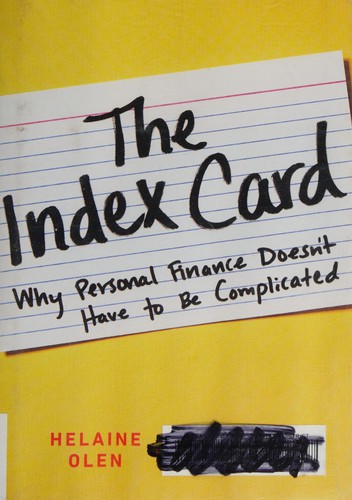
The Index Card began as a genuine index card. University of Chicago professor Harold Pollack scribbled his complete financial advice on one during an interview with journalist Helaine Olen, photographed it, and posted it online in 2013. It went viral. The premise — that everything you need to know about personal finance fits on a single index card — attracted millions of people exhausted by contradictory advice from an industry that profits by making money complicated.
Olen and Pollack's book expands those rules into chapters without diluting the core message: save 10 to 20 percent of your income, max out your tax-advantaged accounts, buy index funds, avoid actively managed funds and financial advisors who earn commissions, pay off your credit cards every month, and never try to time the market. Each rule gets historical context and a clear explanation of why the financial services industry actively discourages the behavior that most benefits ordinary investors.
The more pointed argument is structural. Olen, who wrote Pound Foolish as a critique of the personal finance industry, uses this book to explain why straightforward advice is rare: advisors are often paid by commissions tied to expensive products, and the financial media needs novel content even when stable boring advice works better. The index card format is a rebuke to that industry, not just a memory device.
The book is short, easy to read, and deliberately repetitive about the core rules. Some readers find the repeated emphasis reassuring; others find it thin. Anyone hoping for sophisticated tax optimization or estate planning will need other resources. What the book does well is give anxious people a firm foundation and a clear reason to stop making the situation more complicated than it needs to be.
The big ideas
- 1.
All essential personal finance advice fits on a single index card. Complexity in the financial services industry usually serves the advisor's interests more than the client's.
- 2.
Save 10 to 20 percent of your income, starting now. The exact amount matters less than the habit; saving 10 percent consistently beats saving 20 percent erratically.
- 3.
Max out tax-advantaged accounts first: 401(k), IRA, HSA. The tax savings compound over decades and are effectively free money from the government.
