Talk to The Innovator's Solution like its author wrote you back.
Get the ideas that fit your life — not generic summaries.
- Chat with the book
- Audiobook-style main ideas
- Adapts to your life and goals
- Helps you take action
What it argues
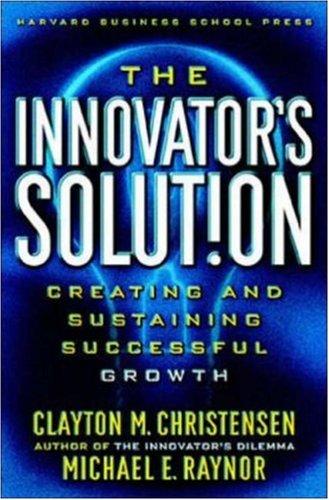
The Innovator's Solution is Christensen and Raynor's follow-up to The Innovator's Dilemma, which explained why great companies fail in the face of disruptive innovation. This book addresses the natural next question: if you understand the dilemma, how do you either become the disruptor or avoid being disrupted? It is more prescriptive than the first book, and it provides a more developed framework for thinking about where to play and how to win in disruptive innovation.
The book's central refinement is the distinction between sustaining innovation — making better products for existing customers — and disruptive innovation — introducing a simpler, cheaper solution that initially appeals to non-consumers or underserved customers before eventually improving to take over the mainstream. The Innovator's Dilemma showed why disruption happens; The Innovator's Solution addresses how to create and sustain disruptive growth deliberately.
What it gets right
- 1.
Sustaining innovation improves existing products for existing customers. Disruptive innovation initially serves non-consumers or underserved customers before improving to capture the mainstream.
- 2.
Jobs to Be Done: customers don't buy products — they hire them to accomplish something in their lives. Understanding the job drives better product design than demographic or psychographic segmentation.
- 3.
Non-consumption is the most reliable target for disruption. Finding people who aren't served by existing solutions — because they're too expensive, complicated, or inaccessible — identifies where disruption can enter.
What it covers
Who wrote it
Clayton M. Christensen was a professor at Harvard Business School until his death in 2020 and is considered one of the most influential business thinkers of his era. He created the theory of disruptive innovation, introduced in The Innovator's Dilemma in 1997, and developed it further in The Innovator's Solution and Competing Against Luck. He also wrote How Will You Measure Your Life? Michael E. Raynor is a managing director at Deloitte Services and the author of The Strategy Paradox. Together they sharpened the prescriptive applications of disruption theory in this 2003 follow-up.
