Talk to The Intelligent Investor like its author wrote you back.
Get the ideas that fit your life — not generic summaries.
- Chat with the book
- Audiobook-style main ideas
- Adapts to your life and goals
- Helps you take action
The Intelligent Investor, in detail
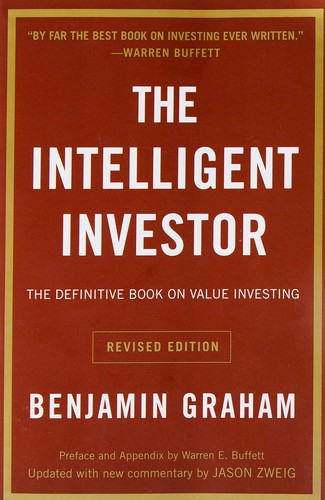
The Intelligent Investor is Benjamin Graham's case that successful investing has less to do with picking the right stocks than with managing your own behavior. First published in 1949 and revised several times before Graham's death in 1976, it remains the foundational text of value investing — the approach that informed Warren Buffett, who studied under Graham at Columbia and called this book "by far the best book on investing ever written."
Graham's central distinction is between the investor and the speculator. A speculator bets on price movements. An investor analyzes the underlying business, buys at a price that offers a margin of safety, and holds through market noise. Most people who think they are investing are speculating. The book is largely an effort to help readers tell the difference in their own behavior.
The most enduring idea is Mr. Market, Graham's allegory for the stock market as an emotionally unstable business partner who offers to buy or sell his stake every day at a price set by his mood. When Mr. Market is euphoric, his prices are too high. When he is despairing, his prices are too low. The intelligent investor has no obligation to act on Mr. Market's offers — but is free to take advantage of them when the price is obviously wrong. This framing separates market volatility from actual business value, which is the psychological foundation of every sensible long-term portfolio.
Graham distinguishes between defensive investors (who want safety and minimal effort) and enterprising investors (who are willing to do substantial research for better returns). Most people, he argues, should be defensive: hold a mix of bonds and diversified common stocks, rebalance periodically, and resist the temptation to chase performance. Enterprising investors can do more, but only through genuine analysis — not through tips, rumors, or narrative.
The updated edition includes commentary by Jason Zweig that connects Graham's 1970s examples to modern markets without diluting the original arguments. The result is dense in places, occasionally dated in its specific examples, but clearer in its core principles than anything written since.
The big ideas
- 1.
The market is a voting machine in the short run and a weighing machine in the long run. Price and value diverge constantly. The investor's edge is patience.
- 2.
Margin of safety is the central concept. Buy at a price significantly below your estimate of intrinsic value so that errors in your analysis don't ruin you.
- 3.
Mr. Market is your servant, not your guide. The market's daily mood swings are an opportunity to act, not a signal to follow.
