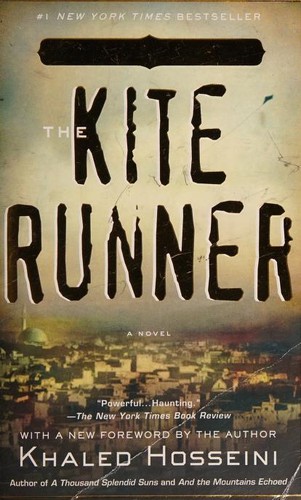
Talk to The Kite Runner like its author wrote you back.
Get the ideas that fit your life — not generic summaries.
- Chat with the book
- Audiobook-style main ideas
- Adapts to your life and goals
- Helps you take action
The Kite Runner, in detail
The Kite Runner opens in Kabul in the early 1970s and follows Amir, the son of a wealthy Pashtun merchant, and Hassan, the son of his father's Hazara servant. The boys are inseparable, with Hassan's devoted loyalty to Amir being one of the novel's early certainties. When Amir witnesses something terrible happen to Hassan and fails to intervene — an act of cowardice he cannot undo — the novel is set in motion. Afghanistan changes around them: the Soviet invasion, the exile of Amir's family to Pakistan and then the United States, the rise of the Taliban, and decades of distance and guilt.
The novel is built on the architecture of classic guilt narrative: a sin committed in youth, a life spent in its shadow, and the late possibility of something like atonement. Hosseini layers this personal story against Afghanistan's twentieth-century history — the country as Amir knew it in childhood becomes unrecognizable, and the novel uses that historical obliteration to ask what, if anything, can be redeemed from what has been destroyed. The return trip to Taliban-era Afghanistan in the second half is harrowing and drives the novel to its resolution.
Hosseini is a skilled storyteller in the classical sense — the novel is propulsive, emotionally direct, and structured around dramatic reversals and revelations. The prose is clear and unambiguous about what the reader should feel at each moment. This accessibility is also a common criticism: reviewers and readers who prefer formal complexity sometimes find the novel's emotional mechanics too visible, its symbolism too neat. The kite is a kite, and it means what it means, and it means it clearly. Whether that straightforwardness is a virtue or a limitation depends largely on what you want novels to do.
For many readers, The Kite Runner is the novel that made Afghanistan real as a place — not a theater of war but a country with history, culture, and specific human lives. That's not a small thing, and the novel deserves credit for it. It became one of the most widely read literary novels of the 2000s, generating conversations about race, class, ethnicity, and guilt that the story's directness facilitates rather than obstructs.
The big ideas
- 1.
Hassan's Hazara identity — and the structural discrimination Hazaras face from Pashtuns — is not incidental background but the axis on which the novel's central betrayal turns.
- 2.
Amir's cowardice is not a single moment but a pattern of choices — the novel shows how one failure of courage shapes a personality across decades.
- 3.
Baba, Amir's father, is a morally complex figure whose own secret — revealed late — recontextualizes his relationship with Amir and his moral authority throughout.
