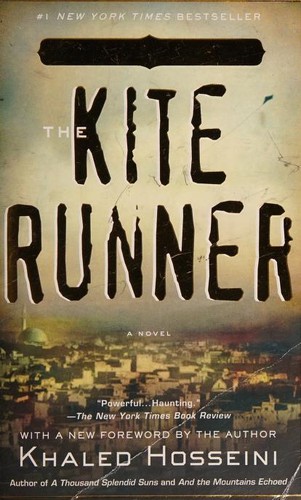
The Kite Runner by Khaled Hosseini is a 2003 literary fiction book about guilt and redemption, class and ethnic division, father-son relationships. Hassan's Hazara identity — and the structural discrimination Hazaras face from Pashtuns — is not incidental background but the axis on which the novel's central betrayal turns.
Summary
The Kite Runner opens in Kabul in the early 1970s and follows Amir, the son of a wealthy Pashtun merchant, and Hassan, the son of his father's Hazara servant. The boys are inseparable, with Hassan's devoted loyalty to Amir being one of the novel's early certainties. When Amir witnesses something terrible happen to Hassan and fails to intervene — an act of cowardice he cannot undo — the novel is set in motion. Afghanistan changes around them: the Soviet invasion, the exile of Amir's family to Pakistan and then the United States, the rise of the Taliban, and decades of distance and guilt.
The novel is built on the architecture of classic guilt narrative: a sin committed in youth, a life spent in its shadow, and the late possibility of something like atonement. Hosseini layers this personal story against Afghanistan's twentieth-century history — the country as Amir knew it in childhood becomes unrecognizable, and the novel uses that historical obliteration to ask what, if anything, can be redeemed from what has been destroyed. The return trip to Taliban-era Afghanistan in the second half is harrowing and drives the novel to its resolution.
Hosseini is a skilled storyteller in the classical sense — the novel is propulsive, emotionally direct, and structured around dramatic reversals and revelations. The prose is clear and unambiguous about what the reader should feel at each moment. This accessibility is also a common criticism: reviewers and readers who prefer formal complexity sometimes find the novel's emotional mechanics too visible, its symbolism too neat. The kite is a kite, and it means what it means, and it means it clearly. Whether that straightforwardness is a virtue or a limitation depends largely on what you want novels to do.
For many readers, The Kite Runner is the novel that made Afghanistan real as a place — not a theater of war but a country with history, culture, and specific human lives. That's not a small thing, and the novel deserves credit for it. It became one of the most widely read literary novels of the 2000s, generating conversations about race, class, ethnicity, and guilt that the story's directness facilitates rather than obstructs.
Talk to The Kite Runner like its author wrote you back.
Get the ideas that fit your life — not generic summaries.
- Chat with the book
- Audiobook-style main ideas
- Adapts to your life and goals
- Helps you take action
Key takeaways
- 1.
Hassan's Hazara identity — and the structural discrimination Hazaras face from Pashtuns — is not incidental background but the axis on which the novel's central betrayal turns.
- 2.
Amir's cowardice is not a single moment but a pattern of choices — the novel shows how one failure of courage shapes a personality across decades.
- 3.
Baba, Amir's father, is a morally complex figure whose own secret — revealed late — recontextualizes his relationship with Amir and his moral authority throughout.
- 4.
The novel argues that there is a way to be good again — but Hosseini is careful to show the cost and incompleteness of redemption rather than presenting it as full restoration.
- 5.
Afghanistan's history is threaded through individual lives without becoming an abstract backdrop — the Soviet invasion, the civil war, the Taliban are felt through specific characters.
- 6.
The Amir-Hassan dynamic encodes the Pashtun-Hazara ethnic hierarchy in intimate form, making structural discrimination visible through a personal relationship.
- 7.
Sohrab, Hassan's son, carries the novel's final weight — an image of what trauma does to children who survive what adults perpetrate.
- 8.
The novel's greatest technical achievement is making Amir sympathetic despite his choices, by showing the psychology of cowardice with unusual honesty.
Discussion questions
Use these on your own, with a book club, or as chat starters in Superbook. Book club version, ready to copy or print →
- 1.
Amir watches the assault on Hassan and does nothing. Is the novel too forgiving of him in the end, or does it earn its move toward redemption?
- 2.
Hassan's loyalty to Amir persists even after the assault. What does the novel make of that loyalty — is it virtue, conditioning, or tragedy?
- 3.
Baba's secret is one of the novel's central reversals. Does it complicate your reading of him as a moral figure, or does it make him more human?
- 4.
The Hazara-Pashtun hierarchy is the novel's ethnic substructure. Does Hosseini handle it with enough complexity, or does the personal story crowd out the structural one?
- 5.
Hosseini wrote this novel in English about an Afghan experience. Does that choice — to write for a Western audience — shape what the novel can and can't do?
- 6.
The Taliban section in the second half is the most harrowing part of the novel. Did it feel continuous with the first half, or like a different kind of book?
- 7.
Amir's return to Afghanistan is dangerous and partly driven by guilt rather than pure altruism. Does that ambiguity matter — does motivation change the moral value of the act?
- 8.
The kite-fighting imagery recurs throughout. Does it earn the symbolic weight Hosseini places on it, or does the symbolism feel imposed?
- 9.
The Kite Runner was controversial in Afghanistan for its depictions of ethnic tension and sexual violence. How do you think about that reception in relation to the novel's intentions?
- 10.
Compare the father-son relationship in this novel to another father-son story you know. What is Hosseini adding to that tradition?
- 11.
The ending provides resolution — it's one of the more optimistic of Hosseini's possible endings. Did you find it earned, or did it feel too neat given what came before?
- 12.
The novel was enormously popular. What do you think drove that? Is popularity a different kind of literary quality?
Themes
Frequently asked questions
-
Is The Kite Runner worth reading?
Yes, especially if you want a novel that carries its emotional weight directly rather than asking you to excavate it. It's one of the most effective guilt-and-redemption narratives in recent literary fiction, and it makes Afghanistan's twentieth-century history personally legible in a way that journalism rarely achieves.
-
Is The Kite Runner hard to read?
Not technically — the prose is clear and the story moves quickly. It's emotionally difficult in places, particularly the assault scene and the Taliban sections, but those are deliberately hard rather than formally challenging.
-
What happens in The Kite Runner, without major spoilers?
A wealthy Kabul boy fails to protect his closest friend and spends his adult life in exile, haunted by that failure. When he learns there's a chance to make amends — involving a dangerous return to Taliban-controlled Afghanistan — he takes it.
-
Who shouldn't read The Kite Runner?
Readers sensitive to depictions of sexual assault and child trauma. The novel contains scenes that are deliberately distressing and central to the plot. It also won't satisfy readers who want formal complexity or ambiguous, unsentimental endings — Hosseini's emotional mechanics are explicit and the novel moves toward resolution.
-
Is there a film adaptation?
Yes — a 2007 film directed by Marc Forster, largely faithful to the novel and filmed partly in China (standing in for Afghanistan). It was well-received critically though the child actors required relocation for safety reasons after the film's release.
Similar books
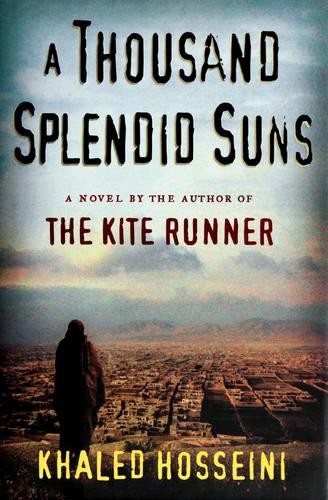
A Thousand Splendid Suns
Khaled Hosseini
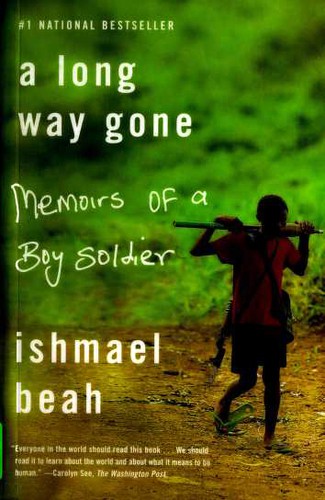
A Long Way Gone: Memoirs of a Boy Soldier
Ishmael Beah
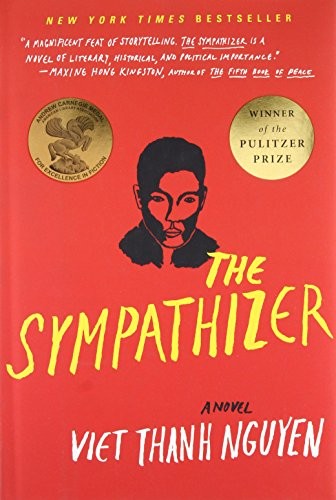
The Sympathizer
Viet Thanh Nguyen
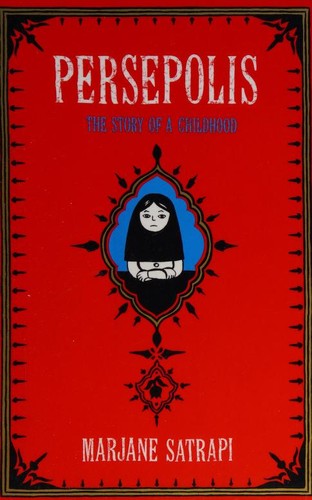
Persepolis: The Story of a Childhood
Marjane Satrapi
