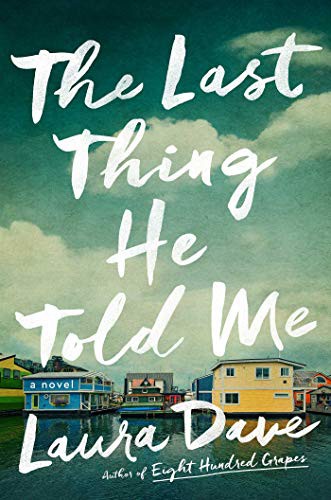
Talk to The Last Thing He Told Me like its author wrote you back.
Get the ideas that fit your life — not generic summaries.
- Chat with the book
- Audiobook-style main ideas
- Adapts to your life and goals
- Helps you take action
The Last Thing He Told Me, in detail
Hannah Hall's husband Owen doesn't come home from work on the day his tech company implodes in a federal investigation. He leaves her one note — two words: "Protect her." Her is Owen's sixteen-year-old daughter Bailey, who resents Hannah's presence in the family and has made little attempt to hide it. With federal marshals at the door, no idea where her husband is, and the unsettling discovery that she may not know him as well as she thought, Hannah has to figure out what Owen was protecting Bailey from — and whether she can trust the daughter who doesn't trust her.
The thriller mechanics are tightly wound: short chapters, a propulsive pace, information released in precisely calibrated doses. Dave is a screenwriter, and the novel has that lean, scene-based construction that reads fast and translates easily to screen. Each chapter ends slightly before a revelation or slightly after it, pulling the reader through. The mystery at the center — who is Owen, really? — has enough real content that the reveals feel genuinely surprising rather than arbitrary, though the book is careful not to complicate its thriller structure with moral ambiguity that would slow it down.
The stepdaughter relationship is where the novel does its most interesting work. Hannah and Bailey's dynamic — hostility that cannot afford to be hostility, dependency neither of them wants — gives the thriller a human spine that straight procedural plotting wouldn't achieve. Their arc from reluctant allies to something more is the emotional payoff the book is building toward, as much as the mystery resolution.
The Last Thing He Told Me is efficient and well-crafted genre fiction. It doesn't ask to be more than it is, and within its parameters it's very good. Readers who want psychological depth or literary texture will be underserved. Readers who want a tight, fast-paced mystery that keeps them turning pages until midnight should be well satisfied. The Apple TV+ adaptation (2023, with Julia Roberts) captures the book's appeal accurately.
The big ideas
- 1.
The two-word note — 'Protect her' — is a near-perfect thriller inciting device: it conveys urgency, establishes stakes, and opens questions that take the entire novel to answer.
- 2.
Dave's screenwriting background shows in the construction: scene-based, economical, with information released in careful sequence.
- 3.
The Hannah-Bailey relationship is the novel's true subject — a blended family forged under impossible pressure, which is more emotionally interesting than the thriller mechanics alone.
