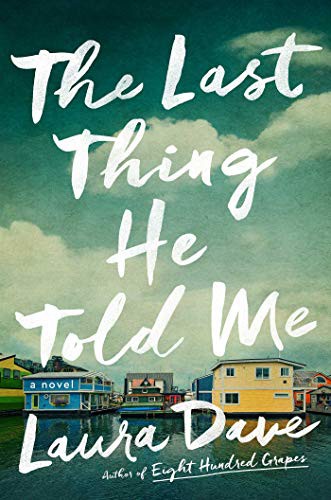
The Last Thing He Told Me by Laura Dave is a 2021 thriller book about identity and secrets, trust and deception, stepmother-stepdaughter bonds. The two-word note — 'Protect her' — is a near-perfect thriller inciting device: it conveys urgency, establishes stakes, and opens questions that take the entire novel to answer.
Summary
Hannah Hall's husband Owen doesn't come home from work on the day his tech company implodes in a federal investigation. He leaves her one note — two words: "Protect her." Her is Owen's sixteen-year-old daughter Bailey, who resents Hannah's presence in the family and has made little attempt to hide it. With federal marshals at the door, no idea where her husband is, and the unsettling discovery that she may not know him as well as she thought, Hannah has to figure out what Owen was protecting Bailey from — and whether she can trust the daughter who doesn't trust her.
The thriller mechanics are tightly wound: short chapters, a propulsive pace, information released in precisely calibrated doses. Dave is a screenwriter, and the novel has that lean, scene-based construction that reads fast and translates easily to screen. Each chapter ends slightly before a revelation or slightly after it, pulling the reader through. The mystery at the center — who is Owen, really? — has enough real content that the reveals feel genuinely surprising rather than arbitrary, though the book is careful not to complicate its thriller structure with moral ambiguity that would slow it down.
The stepdaughter relationship is where the novel does its most interesting work. Hannah and Bailey's dynamic — hostility that cannot afford to be hostility, dependency neither of them wants — gives the thriller a human spine that straight procedural plotting wouldn't achieve. Their arc from reluctant allies to something more is the emotional payoff the book is building toward, as much as the mystery resolution.
The Last Thing He Told Me is efficient and well-crafted genre fiction. It doesn't ask to be more than it is, and within its parameters it's very good. Readers who want psychological depth or literary texture will be underserved. Readers who want a tight, fast-paced mystery that keeps them turning pages until midnight should be well satisfied. The Apple TV+ adaptation (2023, with Julia Roberts) captures the book's appeal accurately.
Talk to The Last Thing He Told Me like its author wrote you back.
Get the ideas that fit your life — not generic summaries.
- Chat with the book
- Audiobook-style main ideas
- Adapts to your life and goals
- Helps you take action
Key takeaways
- 1.
The two-word note — 'Protect her' — is a near-perfect thriller inciting device: it conveys urgency, establishes stakes, and opens questions that take the entire novel to answer.
- 2.
Dave's screenwriting background shows in the construction: scene-based, economical, with information released in careful sequence.
- 3.
The Hannah-Bailey relationship is the novel's true subject — a blended family forged under impossible pressure, which is more emotionally interesting than the thriller mechanics alone.
- 4.
The mystery about Owen's identity is structured so that each answer opens a new question, sustaining pace without feeling dishonest about the information Hannah has.
- 5.
The novel trusts genre conventions rather than subverting them, which makes it fast and satisfying within its lane even if it doesn't expand what the lane can do.
- 6.
Short chapters are load-bearing: they give the reader the sense of constant forward movement even when scenes are doing largely expository work.
- 7.
The witness protection premise is handled with enough procedural specificity to feel credible without slowing the narrative.
- 8.
The ending resolves the thriller plot cleanly while leaving the family relationship in a genuinely earned place — better than the beginning, but not falsely healed.
Discussion questions
Use these on your own, with a book club, or as chat starters in Superbook. Book club version, ready to copy or print →
- 1.
Hannah fell in love with and married Owen without knowing who he really was. Does the novel interrogate how that was possible, or does it mostly treat it as a thriller premise?
- 2.
Bailey's hostility toward Hannah is readable from multiple angles — grief for her mother, resentment of a replacement, instinctive self-protection. Which reading does the novel support most?
- 3.
The note says 'Protect her.' At what point does Hannah's protection shift from obligation to genuine care, and what marks that transition?
- 4.
Dave is a screenwriter, and the novel has a very visual, scene-based construction. Does that feel like an asset in your reading, or do you miss interiority that a more literary novel would provide?
- 5.
The thriller genre generally works by withholding information. At what point, if any, did you feel the withholding was unfair — that Hannah would have noticed or known something the novel was keeping from her?
- 6.
Owen is largely absent from the novel, but constructed through Hannah's memories and what she discovers about his past. Does he feel like a real character, or a construct of plot function?
- 7.
The federal investigation angle adds a ticking clock to the story. How does institutional threat — marshals, federal charges — affect the thriller's emotional register compared to, say, a personal antagonist?
- 8.
Hannah and Bailey's relationship changes under pressure. Is that change credible given who both characters are, or does it feel forced by circumstance?
- 9.
The Apple TV+ adaptation with Julia Roberts changes some elements of the book. If you've seen it: what worked better in one form versus the other?
- 10.
The ending leaves certain questions deliberately unanswered. Does that feel honest to you, or does it leave more ambiguity than the story earned?
- 11.
This was a massive bestseller and streaming hit. What do you think the story is touching in the culture — is there something beyond craft that explains its reach?
Themes
Frequently asked questions
-
Is The Last Thing He Told Me worth reading?
Yes, if you enjoy tight, well-constructed domestic thrillers. The pacing is excellent, the mystery is genuinely involving, and the stepdaughter relationship gives it more heart than the genre usually delivers. Don't expect literary depth — expect a well-made page-turner.
-
Is the Apple TV+ adaptation good?
Reasonably. Julia Roberts is well-cast, and the production captures the book's atmosphere. The adaptation makes some changes that most fans consider improvements. If you've seen the show, the book covers the same ground with slightly more interior access to Hannah.
-
How long does it take to read?
Most readers finish in a single sitting or two — around five hours. The short chapters and fast pace make it the kind of book that disappears in a day.
-
What is the twist?
The full answer is in the book, but the central secret involves Owen's actual identity and history. Saying more would spoil it.
-
Who shouldn't read this book?
Readers who find domestic thriller conventions tiresome, or who need literary texture and moral complexity. The novel is very good at what it does and doesn't try to be anything else.