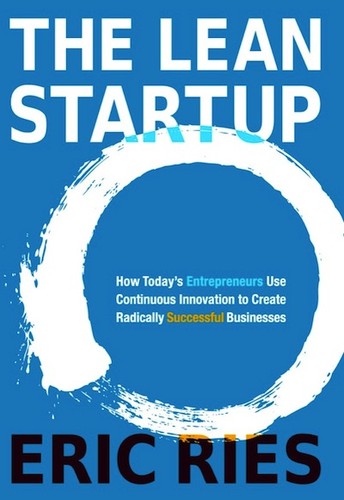
Talk to The Lean Startup like its author wrote you back.
Get the ideas that fit your life — not generic summaries.
- Chat with the book
- Audiobook-style main ideas
- Adapts to your life and goals
- Helps you take action
What it argues
The Lean Startup is Eric Ries's argument that the biggest cause of startup failure is not building the wrong product — it's spending months or years building something before finding out whether anyone wants it. His prescription is a feedback loop he calls build-measure-learn: ship the smallest possible version of an idea, measure how real customers actually behave, learn what to keep or discard, and repeat. The goal is to reduce the time between hypotheses and evidence so that failures happen cheaply and early rather than expensively and late.
The book's central concept is the minimum viable product, or MVP. An MVP is not a rough draft or a beta release — it is the minimum set of features needed to test a specific assumption. Ries gives examples ranging from a simple landing page that measures signup intent to a manual-fulfillment service that looks automated from the outside. The point is to avoid the common trap of building in secret and launching big, which delays real feedback by months and makes course-correction expensive.
What it gets right
- 1.
The build-measure-learn loop is the fundamental unit of startup progress. The goal is to minimize total cycle time, not to maximize the quality of any single release.
- 2.
A minimum viable product tests the riskiest assumption in your business as cheaply as possible. It is not an inferior product; it is a learning tool.
- 3.
Vanity metrics (page views, registered users, downloads) make you feel good and tell you nothing about whether the business is working. Measure actionable metrics tied to specific decisions.
What it covers
Who wrote it
Eric Ries is an American entrepreneur and author who developed the lean startup methodology while working as a software engineer and startup co-founder in Silicon Valley. He studied at Yale and later co-founded IMVU, an avatar-based social network, where he began applying lean manufacturing principles to software development. The Lean Startup, published in 2011, grew out of his blog and a series of talks that attracted a large following among founders and product teams. He has since worked with companies and government agencies on innovation programs and founded the Long-Term Stock Exchange (LTSE).
