Talk to The Lean Startup like its author wrote you back.
Get the ideas that fit your life — not generic summaries.
- Chat with the book
- Audiobook-style main ideas
- Adapts to your life and goals
- Helps you take action
The Lean Startup, in detail
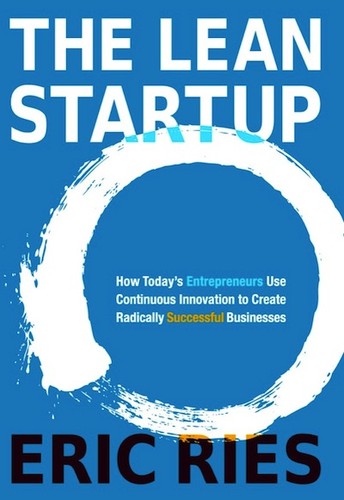
The Lean Startup is Eric Ries's argument that the biggest cause of startup failure is not building the wrong product — it's spending months or years building something before finding out whether anyone wants it. His prescription is a feedback loop he calls build-measure-learn: ship the smallest possible version of an idea, measure how real customers actually behave, learn what to keep or discard, and repeat. The goal is to reduce the time between hypotheses and evidence so that failures happen cheaply and early rather than expensively and late.
The book's central concept is the minimum viable product, or MVP. An MVP is not a rough draft or a beta release — it is the minimum set of features needed to test a specific assumption. Ries gives examples ranging from a simple landing page that measures signup intent to a manual-fulfillment service that looks automated from the outside. The point is to avoid the common trap of building in secret and launching big, which delays real feedback by months and makes course-correction expensive.
Ries draws a sharp line between two kinds of change: a pivot and an optimization. Optimization is tuning what you already do. A pivot is a structured course correction that tests a new fundamental hypothesis about the product, the customer, or the growth model. Most failing startups, he argues, don't pivot soon enough — they persist in hope when the evidence has already indicated a change of direction is needed. Innovation accounting, a framework for tracking validated learning rather than vanity metrics like page views or registered users, is meant to make that decision less emotional.
The book is strongest as a mindset shift for founders who have been trained to treat plans as commitments. It is weaker as an operations manual: some advice is underspecified, and the framework was designed for consumer internet startups in a way that requires translation for hardware companies, professional services, or large enterprises trying to apply lean methods internally. Ries addresses corporate "intrapreneurs" in the later chapters, but the fit is less clean. Still, the core case — that uncertainty demands experimentation, not more planning — holds up across contexts.
The big ideas
- 1.
The build-measure-learn loop is the fundamental unit of startup progress. The goal is to minimize total cycle time, not to maximize the quality of any single release.
- 2.
A minimum viable product tests the riskiest assumption in your business as cheaply as possible. It is not an inferior product; it is a learning tool.
- 3.
Vanity metrics (page views, registered users, downloads) make you feel good and tell you nothing about whether the business is working. Measure actionable metrics tied to specific decisions.
