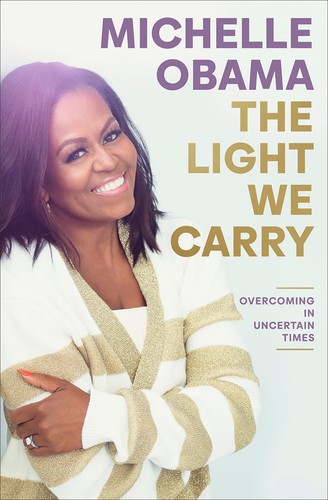
Talk to The Light We Carry like its author wrote you back.
Get the ideas that fit your life — not generic summaries.
- Chat with the book
- Audiobook-style main ideas
- Adapts to your life and goals
- Helps you take action
The Light We Carry, in detail
The Light We Carry is Michelle Obama's second memoir, published in 2022 as a follow-up to Becoming. Where Becoming traced the arc of her life story, this book is more essayistic — organized around practices and principles she has developed for navigating uncertainty, maintaining relationships, and keeping herself grounded when external circumstances are difficult or unpredictable. The title refers to what each person carries: a particular set of experiences, skills, and perspectives that can illuminate not just their own path but those around them.
Obama structures the book around specific "tools" she uses: knitting as meditative practice and community-building; friend groups as deliberate investments rather than passive accumulations; starting kinder with oneself as a prerequisite for kindness toward others; the power of finding something concrete to focus on when anxiety is abstract. These are not productivity hacks but ways of orienting herself in situations where control is limited and uncertainty is high. The White House years, which she addresses again here, serve as extreme examples of a situation most readers will recognize in milder form.
The relationship chapters are the most developed. Obama is direct about what she expects from friendships — that they be reciprocal, that they evolve, that they survive the test of people growing in different directions. She describes the Friend Group she and Barack have built around meals and travel with other couples, and is honest that maintaining close friendships across the demands of public life required treating those friendships as priorities rather than luxuries. The chapters on her marriage are notably direct about the years when both of them were investing more in their careers than in each other, and what addressing that imbalance required.
Obama's voice throughout is warm, self-disclosing, and deliberately down-to-earth. She is aware of the gap between her circumstances and most readers' and addresses it directly rather than pretending it doesn't exist. The book works best as an invitation to reflect on one's own practices and relationships. It does not offer templates — it offers a framework for thinking about what helps you function under pressure and what you owe the people around you.
The big ideas
- 1.
Uncertainty is not a problem to be solved but a permanent condition to be managed. The practices that help you navigate it — consistency, community, honest self-assessment — are more important than any specific plan.
- 2.
Friend groups require active maintenance and deliberate investment. The friendships that endure are rarely those that formed naturally and were never tended; they are the ones both parties chose to keep.
- 3.
Starting kinder means calibrating your initial assumptions about situations and people toward generosity rather than suspicion. It does not mean ignoring evidence; it means not leading with the worst interpretation.
