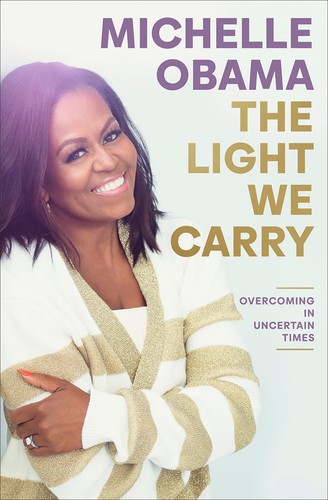
The Light We Carry by Michelle Obama is a 2022 memoir book about resilience, identity, relationships. Uncertainty is not a problem to be solved but a permanent condition to be managed. The practices that help you navigate it — consistency, community, honest self-assessment — are more important than any specific plan.
Summary
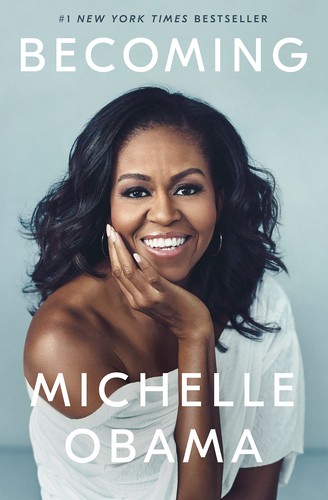
The Light We Carry is Michelle Obama's second memoir, published in 2022 as a follow-up to Becoming. Where Becoming traced the arc of her life story, this book is more essayistic — organized around practices and principles she has developed for navigating uncertainty, maintaining relationships, and keeping herself grounded when external circumstances are difficult or unpredictable. The title refers to what each person carries: a particular set of experiences, skills, and perspectives that can illuminate not just their own path but those around them.
Obama structures the book around specific "tools" she uses: knitting as meditative practice and community-building; friend groups as deliberate investments rather than passive accumulations; starting kinder with oneself as a prerequisite for kindness toward others; the power of finding something concrete to focus on when anxiety is abstract. These are not productivity hacks but ways of orienting herself in situations where control is limited and uncertainty is high. The White House years, which she addresses again here, serve as extreme examples of a situation most readers will recognize in milder form.
The relationship chapters are the most developed. Obama is direct about what she expects from friendships — that they be reciprocal, that they evolve, that they survive the test of people growing in different directions. She describes the Friend Group she and Barack have built around meals and travel with other couples, and is honest that maintaining close friendships across the demands of public life required treating those friendships as priorities rather than luxuries. The chapters on her marriage are notably direct about the years when both of them were investing more in their careers than in each other, and what addressing that imbalance required.
Obama's voice throughout is warm, self-disclosing, and deliberately down-to-earth. She is aware of the gap between her circumstances and most readers' and addresses it directly rather than pretending it doesn't exist. The book works best as an invitation to reflect on one's own practices and relationships. It does not offer templates — it offers a framework for thinking about what helps you function under pressure and what you owe the people around you.
Talk to The Light We Carry like its author wrote you back.
Get the ideas that fit your life — not generic summaries.
- Chat with the book
- Audiobook-style main ideas
- Adapts to your life and goals
- Helps you take action
Key takeaways
- 1.
Uncertainty is not a problem to be solved but a permanent condition to be managed. The practices that help you navigate it — consistency, community, honest self-assessment — are more important than any specific plan.
- 2.
Friend groups require active maintenance and deliberate investment. The friendships that endure are rarely those that formed naturally and were never tended; they are the ones both parties chose to keep.
- 3.
Starting kinder means calibrating your initial assumptions about situations and people toward generosity rather than suspicion. It does not mean ignoring evidence; it means not leading with the worst interpretation.
- 4.
Concrete small actions — Obama's knitting is the recurring example — can serve as anchors during periods when larger goals feel out of reach. The act of making something with clear steps and visible progress is psychologically stabilizing.
- 5.
Identity is not fixed. Obama describes her sense of herself changing significantly between her twenties and her fifties, and argues that treating those changes as threats rather than developments is a mistake.
- 6.
High-visibility positions distort relationships in predictable ways. Learning to distinguish genuine connection from status-driven attention, and to protect the former, is a skill that takes years.
- 7.
The people who have most helped Obama through difficulty were usually not the most powerful or the most accomplished — they were the ones who showed up consistently, asked real questions, and were honest about their own limitations.
Discussion questions
Use these on your own, with a book club, or as chat starters in Superbook. Book club version, ready to copy or print →
- 1.
Obama talks about the importance of having a consistent small practice that anchors you. What do you have that functions that way, and how did you find it?
- 2.
She describes friendship as something that requires deliberate investment rather than passive maintenance. Have you lost a friendship because neither party chose to invest? What would have changed the outcome?
- 3.
Obama is honest that her marriage went through years where both she and Barack were investing more in their careers than in each other. How does she describe recognizing that, and what did changing it require?
- 4.
She argues for 'starting kinder' as a default orientation. Where in your own life do you default to the most suspicious interpretation, and what would the kinder interpretation look like?
- 5.
The book is partly about navigating extreme visibility and loss of control. Which of her strategies feel genuinely transferable to ordinary pressures, and which seem specific to her circumstances?
- 6.
Obama builds the book around tools and practices rather than conclusions. Do you find that framework more or less useful than books that argue for a single central principle?
- 7.
She talks about the difference between a team — people assembled to accomplish a task — and a community — people who have chosen mutual obligation. Where do you experience that difference most clearly in your own life?
- 8.
Several chapters deal with the specific challenges of maintaining identity under external scrutiny. Have you ever been in a situation where external expectations of who you were conflicted with your own sense of yourself?
- 9.
Obama is direct about what she expects from friendship, which some readers find demanding and others find refreshing. Where do you stand on whether friendships should have explicit expectations?
- 10.
The book was written in 2022, after four years of Donald Trump's presidency and through the pandemic. How does that context shape what she chooses to address and how she frames it?
- 11.
She discusses becoming a grandmother-like figure to younger women she mentors. What does she say about what useful mentorship looks like, and does it match your experience of being mentored or mentoring?
- 12.
What is the one practice or principle from the book you most want to think more seriously about in your own life, and what would actually putting it in practice require of you?
Themes
Frequently asked questions
-
Is The Light We Carry worth reading?
For readers who found Becoming meaningful, yes. It is less narrative and more reflective, organized around practices and relationships rather than life story. Those who prefer memoir with sustained narrative arc may find it less satisfying than the first book.
-
Is this book a sequel to Becoming?
Not exactly. It doesn't pick up the story where Becoming left off; instead it reflects more broadly on lessons learned across Obama's life. You can read it without having read Becoming, though the earlier book provides useful context.
-
What is The Light We Carry about?
The practices, relationships, and orientations that Michelle Obama uses to navigate uncertainty and maintain herself under pressure. It covers friendship, marriage, self-knowledge, community, and the role of small consistent practices in a destabilized world.
-
Who should read this book?
Readers who responded to Obama's voice in Becoming, people looking for a reflective memoir focused on practices rather than achievement, and anyone thinking about how to maintain close relationships and a stable sense of self during difficult periods.
-
What's the most practical idea in the book?
Starting kinder — defaulting to a generous rather than suspicious interpretation of ambiguous situations and people. Obama frames it not as naivety but as a deliberate choice that changes what becomes possible in relationships and encounters.