The Light We Lost by Jill Santopolo is a 2017 romance book about first love and its afterlife, paths not taken, ambition versus intimacy. First love imprints differently than later love — the person you are when you fall in love for the first time is not fully formed, which is what makes it so difficult to let go of.
Summary
Lucy meets Gabe on the morning of September 11, 2001, when they are both students at Columbia, watching the towers fall. They fall in love, spend years together, and then he leaves for the Middle East as a photojournalist to document conflict. She stays. He goes back, and back again. She meets someone steadier, builds a life, has children. He returns intermittently, and the connection between them remains incandescent and unresolved across a decade and a half.
The novel is structured as Lucy's long address to Gabe — written in second person, looking back — which gives it an elegiac, confessional tone from the first page. Santopolo is working in the tradition of romantic tragedy: the question is never whether Lucy and Gabe could have had a different life, but what the life they almost had costs her for years afterward. The September 11 opening is not decorative; the novel argues that they were forged by a moment of catastrophe, which made their bond feel more absolute than it might have been otherwise.
The book's strength is its honesty about how first love operates in memory — how a relationship that occupied only a few years can shadow decades of an ordinary life, and how the person you were when you fell in love and the person you became are not always the same. Lucy's second relationship, with Darren, is rendered with sympathy rather than as a consolation prize, which complicates the romantic logic the novel appears to be following. Santopolo is not writing a case for grand passion over ordinary happiness; she is writing about what it means to carry both.
This is commercial literary fiction — emotionally direct, clearly plotted, designed for book clubs and beach bags. The prose is clean and the pacing is reliable. Readers who want a love story that doesn't resolve neatly and who find the elegiac second-person register affecting will find it genuinely moving. Readers who want more irony, formal complexity, or distance from the emotional material will find it too earnest.
Talk to The Light We Lost like its author wrote you back.
Get the ideas that fit your life — not generic summaries.
- Chat with the book
- Audiobook-style main ideas
- Adapts to your life and goals
- Helps you take action
Key takeaways
- 1.
First love imprints differently than later love — the person you are when you fall in love for the first time is not fully formed, which is what makes it so difficult to let go of.
- 2.
The novel makes a careful case that the life you build with a steadier person is not a lesser life, even if it lacks the charge of the one you didn't build.
- 3.
September 11 functions in the novel as a kind of origin wound — the event that made Lucy and Gabe feel fated, which may have been a distortion as much as a revelation.
- 4.
Gabe's compulsion to return to conflict zones is both admirable and a refusal of intimacy — the novel holds both readings without settling for one.
- 5.
The second-person address to an absent person is a device for grief as much as love; writing to someone who cannot answer is a way of processing what cannot be processed directly.
- 6.
Lucy's choice — to stay, to build, to be present — is treated as a real choice with real costs, not a failure of nerve.
- 7.
The novel argues that idealized love often says more about who we needed to be at a specific moment than about the other person.
- 8.
Happiness and meaning are shown as separable: Lucy's life with Darren is happy; her life with Gabe was not stable but felt more meaningful. The novel doesn't resolve which matters more.
Discussion questions
Use these on your own, with a book club, or as chat starters in Superbook. Book club version, ready to copy or print →
- 1.
Lucy narrates the novel as an address to Gabe. How does that structure shape what she tells us and what she leaves out?
- 2.
Gabe keeps returning to conflict zones instead of building a life with Lucy. Is that heroism, self-destruction, or a form of emotional unavailability?
- 3.
Darren is a genuinely good partner. Did you root for Lucy to be with Gabe anyway? What does that reveal about how the novel manipulates its readers?
- 4.
The September 11 framing suggests Lucy and Gabe's connection was forged by trauma and catastrophe. Does the novel treat that as a reason to trust the connection or to question it?
- 5.
Is this a novel about love or about grief? What's the difference in this context?
- 6.
Lucy makes a choice in the novel's final section that many readers find devastating. Did you see it coming, and did you think she was right?
- 7.
The novel ends on a specific emotional note. Did you find it earned, or did the ending ask you to feel things the preceding pages hadn't quite built toward?
- 8.
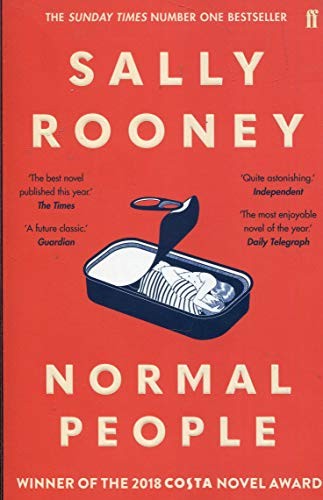
Compared to Normal People — another novel about a couple who keep missing each other — what does The Light We Lost do differently with similar material?
- 9.
Gabe is the romantic ideal of the novel but also, if you read him as a real person rather than a symbol, something of a disappointment. Which reading does the novel support?
- 10.
The second-person 'you' makes Gabe feel present throughout. Did that technique make you feel closer to the story or more aware of the artifice?
- 11.
What does the title mean? Who is 'the light' — Gabe, or something else?
- 12.
If you were to recommend this novel to someone, what would you say it's about? Does your answer differ from what Santopolo says it's about?
Themes
Frequently asked questions
-
Is The Light We Lost a tearjerker?
Yes, deliberately. The novel is structured to produce grief, and most readers report crying. If you're reading it for emotional catharsis, you'll get it. If you want to feel good at the end, look elsewhere.
-
What is the ending of The Light We Lost?
Avoiding spoilers: the ending is tragic and polarizing. Many readers find it devastating and earned; others find it manipulative. It is not ambiguous — Santopolo commits to her choice.
-
Is this a romance novel?
It contains a love story but does not follow romance genre conventions — particularly the convention that the couple ends up together. It is better described as romantic literary fiction or a love story with a literary ending.
-
Who shouldn't read this book?
Readers who find earnest emotional directness cloying, or who want formal complexity and irony in their fiction. The novel is not trying to be subtle. It knows what it wants you to feel and arranges its parts to produce that feeling.
-
Is there a companion or sequel?
Yes. More Than Words, published in 2020, is a companion novel set in a related world with some thematic overlap. It is a standalone and does not follow the same characters.