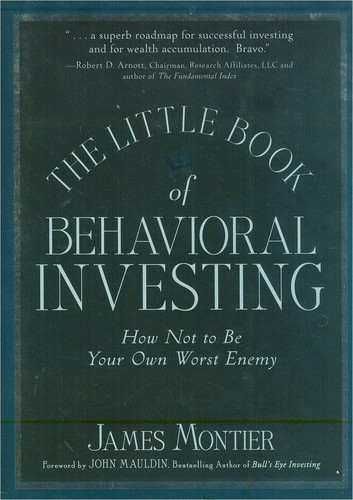
Talk to The Little Book of Behavioral Investing like its author wrote you back.
Get the ideas that fit your life — not generic summaries.
- Chat with the book
- Audiobook-style main ideas
- Adapts to your life and goals
- Helps you take action
What it argues
The Little Book of Behavioral Investing is James Montier's tour through the cognitive traps that cause intelligent, well-intentioned investors to consistently underperform. Montier, a quantitative strategist with extensive experience at major investment banks, writes with unusual candor: the biases he describes are not just problems for retail investors. They affect professionals too, and the data he cites makes that uncomfortable point repeatedly.
The book is organized around specific biases rather than a single unifying framework. Montier covers overconfidence and the illusion of knowledge, where having more information generates false confidence without improving outcomes. He addresses inattentional blindness, where investors focus so hard on specific data that they miss obvious disconfirming evidence. He dissects the influence of emotion on decision-making — fear and greed at market extremes — and shows how social pressure leads investors to hold consensus positions long past the point where the evidence supports them.
What it gets right
- 1.
More information does not produce better investment decisions. Past a certain point it increases confidence without improving accuracy — a dangerous combination.
- 2.
Overconfidence is the most pervasive and costly bias in investing. Most investors, including professionals, believe their analysis is better than it typically is.
- 3.
Anchoring to reference prices — purchase price, 52-week high, analyst targets — corrupts valuation judgment in ways investors rarely notice.
What it covers
Who wrote it
James Montier is a member of the asset allocation team at GMO and a former global equity strategist at Société Générale and Dresdner Kleinwort Wasserstein. He is one of the most widely cited practitioners in the field of behavioral finance and is the author of several books including Behavioural Finance, Value Investing, and the Little Book series on behavioral investing. His research combines empirical data with academic behavioral economics and is known for its directness about the limits of investment skill.
