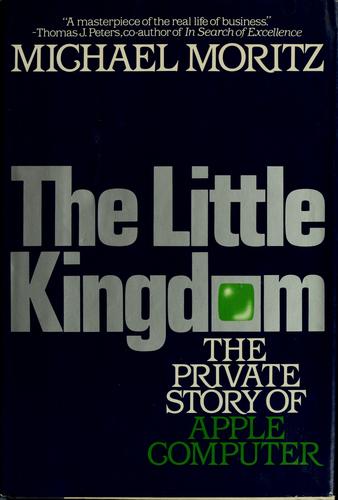
Talk to The Little Kingdom like its author wrote you back.
Get the ideas that fit your life — not generic summaries.
- Chat with the book
- Audiobook-style main ideas
- Adapts to your life and goals
- Helps you take action
The Little Kingdom, in detail
The Little Kingdom is the first serious book about Apple Computer, written in 1984 while the company was still young and its founders were still defining what it would become. Michael Moritz, a journalist who later became one of Silicon Valley's most successful venture capitalists at Sequoia Capital, wrote it from close access to Steve Jobs, Steve Wozniak, and many of the engineers and early employees who built the Apple II and the original Macintosh.
The book covers the founding years in detail — the Homebrew Computer Club, Wozniak's technical genius and Jobs's commercial instincts, the early investor relationships, and the chaotic internal culture that characterized the company before its IPO. Moritz writes with the eye of a journalist rather than a hagiographer. Jobs is portrayed as brilliant and difficult in equal measure, controlling and inspiring, capable of motivating extraordinary work and also of crushing people he had recently championed. Wozniak emerges as perhaps the more sympathetic figure: a genuine engineer who wanted to share his designs freely and was pulled into commercial success almost against his inclinations.
What makes the book interesting now is the vantage point. It was written before Jobs was ousted, before the Macintosh had a chance to succeed or fail in the market, and before Apple's story had acquired the heroic mythology that later books imposed on it. The picture is rawer and more complicated. The conflicts between Jobs and other executives, the marketing gambits, the engineering compromises, and the internal politics of a company growing faster than anyone could manage are all on the page without the benefit of hindsight.
Readers who have consumed later Jobs biographies — particularly Walter Isaacson's — will find the early period covered here from a perspective that predates the received narrative. The prose is clean and accessible, and the book rewards anyone interested in how technology companies actually form and what the people inside them are really like before the myth solidifies around them. It is also a useful artifact: a document of how Silicon Valley worked before venture capital became a global industry and before the personal computer had transformed daily life.
The big ideas
- 1.
Steve Wozniak was the technical engine behind both the Apple I and Apple II. His willingness to share designs freely with the Homebrew community reflected values Jobs had to work around rather than suppress.
- 2.
Steve Jobs's talent was less in inventing products than in recognizing what mattered about them and pushing every surrounding system — design, marketing, distribution — to match that vision.
- 3.
Apple's early culture was defined by a productive tension between engineers who wanted to solve elegant problems and a commercial operation that needed to sell products to survive.
