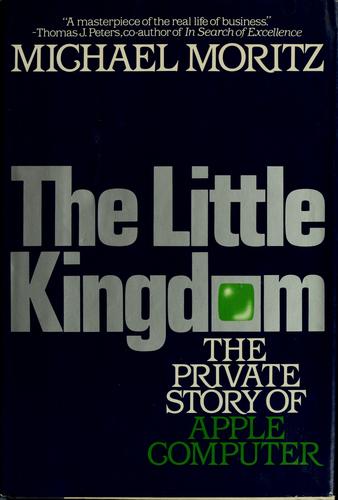
The Little Kingdom by Michael Moritz is a 1984 biography book about technology entrepreneurship, apple history, innovation. Steve Wozniak was the technical engine behind both the Apple I and Apple II. His willingness to share designs freely with the Homebrew community reflected values Jobs had to work around rather than suppress.
Summary
The Little Kingdom is the first serious book about Apple Computer, written in 1984 while the company was still young and its founders were still defining what it would become. Michael Moritz, a journalist who later became one of Silicon Valley's most successful venture capitalists at Sequoia Capital, wrote it from close access to Steve Jobs, Steve Wozniak, and many of the engineers and early employees who built the Apple II and the original Macintosh.
The book covers the founding years in detail — the Homebrew Computer Club, Wozniak's technical genius and Jobs's commercial instincts, the early investor relationships, and the chaotic internal culture that characterized the company before its IPO. Moritz writes with the eye of a journalist rather than a hagiographer. Jobs is portrayed as brilliant and difficult in equal measure, controlling and inspiring, capable of motivating extraordinary work and also of crushing people he had recently championed. Wozniak emerges as perhaps the more sympathetic figure: a genuine engineer who wanted to share his designs freely and was pulled into commercial success almost against his inclinations.
What makes the book interesting now is the vantage point. It was written before Jobs was ousted, before the Macintosh had a chance to succeed or fail in the market, and before Apple's story had acquired the heroic mythology that later books imposed on it. The picture is rawer and more complicated. The conflicts between Jobs and other executives, the marketing gambits, the engineering compromises, and the internal politics of a company growing faster than anyone could manage are all on the page without the benefit of hindsight.
Readers who have consumed later Jobs biographies — particularly Walter Isaacson's — will find the early period covered here from a perspective that predates the received narrative. The prose is clean and accessible, and the book rewards anyone interested in how technology companies actually form and what the people inside them are really like before the myth solidifies around them. It is also a useful artifact: a document of how Silicon Valley worked before venture capital became a global industry and before the personal computer had transformed daily life.
Talk to The Little Kingdom like its author wrote you back.
Get the ideas that fit your life — not generic summaries.
- Chat with the book
- Audiobook-style main ideas
- Adapts to your life and goals
- Helps you take action
Key takeaways
- 1.
Steve Wozniak was the technical engine behind both the Apple I and Apple II. His willingness to share designs freely with the Homebrew community reflected values Jobs had to work around rather than suppress.
- 2.
Steve Jobs's talent was less in inventing products than in recognizing what mattered about them and pushing every surrounding system — design, marketing, distribution — to match that vision.
- 3.
Apple's early culture was defined by a productive tension between engineers who wanted to solve elegant problems and a commercial operation that needed to sell products to survive.
- 4.
The IPO made dozens of Apple employees wealthy but also began the process of formalizing a culture that had thrived on informal intensity — a transition that produced real conflict.
- 5.
Jobs's management style polarized everyone around him: people either found his demands energizing or destructive, and accounts differ sharply depending on which experience they had.
- 6.
Moritz captures Apple before it became a mythology, which makes the internal conflicts, wrong turns, and personality clashes visible in ways that later accounts smooth over.
- 7.
The personal computer industry in the late 1970s and early 1980s was genuinely open terrain — small teams of engineers could define entire product categories, a window that closed rapidly as the industry matured.
Discussion questions
Use these on your own, with a book club, or as chat starters in Superbook. Book club version, ready to copy or print →
- 1.
Moritz wrote The Little Kingdom in 1984, while the story was still unfolding. How does real-time proximity change what a biographer captures versus what a retrospective biography recovers?
- 2.
Wozniak wanted to give away his Apple I design. Jobs saw commercial potential immediately. Which of them was right in the long run, and in what sense?
- 3.
Jobs is portrayed here before the mythology of the iPhone era. Does reading this early portrait change how you think about the later Steve Jobs biographies?
- 4.
Apple's early culture was chaotic, egalitarian, and intensely demanding. How much of its early success depended on conditions that couldn't be replicated or sustained at scale?
- 5.
The Homebrew Computer Club was a community of hobbyists who shared knowledge freely. What role did that culture of openness play in the birth of the personal computer industry?
- 6.
Jobs reportedly made people feel both specially chosen and disposable, sometimes in the same week. Is that kind of leadership a genius trait or a failure mode, or something that can't be cleanly categorized?
- 7.
The book describes an IPO that made many early employees rich but also changed the company's culture. Does financial success tend to kill the conditions that produced it?
- 8.
Wozniak and Jobs had fundamentally different values about what technology was for. How did that difference shape Apple's products in ways that are still visible today?
- 9.
Moritz later became a partner at Sequoia Capital and invested in Google, Yahoo, and others. How do you think his journalist's instincts shaped what he noticed about Apple that venture capitalists at the time might have missed?
- 10.
Apple's early advertising, including the '1984' commercial and the 'Here's to the Crazy Ones' campaign, positioned the company against conformity. How genuine was that positioning given how the company actually operated internally?
- 11.
What does the story of Apple in the early 1980s tell us about the relationship between individual genius and institutional competence in building lasting companies?
Themes
Frequently asked questions
-
Is The Little Kingdom still worth reading given newer Jobs biographies?
Yes, precisely because it predates the mythology. Moritz was reporting in real time, without knowing how the story would end, and that produces a more complicated and honest portrait than retrospective accounts. It's especially useful as a complement to Isaacson's biography, which covers the same early period from a much later vantage point.
-
How long does The Little Kingdom take to read?
Around five to six hours. It's roughly 330 pages and reads as narrative journalism, which keeps the pace steady. Readers already familiar with Apple's history will move through it quickly; those new to the subject may want to slow down in the technical sections.
-
What does the title mean?
It refers both to Apple Computer itself — a company built and run by very young people in a small geographic area — and to the hermetic, self-referential culture Jobs cultivated, which created a kind of internal world separate from the norms of mainstream business.
-
Who should read this book?
Anyone interested in how technology companies actually form, as opposed to how their founding myths are later constructed. Also useful for readers of startup history who want a primary source account of Silicon Valley before it became the center of the global technology economy.
-
Is this book about Jobs or about Apple?
Both, though Jobs dominates. Moritz gives substantial attention to Wozniak, to early investors like Mike Markkula, and to the engineers and managers who built the products. But Jobs's personality and choices are the central thread.
Similar books
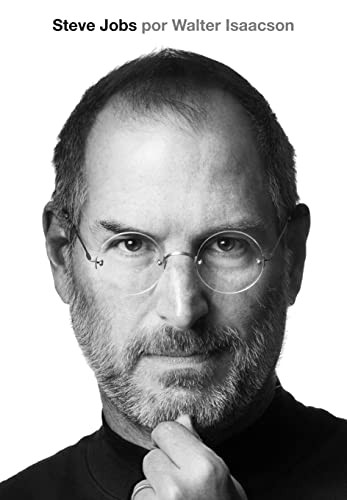
Steve Jobs
Walter Isaacson
Shoe Dog: A Memoir by the Creator of Nike
Phil Knight
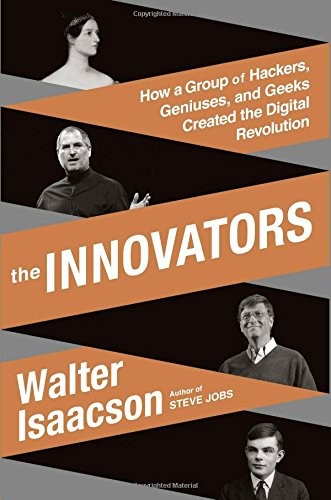
The Innovators: How a Group of Hackers, Geniuses, and Geeks Created the Digital Revolution
Walter Isaacson
Bad Blood: Secrets and Lies in a Silicon Valley Startup
John Carreyrou
