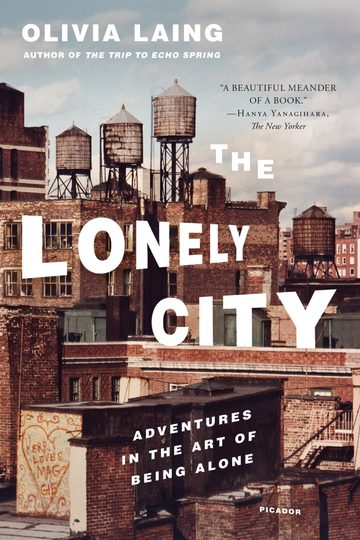
Talk to The Lonely City: Adventures in the Art of Being Alone like its author wrote you back.
Get the ideas that fit your life — not generic summaries.
- Chat with the book
- Audiobook-style main ideas
- Adapts to your life and goals
- Helps you take action
The Lonely City: Adventures in the Art of Being Alone, in detail
The Lonely City is Olivia Laing's memoir-essay hybrid about a period of acute loneliness she experienced after moving to New York City following the collapse of a relationship. Rather than treating loneliness as a private failure to be overcome, Laing treats it as a condition worth investigating — historically, aesthetically, and politically. The book is structured around artists who were themselves profoundly alone: Edward Hopper, Andy Warhol, Henry Darger, David Wojnarowicz. Their work becomes both subject and method.
Laing writes about Hopper's paintings as documents of urban disconnection — the figures in diners and hotel rooms who seem sealed off from one another even when sharing a frame. She traces Warhol's defensive use of the machine and the crowd, his terror of intimacy alongside his desperate need for it. With Darger, who died leaving thousands of pages of illustrated fantasy no one knew existed, she explores the most extreme form of loneliness: a rich interior life no one witnessed. Wojnarowicz's rage at AIDS-era invisibility becomes a chapter on how loneliness and political abandonment interlock.
What makes the book unusual is that Laing doesn't resolve her loneliness into a lesson. She allows it to persist, to become curious rather than urgent. The research is real — she draws on psychologists, sociologists, and historians of the body — but always in service of something more personal and harder to classify. The prose is precise and lyrical without being ornate. She writes about the body in urban space in a way that makes you notice your own.
The book ends not with connection achieved but with a more complicated idea: that art made in loneliness can reach across time to people it wasn't made for. That the transmission matters even when it isn't intended. It's a book about being alone in a city of millions, and about what artists do with the energy that isolation generates.
The big ideas
- 1.
Loneliness is not a personal failure but a widespread, politically shaped experience — cities designed around cars and commerce structurally produce it.
- 2.
Edward Hopper's paintings are among the most honest documents of urban disconnection ever made — figures near each other but sealed away.
- 3.
Andy Warhol's obsession with celebrity and surfaces was partly a defensive response to a childhood of isolation and a body he experienced as alien.
