Talk to The Long Call like its author wrote you back.
Get the ideas that fit your life — not generic summaries.
- Chat with the book
- Audiobook-style main ideas
- Adapts to your life and goals
- Helps you take action
What it argues
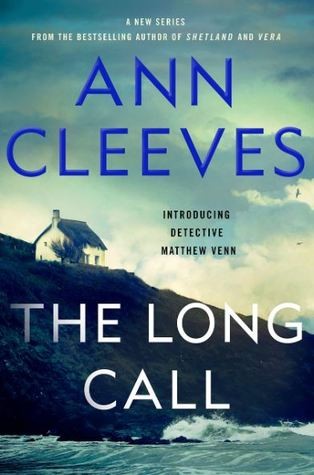
The Long Call opens a new series from Ann Cleeves, best known for the Vera and Shetland books, set on the remote north Devon coast. Detective Matthew Venn grew up in a strict Brethren religious community and was expelled years ago for being gay; the opening pages take place at his father's funeral, which he attends despite knowing his community will see his presence as an intrusion. Shortly after, a man is found murdered on the beach near Matthew's home — a man connected, it turns out, to the same Brethren community Matthew thought he'd left behind.
The novel works on two levels simultaneously. On the surface it is a carefully constructed procedural with a cast of connected characters in a specific rural setting — a day center for adults with disabilities plays a key role, and Cleeves writes those characters with care and without condescension. Beneath that, it is a novel about what it costs to leave a community defined by moral certainty, and what happens when that departure is never quite complete. Matthew's outsider status shapes every interaction he has, both personally and professionally.
What it gets right
- 1.
Matthew's expulsion from the Brethren is the formative event in his adult life — not as trauma he carries dramatically, but as a quiet deficit that shapes how he reads belonging and exclusion.
- 2.
The day center for adults with disabilities is treated as a community rather than a backdrop, and Cleeves makes the people who use it among the most fully rendered characters in the book.
- 3.
The Brethren community is presented with some sympathy: Cleeves resists making them simply villains while being clear about the damage strict doctrinal exclusion causes.
What it covers
Who wrote it
Ann Cleeves is a British crime novelist whose two major series — Vera, set in Northumberland, and Shetland, set in Scotland — have been adapted for long-running BBC television dramas. The Long Call launched her third series, the Two Rivers books featuring Detective Matthew Venn, in 2019. Cleeves has won the Crime Writers' Association Gold Dagger and the Theakston Old Peculier Crime Novel of the Year Award. She is known for her detailed sense of place and her interest in outsider characters who illuminate closed communities.
