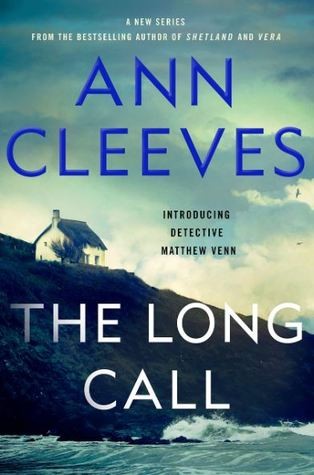
The Long Call by Ann Cleeves is a 2019 mystery book about identity and belonging, faith and community, outsiderdom. Matthew's expulsion from the Brethren is the formative event in his adult life — not as trauma he carries dramatically, but as a quiet deficit that shapes how he reads belonging and exclusion.
Summary
The Long Call opens a new series from Ann Cleeves, best known for the Vera and Shetland books, set on the remote north Devon coast. Detective Matthew Venn grew up in a strict Brethren religious community and was expelled years ago for being gay; the opening pages take place at his father's funeral, which he attends despite knowing his community will see his presence as an intrusion. Shortly after, a man is found murdered on the beach near Matthew's home — a man connected, it turns out, to the same Brethren community Matthew thought he'd left behind.
The novel works on two levels simultaneously. On the surface it is a carefully constructed procedural with a cast of connected characters in a specific rural setting — a day center for adults with disabilities plays a key role, and Cleeves writes those characters with care and without condescension. Beneath that, it is a novel about what it costs to leave a community defined by moral certainty, and what happens when that departure is never quite complete. Matthew's outsider status shapes every interaction he has, both personally and professionally.
Cleeves writes landscape the way other writers write character. The Devon estuary — tidal, shifting, seasonally brutal — functions as more than backdrop. The sense of a place that is beautiful and isolated and resistant to easy reading extends to the human landscape of the book. Matthew's husband Jonathan is one of the more thoughtful depictions of a secondary character in recent crime fiction: present, supportive, and also navigating his own questions about their shared life.
The Long Call is slower and more emotionally careful than the typical police procedural. The mystery plot is solid but the book's real achievement is making Matthew Venn feel like someone you'd want to spend several books with — a detective whose damage is legible without being melodramatic, and whose method grows naturally from who he is.
Talk to The Long Call like its author wrote you back.
Get the ideas that fit your life — not generic summaries.
- Chat with the book
- Audiobook-style main ideas
- Adapts to your life and goals
- Helps you take action
Key takeaways
- 1.
Matthew's expulsion from the Brethren is the formative event in his adult life — not as trauma he carries dramatically, but as a quiet deficit that shapes how he reads belonging and exclusion.
- 2.
The day center for adults with disabilities is treated as a community rather than a backdrop, and Cleeves makes the people who use it among the most fully rendered characters in the book.
- 3.
The Brethren community is presented with some sympathy: Cleeves resists making them simply villains while being clear about the damage strict doctrinal exclusion causes.
- 4.
Matthew and Jonathan's relationship is the most quietly radical aspect of the novel — a married gay detective in a British procedural, written without announcement or special pleading.
- 5.
The north Devon setting is inseparable from the novel's emotional texture: isolation, beauty, and the particular claustrophobia of a community where everyone knows your history.
- 6.
Guilt is distributed carefully throughout the cast. Multiple characters are complicit in different ways in what happened, and the novel distinguishes between moral failures and criminal ones.
- 7.
The procedural machinery is competent and tidy, but the book's interest is in character and place rather than puzzle construction.
- 8.
Matthew's faith — or what remains of it — is treated as an open question. He left the Brethren but didn't arrive anywhere else, and the novel doesn't resolve that.
Discussion questions
Use these on your own, with a book club, or as chat starters in Superbook. Book club version, ready to copy or print →
- 1.
Matthew attends his father's funeral knowing it will cause pain to everyone present, including himself. Was that the right thing to do? What was he looking for?
- 2.
The Brethren community is presented as both harmful and genuinely sustaining for some of its members. Does the novel succeed in holding that complexity?
- 3.
Matthew's sexuality and his expulsion from the community are connected but not identical — his being gay isn't framed as the main thing about him. How does Cleeves achieve that?
- 4.
The day center characters are treated with unusual care for a mystery novel. What does their presence in the investigation change about the texture of the book?
- 5.
Jonathan occupies an unusual position in the book — he is supportive and present but also has his own anxieties about their life in Devon. Did you find him convincing?
- 6.
Several characters in the book are keeping secrets that are not related to the murder but which the investigation exposes anyway. How does Matthew navigate the ethics of that?
- 7.
The Devon landscape — tidal, seasonal, isolated — is used almost architecturally. Where did you feel it most acutely affecting the story?
- 8.
Matthew's relationship to faith is unresolved at the end of the novel. Is that honest, or is it a loose thread?
- 9.
The title refers to a specific symbol from the book — once you know what it means, does it reframe anything about what you read?
- 10.
How does The Long Call compare to the Vera or Shetland series in terms of tone and setting? If you've read those, what does Matthew bring that Vera and Jimmy Perez don't?
- 11.
The murder victim is someone who didn't obviously deserve to die, but who wasn't entirely sympathetic either. How does the novel balance that?
- 12.
By the end, do you trust Matthew as a detective? What about as a person?
Themes
Frequently asked questions
-
Do I need to have read Vera or Shetland before The Long Call?
No. The Long Call is the start of a completely separate series with a new detective and location. No prior Cleeves reading is required.
-
Is The Long Call slow?
Slower than a conventional thriller, yes. Cleeves writes procedurals in the British tradition, where the accumulation of detail and the sense of place are as important as the plot. If you want fast twists, this is not your book. If you want to inhabit a world, it rewards patience.
-
What makes Matthew Venn interesting as a detective?
His expulsion from a religious community has given him an unusual sensitivity to how groups police belonging and exclusion — which turns out to be exactly what the investigation requires. He is also unusually emotionally aware for a detective in this genre.
-
Who shouldn't read The Long Call?
Readers who find religious community subplots tedious or who need action to sustain their interest. The book moves at the pace of a village rather than a city, and the emotional stakes take time to accumulate.
-
Is there a TV adaptation?
Yes. Ben Aldridge plays Matthew Venn in the ITV series The Long Call, which premiered in 2021. It is broadly faithful to the book and reasonably well received.