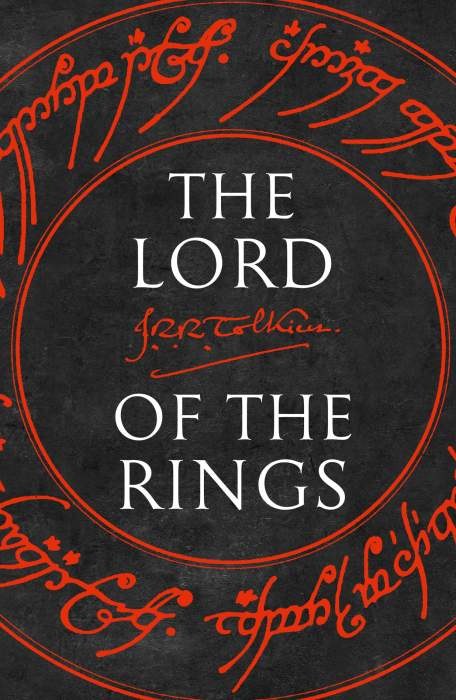
Talk to The Fellowship of the Ring like its author wrote you back.
Get the ideas that fit your life — not generic summaries.
- Chat with the book
- Audiobook-style main ideas
- Adapts to your life and goals
- Helps you take action
The Fellowship of the Ring, in detail
The Fellowship of the Ring is the first volume of The Lord of the Rings, following Frodo Baggins from the safety of the Shire into a world of accelerating danger. After his uncle Bilbo passes on the One Ring — a device of immense power forged by the Dark Lord Sauron — Frodo learns from the wizard Gandalf that the Ring must be destroyed in the fires of Mount Doom before Sauron can reclaim it and conquer all of Middle-earth. The book follows Frodo and his companions through the Shire, the Prancing Pony inn at Bree, Rivendell, the mines of Moria, and the forest of Lothlórien, ending with the breaking of the Fellowship itself as the company scatters.
The book is about the weight that ordinary people carry when they are drawn into events larger than themselves. Tolkien's hobbits — comfortable, unheroic, suspicious of adventure — are the lens through which Middle-earth is seen, and that choice is deliberate: the story's emotional claim is that smallness and decency have their own form of courage, one that great warriors and sorcerers cannot provide. The Ring's specific danger is that it amplifies the desire for power in the user; the characters who are most at risk are precisely the most capable and noble, not the weak.
Tolkien invented the template for secondary-world fantasy fiction. The languages, the appendices, the cosmology, the deep history — all of it was real to him before the story began. The effect on the prose is that Middle-earth feels like a place that existed before the narrative and will continue after it. The writing is uneven — some passages are mythically beautiful, some are tedious to anyone without patience for linguistic elvish poetry — but the world itself is the achievement. Almost every fantasy novel written since 1954 is in some way a response to what Tolkien built here.
The Fellowship of the Ring rewards patience and punishes impatience. The first hundred pages, set entirely in the Shire, are deliberately slow. The mythology can feel impenetrable. But readers who give the book what it requires discover something that has not been replicated: a secondary world that feels genuinely ancient, in which good and evil are metaphysically real without being simple, and in which the stakes are cosmological without losing their human scale.
The big ideas
- 1.
The Ring tempts through each character's specific virtue: Boromir's protectiveness, Gandalf's wisdom, Galadriel's benevolence. The corruption comes precisely from the desire to do good with great power.
- 2.
Tolkien's hobbits are the moral center of the story not despite their smallness but because of it — their lack of ambition is what makes them the only safe bearers of the Ring.
- 3.
The world feels lived-in because it was: Tolkien had developed the languages, histories, and geographies of Middle-earth for decades before writing The Lord of the Rings. The novel is the surface of something much larger.
