Talk to The Love Hypothesis like its author wrote you back.
Get the ideas that fit your life — not generic summaries.
- Chat with the book
- Audiobook-style main ideas
- Adapts to your life and goals
- Helps you take action
The Love Hypothesis, in detail
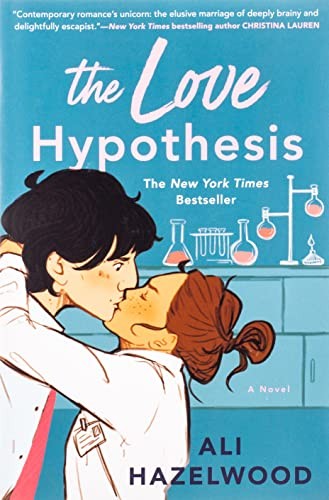
Olive Smith is a third-year biology PhD student who impulsively kisses a stranger to convince her friend that she's moved on from her ex. The stranger is Adam Carlsen, the most feared and least liked professor in the department — cold, demanding, and improbably attractive. When the kiss is witnessed by exactly the wrong people, the two agree to fake-date to maintain the story, with each having a different motive for playing along. What follows is the standard slow-burn fake-dating arc, delivered with unusual specificity because Hazelwood writes academia from the inside.
The Love Hypothesis became a genuine phenomenon — it began as a fan fiction piece and was adapted into a traditionally published novel that sold millions of copies and launched the "STEMinist romance" subgenre. Hazelwood's specific innovation is embedding the romance in a world readers who went to graduate school recognize: the funding anxiety, the advisor power dynamics, the chronic imposter syndrome, the way academic hierarchies can trap people in terrible situations and call it normal. Olive's insecurity about her research and her future in science is the novel's emotional substrate, and it gives the romance more weight than the premise alone would generate.
Adam Carlsen is the novel's structural challenge. He is distant, demanding, and initially incomprehensible, and Hazelwood has to make him sympathetic without explaining him too quickly. She manages this mostly through comic contrast: Adam's internal warmth shows up in specific behaviors (protecting Olive's research funding, showing up without announcement) before it shows up in words. The slow-burn mechanism is well-calibrated. The explicitly sexual content, when it arrives, is frank and warm.
The novel has real weaknesses: the academic villain is cartoonish, some of the supporting characters are thinly drawn, and Olive's self-deprecation occasionally edges into self-erasure in a way that the novel endorses rather than examines. But as a debut novel in a genre it helped define, it delivers. Readers who like romance, academia, and female STEM protagonists will find it sharply pleasurable.
The big ideas
- 1.
Hazelwood's key innovation: grounding the fake-dating romance in doctoral research creates stakes that feel real because the career consequences of academic failure are genuinely severe.
- 2.
Olive's imposter syndrome isn't just characterization — it's the emotional engine of the novel. The romance arc is inseparable from her learning to believe her own work has value.
- 3.
The advisor-student power dynamic is handled with more care than many readers expected from a romance novel. Hazelwood doesn't pretend it doesn't exist, and the plot actively addresses it.
