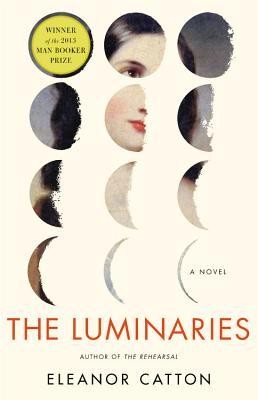
Talk to The Luminaries like its author wrote you back.
Get the ideas that fit your life — not generic summaries.
- Chat with the book
- Audiobook-style main ideas
- Adapts to your life and goals
- Helps you take action
The Luminaries, in detail
The Luminaries is set in Hokitika, a New Zealand gold-rush town, in 1866. Walter Moody arrives in a stormy harbor and blunders into a secret meeting of twelve men, each connected to a cluster of unsolved mysteries: a missing fortune, a man found dead drunk in his cottage, and a woman discovered near death in the road. Over the following eight hundred pages Moody hears each man's account of events, and the reader slowly reconstructs what actually happened.
Catton's formal achievement is staggering and imposes a real cost on the reading experience. The novel is structured according to astrological principles: twelve characters correspond to zodiac signs, seven to planetary bodies, and the chapters halve in length as the book progresses, moving from weeks to hours in its final section. This is not decoration. The structure argues that individual freedom operates within forces and patterns the characters cannot perceive — and that the novel's mystery, like astrology itself, concerns the relationship between visible events and hidden causation. Whether you find this brilliant or excessive will determine your experience of the book.
The prose is a sustained Victorian pastiche — Catton writes with remarkable fidelity to the rhetoric of sensation fiction, the penny press, and the legal document. The period detail is dense and earned. The New Zealand setting is vividly rendered without condescension: the Maori characters are given interiority, and the colonial economy's relationship to race, sex, and class is part of the texture of the narrative rather than its explicit subject.
The Luminaries won the Man Booker Prize in 2013, making Catton the youngest ever winner at twenty-eight. It is a novel that rewards the reader who brings patience and the ability to hold a large cast in mind. It is also genuinely the longest literary novel on most Booker lists, and the structural conceits, however elegant, do produce passages of considerable monotony. The comparison is to Umberto Eco's The Name of the Rose for formal erudition deployed in genre: both novels use a mystery's architecture to do philosophical work.
The big ideas
- 1.
The halving structure — chapters that shrink from hundreds of pages to a few as the novel approaches its center — enacts the novel's argument about fate: the closer you get to the event, the less room for free movement.
- 2.
The twelve zodiacal men and seven planetary characters are not allegorical in a crude sense. Catton uses astrology as a structural logic, not a symbolic code — the configurations predict tendency, not outcome.
- 3.
Anna Wetherell is the novel's moral center, though she is the character most subjected to others' interpretations of her. How the twelve men read her — prostitute, victim, schemer, survivor — is itself the novel's subject.
