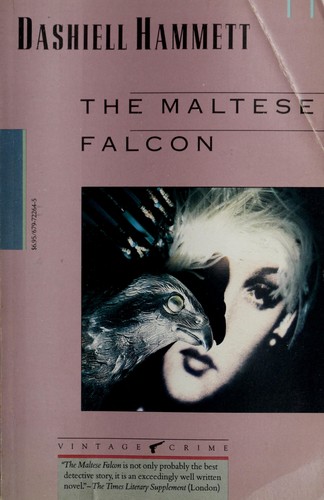
Talk to The Maltese Falcon like its author wrote you back.
Get the ideas that fit your life — not generic summaries.
- Chat with the book
- Audiobook-style main ideas
- Adapts to your life and goals
- Helps you take action
The Maltese Falcon, in detail
San Francisco private detective Sam Spade is hired by a woman calling herself Miss Wonderly to find her missing sister — a lie within thirty seconds of the novel opening. Before long Spade's partner is dead, the woman's story has changed three times, and a peculiar cast of criminals has converged on the city to recover a priceless jeweled statuette: the Maltese Falcon. Hammett gives you almost no interiority. You watch what Spade does, hear what he says, and are left to infer what he thinks.
The book is not, at bottom, about a statuette. It is about whether a man who operates on the edge of legality has any principles worth keeping, and if so, why. Spade's famous final speech to Brigid O'Shaughnessy — explaining exactly why he's going to turn her in despite everything — is the novel's moral center. He lays out his reasoning like a theorem: not because of the law, not because he liked his partner much, but because the alternative would mean his word is worthless and he'd have to spend the rest of his career watching his back.
What makes the book endure is the hard-boiled prose style Hammett invented and the refusal to sentimentalize. Every character lies. Every motive is transactional. Spade himself is not a good man in any conventional sense — he sleeps with his partner's wife, manipulates everyone around him, keeps his own counsel at lethal cost to others. Yet his code holds, and it holds for reasons that have nothing to do with sentiment. The style is spare, declarative, and precise in a way that influenced everything from Raymond Chandler to every crime procedural ever written.
Readers who like their protagonists sympathetic and their moral compass pointing north will be frustrated. The novel gives you no one to root for cleanly. But for readers who want to think about what honor means when it's stripped of social approval, or who want to watch a master prose stylist work, The Maltese Falcon is foundational. Every crime novel written since is in conversation with it, whether the author knows it or not.
The big ideas
- 1.
Spade's final speech is a moral philosophy in miniature: a professional code held not because it feels good but because abandoning it would make him useless to himself and everyone else.
- 2.
Hammett invented the hard-boiled detective voice — clipped, external, relentlessly observational — and the whole genre has been living in that house ever since.
- 3.
The Falcon itself is almost incidental. What drives the plot is not the object but the lies people tell and the identities they perform to get it.
