Psychology · Book club
The Marshmallow Test: Mastering Self-Control book club questions
Here are 12 book club questions for The Marshmallow Test: Mastering Self-Control by Walter Mischel, ordered to open easily and end somewhere worth arguing about. Copy them, print them, or bring them up one at a time.
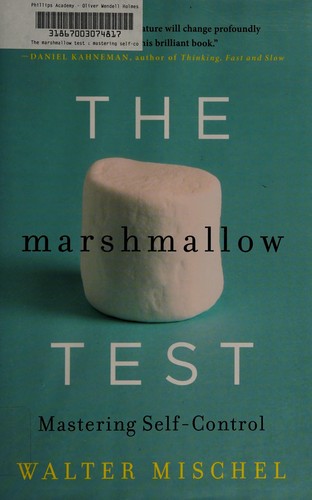
Walter Mischel designed the marshmallow test at Stanford in the late 1960s: a child is left alone in a room with a marshmallow and told that if they can wait for the researcher to return without eating it, they'll get two.
Walter Mischel · 2014 · 5h 20m
Full summary and key takeaways →The 12 questions
- 1.
Mischel argues that self-control is strategic rather than effortful. Which self-control challenges in your life have you been approaching as willpower problems when they might respond better to strategy?
- 2.
The cool versus hot system distinction suggests you can improve self-control by changing how you mentally represent a temptation. Have you ever done this instinctively, and how did it work?
- 3.
The marshmallow test's predictive power depended partly on whether children trusted the experimenter. What does that say about self-control in environments where promises are routinely broken?
- 4.
Implementation intentions — if-then plans — are one of the most studied tools for behavior change. Is there a specific behavior you want to change that you haven't yet tried framing as an if-then rule?
- 5.
Mischel acknowledges the research was over-cited and the original findings oversold. How does that acknowledgment affect your trust in the rest of the book's claims?
- 6.
Which domains of your life require the most self-control, and do you think your current strategies are well-matched to those domains?
- 7.
Mischel raises the possibility that self-control can be maladaptive — that deferring your own needs indefinitely is not a virtue. Where in your life might that apply?
- 8.
Socioeconomic background and family stability influence self-control capacity. What are the implications of that for how we talk about 'discipline' in educational or policy contexts?
- 9.
The hot system is fast and emotional; the cool system is slow and abstract. Which system tends to dominate in your most important decisions?
- 10.
If you could train one specific if-then rule to automate this week, what would it be? What triggers the behavior you want to change?
- 11.
Mischel spent fifty years following the same children. What does that kind of longitudinal research reveal that a shorter study cannot?
- 12.
The book distinguishes between strategies that suppress a temptation and strategies that transform how you perceive it. Which approach do you think is more sustainable for long-term change?
How to run the discussion
- Pick six to eight, not all of them. An hour of real discussion covers fewer questions than anyone expects, and racing the list is what makes a book club feel like homework.
- Open with what people noticed, not what they concluded. Asking for a verdict first hardens opinions before anyone has heard each other.
- Let the disagreement run. The questions below that split a room are the ones worth the time; the ones everyone answers the same way can be skipped.
- Ask the quiet person a specific question. A direct, narrow question is far easier to answer than an open invitation to contribute.
Themes worth steering toward
If the conversation stalls, these are the threads that usually restart it.
Common questions
What are good book club questions for The Marshmallow Test: Mastering Self-Control?
Here are 12 book club questions for The Marshmallow Test: Mastering Self-Control by Walter Mischel, ordered to open easily and end somewhere worth arguing about. The strongest openers ask what each reader noticed rather than what they concluded, and the discussion usually turns on self-control, willpower, delayed gratification.
How long should a book club discussion of The Marshmallow Test: Mastering Self-Control last?
Most groups run 60 to 90 minutes of actual discussion. That is roughly six to eight questions, not all of them, so pick the ones that suit your group rather than working down the list in order.
What are the main themes in The Marshmallow Test: Mastering Self-Control?
Self-control, Willpower, Delayed gratification, Cognitive strategies, Development. Those are the threads most likely to divide a room, which makes them the useful places to steer a discussion that has gone quiet.
Picking the next one? See books like The Marshmallow Test: Mastering Self-Control or questions for other book club picks.
