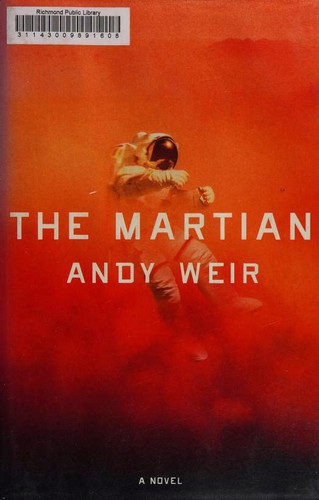
Talk to The Martian like its author wrote you back.
Get the ideas that fit your life — not generic summaries.
- Chat with the book
- Audiobook-style main ideas
- Adapts to your life and goals
- Helps you take action
What it argues
Mark Watney is accidentally left behind on Mars when his crewmates, believing him dead, abort their mission during a storm and launch for Earth. He is now alone on a planet with no way to communicate with NASA and enough food for perhaps sixty days. The Martian is his account of what he does next — told largely through mission logs — and it is, above all, a novel about problem-solving. Watney is a botanist and mechanical engineer, and he uses both disciplines in increasingly improvised ways to extend his survival window from weeks to years.
The book's real subject is competence. Watney's voice is irreverent and funny — he makes jokes in log entries he knows might never be read — but the problems he faces are not comedic. He has to figure out how to grow food in sterile Martian soil, how to generate water from rocket fuel chemistry, how to travel thousands of kilometers across a desert planet in a vehicle not designed for the journey, and how to communicate with a planet that doesn't know he's alive. Weir did the engineering calculations himself before writing the novel, and the solutions are real; readers with science backgrounds have verified most of them.
What it gets right
- 1.
Survival is a series of smaller problems. Watney never asks 'how do I survive for four years?' He asks 'how do I solve this one thing in the next three days?'
- 2.
Humor is a coping strategy with structural consequences — it keeps you functional under conditions that would otherwise produce despair.
- 3.
The novel treats science literacy as heroic. Every crisis is solved through applied chemistry, physics, or biology, and those solutions are portrayed as achievable by an intelligent generalist.
What it covers
Who wrote it
Andy Weir is an American author who spent two decades as a computer programmer at companies including AOL before writing The Martian, which he originally self-published as a free serial on his website. The book was picked up by Crown Publishing in 2014 and adapted into a film starring Matt Damon directed by Ridley Scott. His subsequent novels include Artemis (2017) and Project Hail Mary (2021). Weir is known for exhaustive technical research and a science-forward approach to storytelling.
