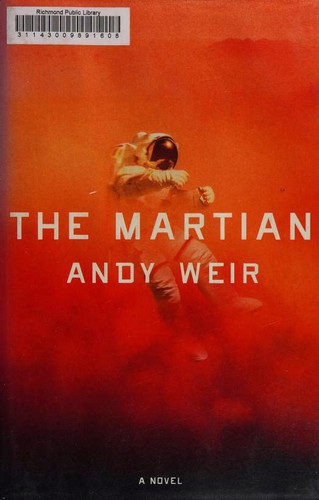
The Martian by Andy Weir is a 2011 science fiction book about survival and ingenuity, problem-solving under pressure, human cooperation. Survival is a series of smaller problems. Watney never asks 'how do I survive for four years?' He asks 'how do I solve this one thing in the next three days?'
Summary
Mark Watney is accidentally left behind on Mars when his crewmates, believing him dead, abort their mission during a storm and launch for Earth. He is now alone on a planet with no way to communicate with NASA and enough food for perhaps sixty days. The Martian is his account of what he does next — told largely through mission logs — and it is, above all, a novel about problem-solving. Watney is a botanist and mechanical engineer, and he uses both disciplines in increasingly improvised ways to extend his survival window from weeks to years.
The book's real subject is competence. Watney's voice is irreverent and funny — he makes jokes in log entries he knows might never be read — but the problems he faces are not comedic. He has to figure out how to grow food in sterile Martian soil, how to generate water from rocket fuel chemistry, how to travel thousands of kilometers across a desert planet in a vehicle not designed for the journey, and how to communicate with a planet that doesn't know he's alive. Weir did the engineering calculations himself before writing the novel, and the solutions are real; readers with science backgrounds have verified most of them.
What distinguishes The Martian from other survival thrillers is the tone. Weir refuses sentimentality and refuses despair. Watney's coping mechanism is a relentless focus on the next immediate problem, and the novel reflects that structure: each chapter is essentially a new problem and a new solution, with the emotional weight compressed into a few moments when the math genuinely doesn't work. The comedy is a feature rather than a bug — it's how an intelligent person in an impossible situation keeps themselves functional.
This is a book for people who loved Apollo 13 and want to spend a novel inside that kind of problem. It is not a book about loneliness, interiority, or what it means to be human in extremis — those questions hover at the edge but Weir doesn't pursue them. If you want hard-science survival thriller delivered with wit and propulsive momentum, there is almost nothing better. If you want character depth or philosophical weight alongside your space botany, you'll need to bring those yourself.
Talk to The Martian like its author wrote you back.
Get the ideas that fit your life — not generic summaries.
- Chat with the book
- Audiobook-style main ideas
- Adapts to your life and goals
- Helps you take action
Key takeaways
- 1.
Survival is a series of smaller problems. Watney never asks 'how do I survive for four years?' He asks 'how do I solve this one thing in the next three days?'
- 2.
Humor is a coping strategy with structural consequences — it keeps you functional under conditions that would otherwise produce despair.
- 3.
The novel treats science literacy as heroic. Every crisis is solved through applied chemistry, physics, or biology, and those solutions are portrayed as achievable by an intelligent generalist.
- 4.
Human cooperation at scale — NASA, JPL, the Chinese space program, the crew of Hermes — is the thing that actually saves Watney. No one survives alone.
- 5.
Redundancy and preparation matter more than improvisation in high-stakes environments; Watney survives partly because of what mission planners put on Mars before he arrived.
- 6.
The cost of accurate risk assessment is sometimes paralysis; Watney survives in part by choosing optimism over accurate probability estimates of failure.
- 7.
Isolation at the scale of interplanetary distances is a genuinely different psychological condition from earthly solitude — the novel doesn't quite grapple with this, which is itself revealing.
- 8.
Weir's research-before-writing approach changes what's possible in hard SF: the solutions feel real because they are, and that reality is the source of the dramatic tension.
Discussion questions
Use these on your own, with a book club, or as chat starters in Superbook. Book club version, ready to copy or print →
- 1.
Watney's voice is almost relentlessly optimistic and funny. Is that psychologically realistic, or is it a storytelling choice that flattens the horror of the situation?
- 2.
The novel solves every problem Watney faces before it kills him. Would a version that didn't succeed be a better or a worse book?
- 3.
NASA makes a decision to risk five crew members to save one. Is that decision defensible? Does the novel think it is?
- 4.
Weir did the engineering math himself before writing. Does knowing the science is real change how you experience the tension?
- 5.
The Martian is almost entirely plot. What does it lose by not spending more time on the psychological experience of isolation?
- 6.
Watney is competent at almost everything the crisis requires. Is that wish-fulfillment, or is his competence believable given his training and personality?
- 7.
The Chinese space agency's cooperation is a significant plot point. The novel depicts international scientific collaboration as possible even between geopolitical rivals. Is that naive, or is Weir making a deliberate argument?
- 8.
The book was self-published as a free serial online before it was picked up by a publisher and then adapted into a film. Does that origin story — built from reader feedback, chapter by chapter — explain anything about its structure or tone?
- 9.
Compare Watney's situation to someone stranded in a more earthly crisis — a shipwreck, a cave-in. What's specific to the Martian context, and what's universal?
- 10.
The frame of the novel is Watney's log entries. What does that format allow Weir to do that third-person narration wouldn't?
- 11.
Science saves Watney in this novel. Is that a political argument? What worldview does a novel about scientific competence implicitly promote?
- 12.
By the end, do you have a clear picture of who Mark Watney is as a person beyond his competence and humor? Does the novel need you to?
Themes
Frequently asked questions
-
Is The Martian scientifically accurate?
Mostly yes. Weir did extensive research and the chemistry, botany, and orbital mechanics are largely correct. A few liberties were taken — the initial storm's severity is unrealistic for Mars's thin atmosphere — but the engineering solutions Watney uses are real. NASA scientists have praised the book's accuracy.
-
Is The Martian funny?
Deliberately and consistently. Watney's voice is sarcastic and self-aware, and the humor is a structural feature rather than occasional comic relief. If Watney's jokes land for you, the book is compulsive; if they grate, the novel will feel tonally wrong throughout.
-
How does the film compare to the book?
The Ridley Scott adaptation is widely considered one of the better recent sci-fi films and captures the tone faithfully. The book has more technical problem-solving and more interior Watney voice. Both work on their own terms; readers of the book won't feel cheated by the film.
-
Who shouldn't read The Martian?
Readers who want character depth, emotional complexity, or existential weight from their survival fiction. The book is relentlessly plot-focused. It also assumes basic scientific curiosity — readers who skip the engineering sections are skipping the point.
-
Is there a sequel?
No direct sequel, but Weir's Project Hail Mary (2021) shares The Martian's hard-science approach and optimistic problem-solving tone, and most readers consider it as good or better.
Similar books

Packing for Mars: The Curious Science of Life in the Void
Mary Roach
Astrophysics for People in a Hurry
Neil deGrasse Tyson

Unbroken: A World War II Story of Survival, Resilience, and Redemption
Laura Hillenbrand
A Short History of Nearly Everything
Bill Bryson
