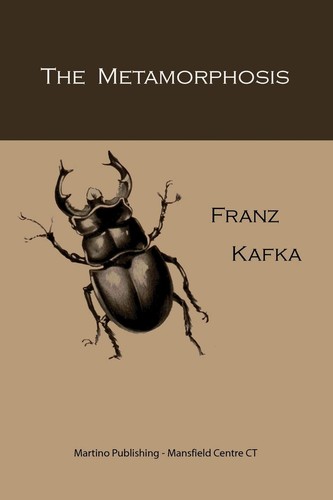
Talk to The Metamorphosis like its author wrote you back.
Get the ideas that fit your life — not generic summaries.
- Chat with the book
- Audiobook-style main ideas
- Adapts to your life and goals
- Helps you take action
The Metamorphosis, in detail
The Metamorphosis begins with one of the most famous sentences in world literature: Gregor Samsa wakes one morning to find he has been transformed into a giant insect. What follows is not a horror story, not a fantasy, and not quite a parable — it is something harder to categorize, written with the flat bureaucratic precision of a bad dream in which everyone accepts the impossible without surprise. Gregor's primary concern, even after his transformation, is that he is going to be late for work.
The novella tracks what happens to a family when its primary earner suddenly cannot work. Gregor had been supporting his parents and his sister Grete on the salary he earned as a traveling salesman — a job he hated, a debt he could not escape. Now, as an insect, he is a burden. The family reorganizes around his absence: his father takes a job, Grete cares for Gregor, his mother pretends nothing has happened. Slowly the burden becomes unbearable and the care becomes resentment, until Gregor's death is received as a relief. The story ends with the family going for a walk in the spring sunshine, looking forward.
Kafka's genius is to make this completely realistic while maintaining the insect transformation as literal fact. The horror is not the transformation itself but the family's gradual withdrawal of humanity — the mechanism by which a person becomes, in the eyes of the people who claimed to love him, a thing that needs to be disposed of. The bureaucratic, affectless prose style is the vehicle: everything is described with the same neutral tone, the same matter-of-fact acceptance, whether it is a workday commute or a son's slow death from neglect.
The Metamorphosis is short enough to read in two hours and dense enough to discuss for weeks. It is one of those texts that seems to mean something different each time you come back to it — as an allegory of depression, of disability, of immigrant assimilation, of late capitalism's treatment of workers. Kafka disliked being asked what it meant. That is probably the right response.
The big ideas
- 1.
The transformation is literal but also functions as a precise image of what depression, chronic illness, or sudden dependency does to a family's social and economic arrangements.
- 2.
Kafka's flat, bureaucratic prose style is inseparable from the horror. Nothing is described as horrifying. This normalizing tone is the story's central technique.
- 3.
Gregor's first thought after transformation is about missing work. The joke is also the tragedy: identity under capitalism is entirely bound to economic function.
