Mystery · Book club
The Midnight Hour book club questions
Here are 12 book club questions for The Midnight Hour by Elly Griffiths, ordered to open easily and end somewhere worth arguing about. Copy them, print them, or bring them up one at a time.
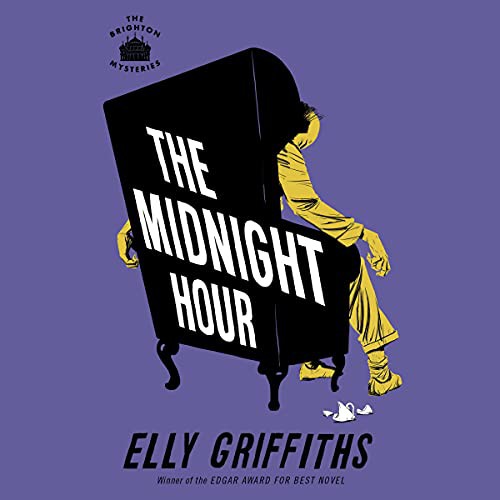
The Midnight Hour is the second book in Elly Griffiths's Brighton Mystery series, set in 1965.
Elly Griffiths · 2023 · 5h 15m
Full summary and key takeaways →The 12 questions
- 1.
Emma has built her own professional life outside the police force. What does the novel say about what that independence costs her, and what it gives her?
- 2.
The music-hall world is treated with affection and some elegy. Did you find that world convincing, and does its decline matter to the novel's larger concerns?
- 3.
The Edgar-Emma dynamic is the slow burn at the center of the series. How did you feel about where The Midnight Hour leaves it?
- 4.
Griffiths is clearly writing in the Golden Age tradition. Does that feel like homage, formula, or something more complex?
- 5.
The novel is set in 1965 — a specific moment of British cultural transition. How much does that transitional quality shape the story?
- 6.
Sam Collins is Emma's partner in both professional and personal terms. How does their relationship function differently from Emma's relationship with Edgar?
- 7.
The theatrical agent at the center of the murder is not sympathetic. Does that affect how you feel about the mystery?
- 8.
The resolution explains what happened but not entirely why. Is there a moral question the novel raises that it doesn't fully answer?
- 9.
The series rewards sustained reading across books. Did The Midnight Hour make you want to read the others, or does it function well enough as a standalone?
- 10.
Griffiths writes her protagonist without the anachronistic modern sensibility that mars some historical fiction. Is the 1965 Emma a believable person from that time?
- 11.
What does the novel say about the gap between public performance and private reality — for the theatrical characters, but also for Emma herself?
- 12.
Is the mystery solved in a satisfying way? Did you see it coming, and if so, at what point?
How to run the discussion
- Pick six to eight, not all of them. An hour of real discussion covers fewer questions than anyone expects, and racing the list is what makes a book club feel like homework.
- Open with what people noticed, not what they concluded. Asking for a verdict first hardens opinions before anyone has heard each other.
- Let the disagreement run. The questions below that split a room are the ones worth the time; the ones everyone answers the same way can be skipped.
- Ask the quiet person a specific question. A direct, narrow question is far easier to answer than an open invitation to contribute.
Themes worth steering toward
If the conversation stalls, these are the threads that usually restart it.
Common questions
What are good book club questions for The Midnight Hour?
Here are 12 book club questions for The Midnight Hour by Elly Griffiths, ordered to open easily and end somewhere worth arguing about. The strongest openers ask what each reader noticed rather than what they concluded, and the discussion usually turns on fame and identity, post-war britain, truth and performance.
How long should a book club discussion of The Midnight Hour last?
Most groups run 60 to 90 minutes of actual discussion. That is roughly six to eight questions, not all of them, so pick the ones that suit your group rather than working down the list in order.
What are the main themes in The Midnight Hour?
Fame and identity, Post-war Britain, Truth and performance, Justice and institutions, The past's hold on the present. Those are the threads most likely to divide a room, which makes them the useful places to steer a discussion that has gone quiet.
Picking the next one? See books like The Midnight Hour or questions for other book club picks.
