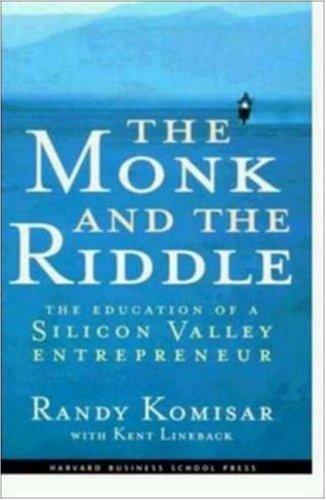
Talk to The Monk and the Riddle like its author wrote you back.
Get the ideas that fit your life — not generic summaries.
- Chat with the book
- Audiobook-style main ideas
- Adapts to your life and goals
- Helps you take action
The Monk and the Riddle, in detail
Randy Komisar spent years as a virtual CEO and partner at Kleiner Perkins helping founders build companies, and The Monk and the Riddle draws on that experience to make a case about what startup culture gets badly wrong. The argument is simple but cutting: most people in Silicon Valley are playing what Komisar calls the Deferred Life Plan — working on something they don't care about now so they can become wealthy enough to do what they really want later. Komisar argues this plan is almost always a trap.
The book is structured as a business parable. Komisar meets Lenny, a founder pitching a funeral services e-commerce business. The pitch is technically plausible, the economics are defensible, but Komisar's question keeps getting in the way: why are you doing this? Lenny's honest answer is that he wants the money to eventually do something he loves. Komisar uses their conversations, and a subplot about an older mentor named Hawk, to explore the difference between a business built on passion and one built on a financial exit as the end point.
The distinction Komisar draws isn't between ambition and meaning — it's between deferred passion and immediate passion. Successful entrepreneurs, in his account, are doing work they would do even if the financial outcome were uncertain. That doesn't mean they're indifferent to success; it means the work itself is the point, not just the vehicle. He's also honest that passion alone isn't sufficient: the business still needs to solve a real problem, the economics still need to make sense, and the team still needs to execute. But without genuine connection to the work, founders tend to make expedient decisions rather than good ones.
The book is short and its narrative structure keeps it moving. Komisar writes with warmth and some wit, and the parable format lets him say things directly that a more academic book might bury in qualifications. It's most useful for people early in their careers making decisions about what to work on, and for founders who are honest enough to ask themselves whether they'd still be doing this if the payout were smaller. It doesn't resolve the question of what your passion actually is — it just insists you ask it seriously before committing five to ten years of your life.
The big ideas
- 1.
The Deferred Life Plan — working on something joyless now in exchange for freedom later — is a common Silicon Valley trap that rarely pays off the way its practitioners expect.
- 2.
Komisar distinguishes passion (the intrinsic drive to do a particular kind of work) from interest (finding a task intellectually engaging). Building a startup requires the former.
- 3.
A business that exists purely as a vehicle to a financial exit tends to produce expedient decisions rather than principled ones, especially when the exit takes longer than planned.
